
Bakhoor, Oud and Agarbatti: The Questions People Ask
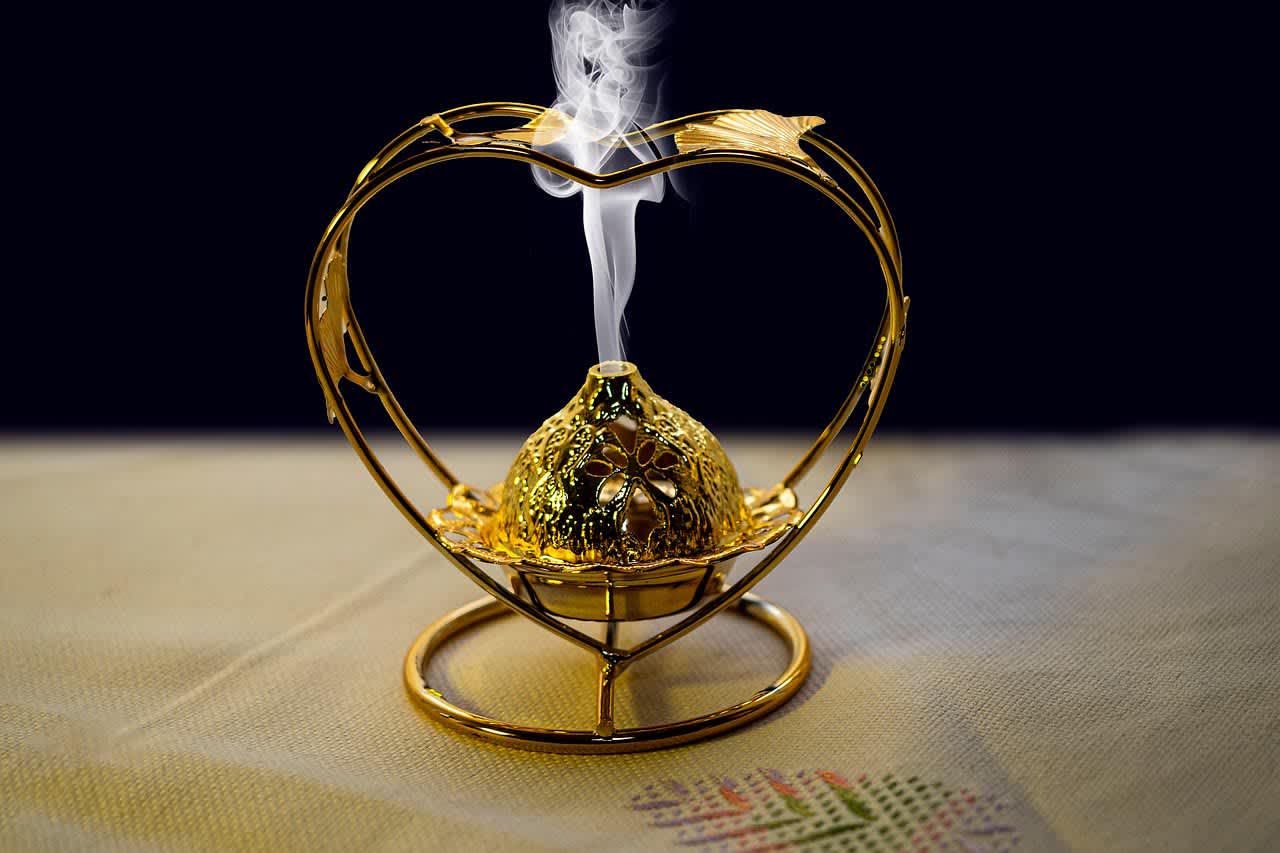
What is bakhoor, actually? Is it just incense with a different name?
No. Bakhoor is wood chips that have been soaked in fragrant oil and left to cure, and then burned over heat. The chips do not burn the way a stick does — they smoulder and give off smoke for a few minutes, and then they are spent.
The base is usually agarwood, sandalwood or a cheaper wood standing in for both, and the soak is some combination of attar, resins, musk-type oils and often a sweetener like sugar or honey that gives bakhoor its characteristic thick, almost edible sweetness. Every household in the Gulf has a brand they insist is the only one worth buying, and no two of those brands smell alike.
An agarbatti is a different object entirely: a thin bamboo stick coated in a paste of binder, charcoal or wood powder, and perfume oil. You light the tip, blow it out, and it burns down on its own for half an hour or so. No external heat, no charcoal, no attending to it.
So: same intention, two completely different mechanisms. One needs heat supplied to it. The other supplies its own.
Why is oud so expensive?
Because it is a defence wound.
Agarwood — oud — is the dark, resin-soaked heartwood that certain Aquilaria trees produce when they are infected by a particular mould. A healthy Aquilaria is pale, light and worth very little. Only when the infection takes hold does the tree flood that section of wood with resin, and only that resinated section is oud. Most trees in the wild never form it.
That is the whole story of the price. You cannot look at a standing tree and know. Wild agarwood is now heavily protected and trade-restricted, and cultivated plantations inoculate trees deliberately, which has helped supply without ever making the good stuff cheap.
Which is also why most bakhoor sold at ordinary prices is not solid oud chips. It is other wood carrying oud-type oil. That is not a scandal — it is how the category works — but it is worth knowing when someone tries to sell you a tola of "pure oud" at a price that seems too kind.
Charcoal burner or electric? Which should I buy for a flat?
Electric, if you live in an apartment and you are asking this question at all.
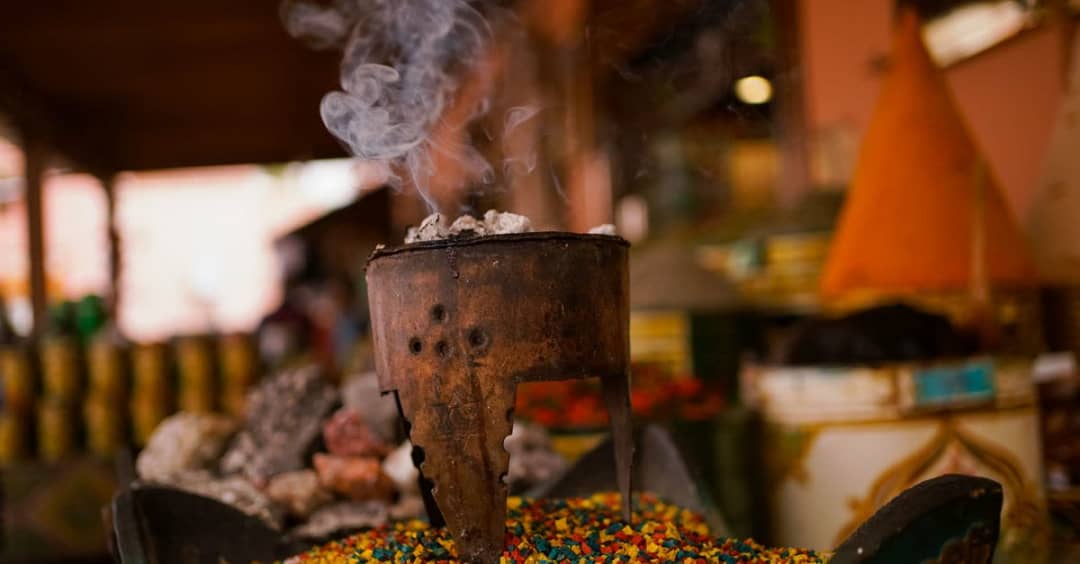
A traditional mabkhara wants a lit charcoal disc. You hold the disc with tongs, light it until it stops sparking and goes grey, set it in the burner on a bed of ash or sand, and put the chips on top. It is the better smell — charcoal heat is fierce and pulls more out of the wood — and it is also an open ember sitting in your living room, which is a real consideration in a small flat with a child, a cat, or a smoke detector six feet away.
An electric burner plugs in, heats a small plate, and takes a couple of minutes to get going. Less smoke, less drama, no ember. The scent is softer and shorter-lived. In a tower flat in Dubai or Sharjah, softer and shorter-lived is usually what you want anyway.
If you do use charcoal: it stays hot long after it looks dead. Do not put it in the bin. Let it die out in the burner, or drown it under running water.
Why does bakhoor stick to my clothes for two days, and incense doesn't?
Because that is what it is for.
The reason bakhoor is passed around a room — held under the abaya, waved through hair, brought close to a guest's collar — is that the smoke is heavy with oils that settle on fibre and stay there. It is a wearable scent that happens to arrive as smoke. In many families the burner comes out before Friday prayers and again when guests are leaving, and the smell you carry home is the point of the gesture, not a side effect.
Agarbatti smoke is lighter and dissipates. It scents a room and then it leaves. If you want your sofa to still smell of something on Sunday, burn bakhoor. If you want the room to be neutral again by evening, burn a stick.
This is also the practical reason people who share a flat with someone sensitive to strong scent tend to keep bakhoor for the majlis and use sticks for daily rooms.
I want something for meditation or the evening wind-down. Which one?
A stick, almost always.
The argument is duration and attention. Bakhoor demands your involvement — light the coal, wait, load the chips, watch it, reload. That is a lovely ritual in itself, but it is a ritual of hosting, not of sitting still. A stick you light once and forget, and it burns for roughly the length of a sitting. Twenty-five minutes of quiet has an edge that arrives on its own, and that is a genuinely useful thing when you are trying not to check the time.
For scent: sandalwood and frankincense are the two most people settle on. Sandalwood is warm and low and does not ask anything of you. Frankincense — loban, the resin the Gulf's own trade was built on — is drier, cooler, a bit resinous and church-like. Rose and jasmine are lovely in the evening but are more presence than backdrop; if a scent keeps making you notice it, it is the wrong one for sitting. Our own signature fragrance range is built around exactly these — chandan, loban, mogra — because they are the ones that hold up in a room for years without wearing out their welcome.
Can I burn incense in a flat with sealed windows and central AC?
Yes, with two adjustments.
First, do not burn under a return vent or directly beneath a detector. Recirculated air will take the smoke straight into the duct, which spreads it everywhere and past the sensor at the same time. Burn in a corner of a room, not near the intake grille.
Second, halve what you would burn in a house with open windows. One stick, not three. In a sealed 90-square-metre flat, one stick is genuinely enough, and the difference between "the flat smells of sandalwood" and "the flat smells of a fire" is one extra stick.
Optical smoke detectors are the ones that trip on incense — they read particles, and they cannot tell smoke from steam or scented smoke. If yours goes off reliably at the same spot, the answer is to move the burning, not to cover the detector. Never tape over a detector, not even for twenty minutes. People forget.
How long does bakhoor last, and how do I store it in this heat?
A tin of chips lasts far longer than people expect — you are using a pinch, three or four chips, per session. The problem is not quantity. It is the climate.
Bakhoor is oil-soaked wood, and in a Gulf summer, oil-soaked wood in a hot cupboard goes off. The sweeter, sugar-heavy blends can turn sticky and lose their top notes in a season. Keep the tin closed, keep it out of the sun, and keep it in the coolest interior cupboard you have — not the balcony storage, not the kitchen shelf above the hob.
Incense sticks are more forgiving but not immune. Heat drives the oil out of them and humidity makes them limp and hard to light. A resealable pouch or a tin, away from direct light, and they will hold a year comfortably.
Is it disrespectful to use bakhoor if it is not my tradition, or agarbatti if it is not?
No. Both of these are older than the identities now attached to them.
Frankincense moved out of southern Arabia to India, Egypt and Rome for centuries before any of the current borders existed, and the wood, resin and oil trade ran in both directions the whole time. A South Indian family in Karama burning bakhoor on a Friday and an Emirati household that keeps a box of sandalwood sticks for the smell are both doing something entirely ordinary and entirely old.
Where care is warranted is not in the material but in the setting: an incense stick lit in front of an image in someone's home is doing a specific religious job, and that is theirs, not a decorating choice. The smell itself belongs to everyone who has ever wanted a room to feel different than it did ten minutes ago.


