
Bathukamma: Telangana's Nine Days of Flowers and Water
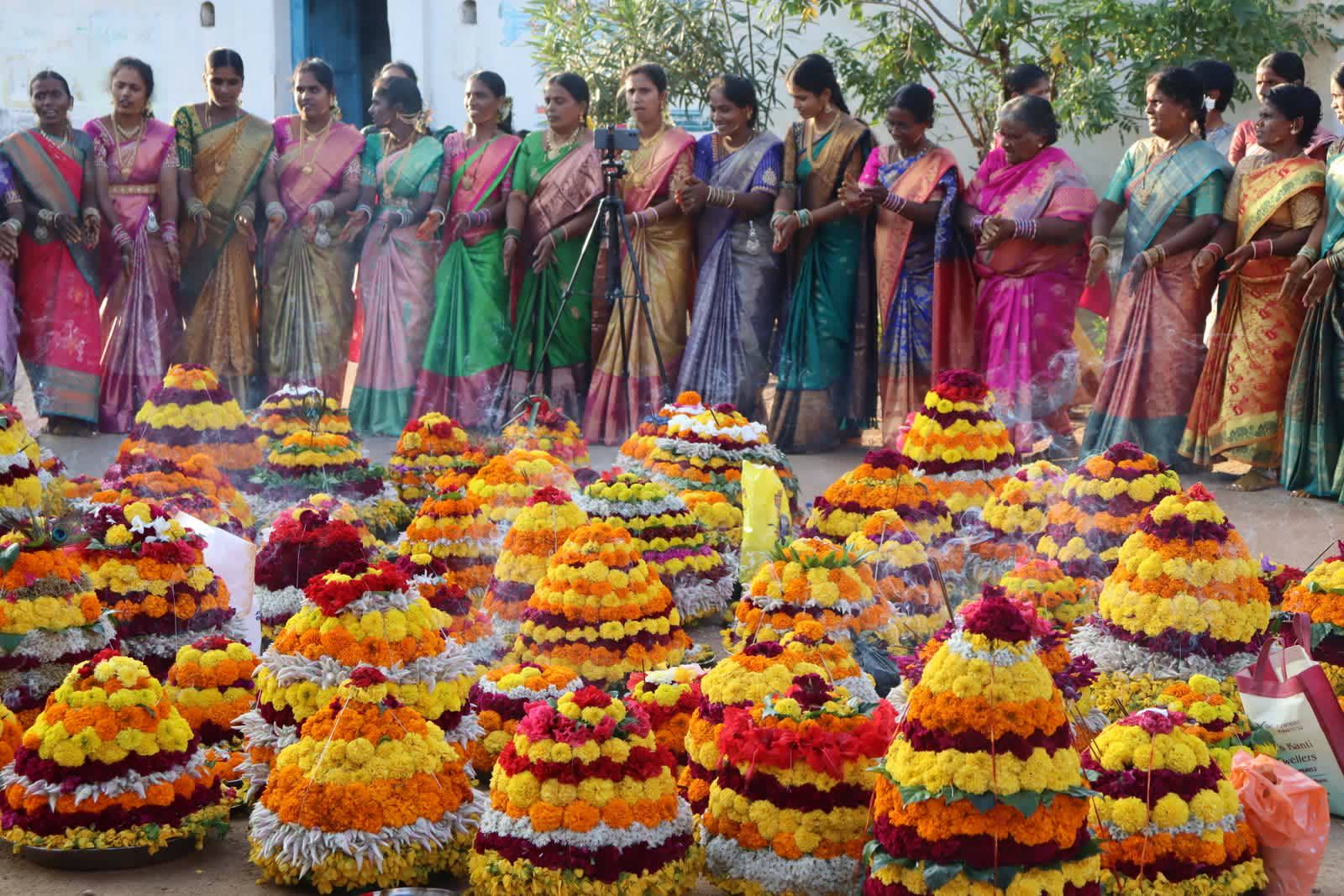
You sent me that photograph on Tuesday with nothing written under it, which I decided meant you wanted it explained. Then you wrote the next morning to say a colleague had asked what it was, you had said "a flower thing from home," and it had bothered you all day.
So. Here is the flower thing from home, as well as I can give it to you.
I should say at the start that I am the wrong person to ask and also the only person you asked. I have never made a Bathukamma and never will. Men do not make them — they are sent out to fetch flowers and then they stand out of the way — and beyond that it is not my family's festival. What I have is a life spent watching it pass the end of our street in Hyderabad, conversations with women who do make them, and the published accounts, which I will give you honestly, including where they disagree.
What you are actually looking at
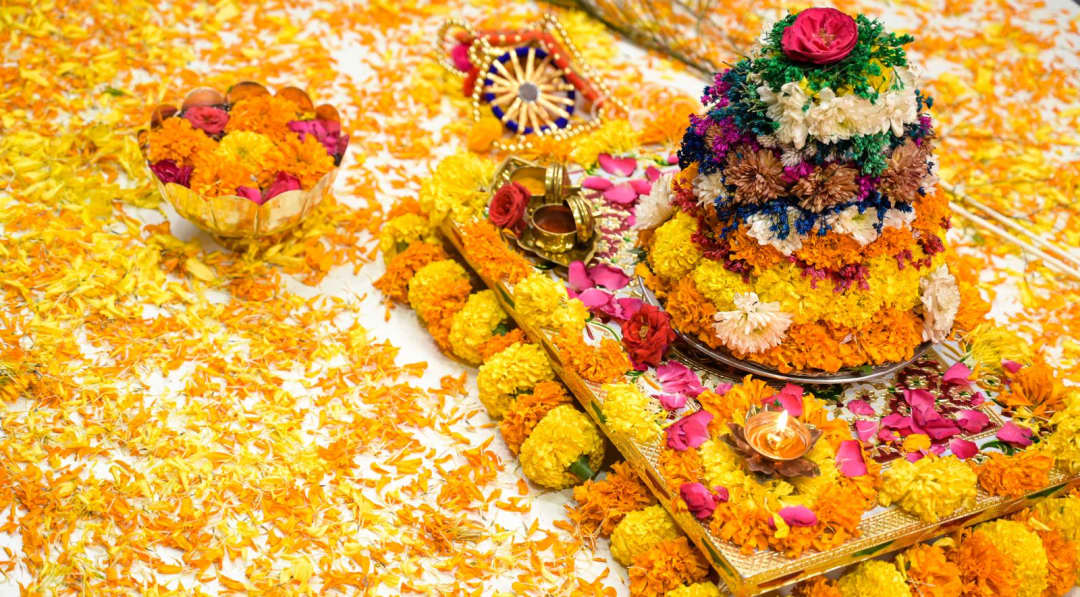
The thing in your photograph is not a bouquet and it is not a cake, though it has been called both by people who should know better. It is built on a wide flat plate, usually steel or brass, called a thambalam. Flowers are cut with almost no stem left and packed down in rings, each ring smaller than the one below it, so the whole thing rises as a cone. The shape is deliberate: it is meant to be a gopuram, the tiered tower over a temple gateway.
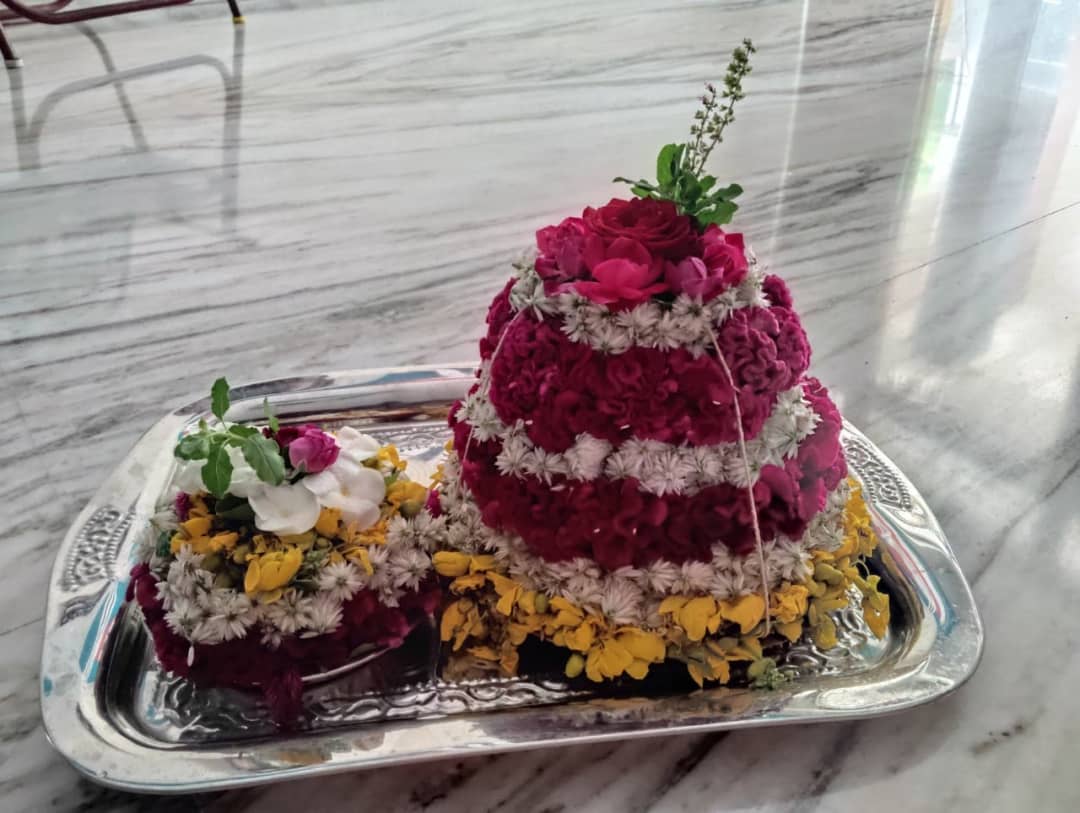
Accounts differ on how many rings there should be — seven is the number most often printed, and nobody I have asked has ever counted. At the top sits a small figure made of turmeric, called Gauramma. That figure is the deity. There is no idol inside the stack and there is no idol anywhere near it. You are looking at a temple made of cut flowers with a lump of turmeric where the god goes.
When it happens, and the strange thing about the start
This year it runs from Saturday 10 October to Sunday 18 October 2026 — nine days, the last of them called Saddula or Pedda Bathukamma, which is the big one and the one worth planning around.
Here is the part I find genuinely odd, and I have never heard it satisfactorily explained. Day one falls on Mahalaya Amavasya, the new moon that closes Pitru Paksha — the fortnight given over to the dead, the fortnight during which most of India will not begin anything. That is the day Telangana starts a festival about flowers being alive. The first day is even called Engili Pula, which means something close to stale or already-tasted flowers. A festival of flowers opens on the darkest night of a fortnight for ancestors, using flowers it calls leftover. I have no idea what to do with that and I have stopped trying to resolve it.
The two flowers that decide everything
Two get named every time. Tangedu is the yellow one — Senna auriculata, a scrubby drought-tolerant shrub that grows on dry waste ground, roadsides and fallow plains, and which the state adopted as its official flower. Gunugu is celosia, the crested one that looks like dense folded velvet. Both of them come up on their own, in quantity, on land nobody is farming, in exactly the weeks after the monsoon pulls back.
That is the whole logic of the timing. This festival is not scheduled around a temple or a priest. It is scheduled around a bloom. The rains fill the village tanks and the uncultivated ground turns yellow and red at the same time, and the festival happens in that window because that is when the material exists. Marigold, chrysanthemum, pumpkin and cucumber flowers and lotus go in too, but tangedu and gunugu are the ones people mean.
The nine days, and the one nobody will explain
Each day carries a name and its own food offering: sesame with rice flour on the first, then flattened rice with jaggery, then softened lentils, then soaked rice and milk, then pancakes, then nothing, then fried rice-flour shapes, then sesame with butter, then five kinds of rice on the last.
You will have noticed "then nothing." The sixth day is Aligina Bathukamma and it is the gap in every account I have read. The printed day-lists say there is no food offering that day. Two women in our lane told me flatly that no Bathukamma is built at all on the sixth, which is a much larger claim. A third said it was built but not taken out. The name is connected to sulking or taking offence, which at least fits the mood, and that is as far as anyone has got with me. None of those is a citation and I am not going to pretend otherwise.
The last evening
On Saddula Bathukamma the stacks come out at dusk, larger than the daily ones, and they are set down together in an open space — a courtyard, a temple forecourt, a road junction swept for it. The women form a circle and move around them clapping, singing. The songs run call-and-response with a refrain, uyyalo, which means swinging and which lands somewhere between a work song and a lullaby.
Then the whole thing is carried to water. Tank, pond, lake, the Musi if there is nothing closer. Married women lift the turmeric Gauramma off the top first and keep it. Everything else goes in.
Why the water is the point
Nothing is kept. That is not incidental to the festival, it is the shape of it. A woman spends an afternoon on an object she has planned and sourced and built, carries it out where everyone can see it, and then walks it into a tank and lets go.
There is a practical story attached — that the flowers and the clay of the little Boddemma figures do something for the tank, which is silting up and holding water and so on. I grew up hearing it and I am not going to tell you whether it is true. It may be, and it is also exactly the kind of reason people supply afterwards for something they were going to do anyway. What I can tell you is that the tanks are full in October and empty by April, and that a festival built around them is a festival that knows it.
It does not travel, and I think that is honest
You cannot do this in a city where tangedu does not grow. You could buy florist flowers and build the shape, and I know people who have, but you would be assembling a picture of it. The festival is nine days of using what came up by itself outside your town, on a schedule set by rain.
What does travel is smaller and I think you already know it. An evening, a lamp, a stick of the hand-rolled agarbatti that gets sent up from Bihar, and something made with your hands that you did not intend to keep. That is not Bathukamma. But the useful part of Bathukamma — that you can build something carefully and hand it over without a photograph being the point — does not actually require tangedu.
The state has gone the other way with it. Since 2014 it has been an official Telangana festival, with Tank Bund and LB Stadium and, last September, two Guinness records — one for a floral structure of seven tonnes standing just over sixty-three feet. I do not object to any of it. I only notice that a seven-tonne Bathukamma is the one thing this festival was never designed to be, which is small, made at home, and gone by morning.
What to tell the person who asked
Say: it is a nine-day festival in Telangana, made by women, out of wild flowers that bloom after the monsoon. Say they build them in layers like a temple tower, sing around them in a circle for nine evenings, and on the last night carry them to the nearest water and let them go.
If she asks what it is for, you can tell her nobody agrees. The name is read three ways — mother goddess, come alive, or mother, come back to life, or simply live forever. Pick whichever one you like. They have been arguing about it a lot longer than either of us has been away.


