
Bhog: The First Plate From a Grandmother's Kitchen
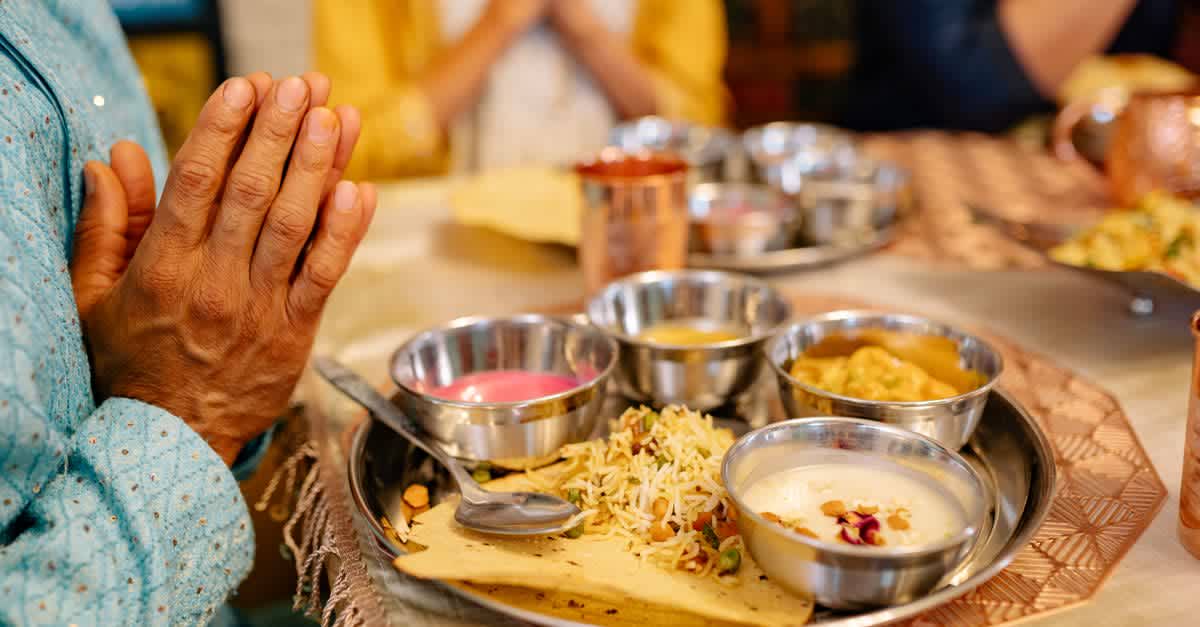
In my grandmother's kitchen in Indore, the food was never ours first. It belonged to the gods, and only after they had eaten did the rest of us sit down.
I did not understand this as a child. I understood only that I was hungry, that the puri had come off the kadhai hot and puffed, and that I was not allowed to touch it. My grandmother — Aji, we called her — would take the very first puri, the best-formed one, and a spoonful of whatever sabzi had been made, and a little of the sheera if it was a festival day, and arrange them on a small brass plate kept only for this. Then she carried it to the wooden mandir in the corner of the kitchen and set it before the thakur ji. Only then, hands washed, did she call us to eat.
That plate had a name in our house. Bhog.
What bhog actually is
Bhog is food offered to God before it is eaten by people. Once it has been offered and accepted, the same food becomes prasad — blessed, and shared back out to everyone in the house. It is one of the oldest habits in a Hindu kitchen, and one of the quietest. There is no ceremony to it on an ordinary day. You cook as you always cook. You simply give the first portion away, upward, before you keep any for yourself.
I think that is the whole lesson, hidden inside a small daily act: the first and best is not yours. You give it before you are full, not from your leftovers.
In our house the bhog was never grand. My grandmother did not have money for grand. A little rice, a little dal, one vegetable, a piece of jaggery on Thursdays. On Janmashtami she made a proper bhog — panjiri, a bit of makhan-mishri for Kanha, some fruit cut small — but that was four or five times a year. The rest of the days it was whatever the house was eating, offered honestly. She used to say that the thakur ji did not count the ghee. He counted whether you remembered him before you sat down.
The smell I still carry
If you ask me what my grandmother's devotion smelled like, I will not say flowers. I will say her kitchen at eleven in the morning — the tadka of cumin and hing hitting hot oil, wheat flour warming on the tava, and underneath all of it, one thin thread of incense smoke from the mandir shelf. She lit a single stick when she set the bhog down. Sandalwood, usually, or on some days loban, because that was the smell of the temple she grew up near and it made the corner of the kitchen feel like a temple too.
I did not notice it then. You never notice the smell of your own home until you have left it. Years later, in my own flat with my own children, I lit a sandalwood stick one morning while the dal was on the stove, and I had to sit down. The whole kitchen in Indore came back — the brass plate, the puffed puri I was not allowed to touch, my grandmother's thumb pressing a dab of kumkum onto the thakur ji before she offered the plate. A smell does that. It keeps what memory lets go.
I keep a small tin of plain incense in my kitchen now for exactly this reason — nothing fancy, the kind of everyday sandalwood or loban a household actually burns. When I am setting the bhog I light one, the way she did. It is not about the brand of the stick. It is a homemade Indian daily incense for the home mandir — the same practical thing my grandmother used, doing the same practical job of turning a kitchen corner into a place you bow at.
The rules, as she kept them
My grandmother was not a scholar. She could not have quoted a shloka to justify how she did things. But she had rules, and they were sensible ones that any homemaker will recognise.
You do not taste the food before offering it. This one was strict. You may smell the dal to check the salt, but you do not eat from the pot before the thakur ji has been served. What you offer should not be jhootha — not already touched by your mouth. So she seasoned by smell and by years of practice, and the food went up unsampled.
The bhog plate is kept separate. A small brass thali and a katori, used for nothing else, washed and kept on the mandir shelf. Not because the other plates were dirty — because this one was set apart for one purpose, and setting a thing apart is itself a kind of respect.
Tulsi on the offering, when there is tulsi. A single tulsi leaf placed on the bhog, especially anything offered to Vishnu or Krishna. She grew a tulsi plant in a painted pot by the kitchen window and would not let it dry out even in the worst of the Malwa summer.
You offer, you wait, you distribute. She left the plate a few minutes. Then she brought it back, and that food — now prasad — was mixed back into what the family ate. Nothing was wasted. The bhog was not thrown away or left to rot on the shelf. It came back to the table blessed.
Why I still do it, in a smaller kitchen
I live in a flat now, not the old Indore house. My kitchen is a fraction of the size and I cook on two burners with a schedule and school lunches to pack. It would be easy to let the bhog go. Half of my neighbours have.
But I have kept it, and I will tell you honestly why. Not because I am afraid of what happens if I stop — I do not think the thakur ji punishes a tired mother. I keep it because it is the one moment in a fast morning where I stop. The dal is done, the children are shouting for the bus, and for thirty seconds I put a spoon of it on the small brass plate, light one stick, and give the first portion away before I keep any. It slows the whole house by a breath. My children have started doing it without being told, which is how these things pass down — not by lecture, by watching.
My daughter asked me last year why we give the food to a statue that does not eat it. I told her what my grandmother told me, more or less. The thakur ji does not need our dal. We are not feeding him. We are practising giving the first and best away before we take. A child who grows up putting the first plate aside for someone else grows up a certain way. That is the point. The god is the excuse. The habit is the gift.
If you want to start
You do not need a big mandir or expensive samagri. My grandmother had a wooden shelf, a brass plate, a tulsi plant and a box of incense. Cook what you were already cooking. Before you serve yourself, take a little of it — the first, not the last — onto a small clean plate kept for the purpose. Put a tulsi leaf on it if you have one. Set it before whatever form of the divine your family keeps. Light a stick if you like the way it settles the room. Wait a few minutes. Then bring it back and share it.
That is all it ever was. A small plate, given first, in a kitchen that smelled of cumin and sandalwood, by a woman who did not have much and gave the best of it away anyway.
I am still learning from her. I expect I will be learning from her for the rest of my life.


