
How to Choose the Right Premium Incense for Meditation
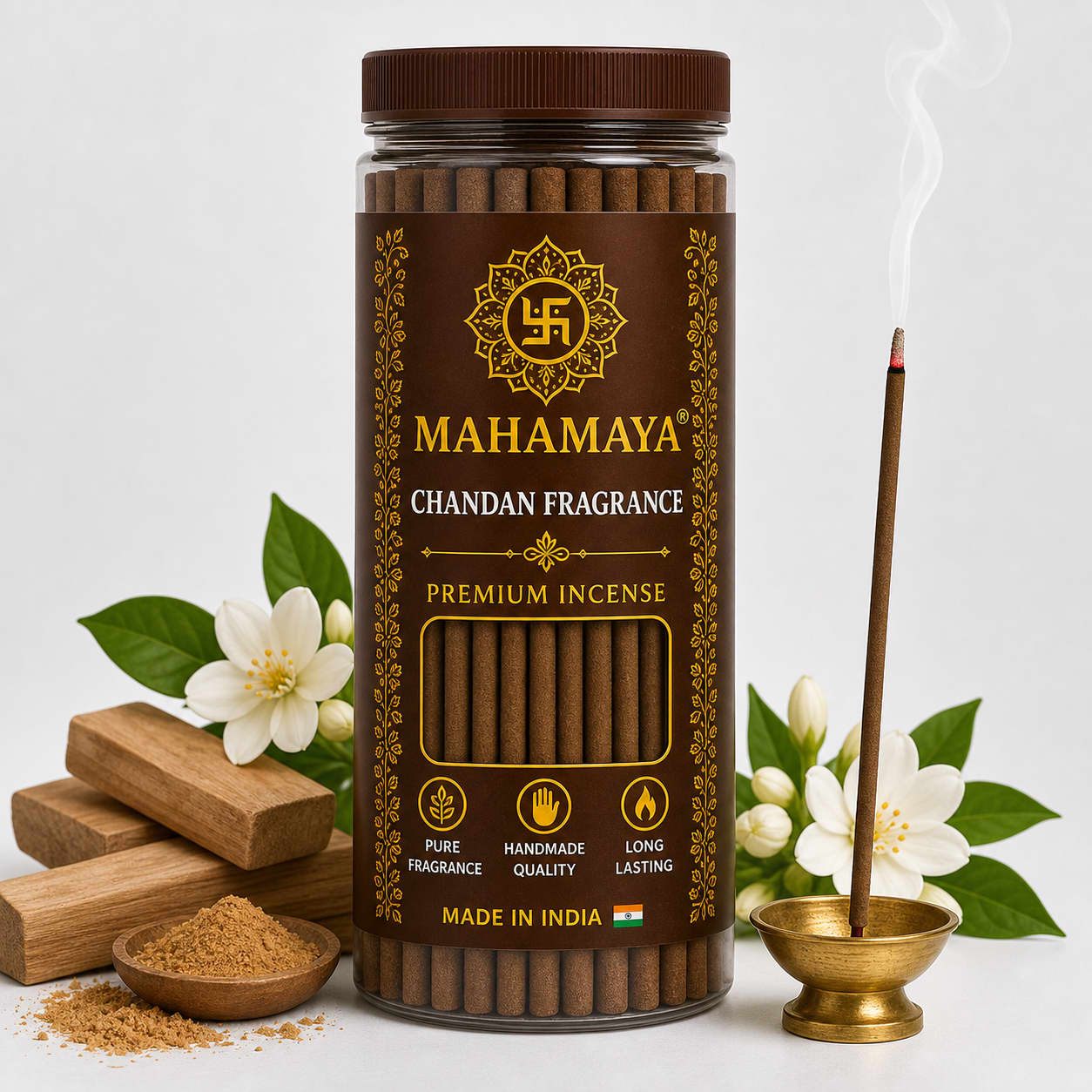
Incense has been used as a companion to meditation for thousands of years — not as decoration, but as a signal to the mind: this is the time to be still. Choosing the right stick, cone, or dhoop for that purpose is less about finding the "best" fragrance and more about finding what helps you settle.
1. Start with how the scent makes you feel, not how it's marketed
Every fragrance has a different effect on mood and alertness:
- Chandan (sandalwood) — warm, woody, and grounding. A classic choice for long sits, favoured for its calm, centering character.
- Lavender — soft and calming, often used for evening practice or to ease a busy mind before sleep.
- Loban (frankincense resin) — deep, resinous, and traditionally associated with clearing and settling a space before practice begins.
- Mogra (jasmine) and Rose — lighter, floral notes that suit shorter sessions or morning practice, when you want alertness alongside calm.
There's no universally "correct" scent — the right one is the one that helps you drop into stillness without becoming a distraction itself.
One correction worth making early: most people starting out reach straight for the heaviest resin they can find, usually loban, because it smells the most like a temple and therefore the most "serious". In a small closed room, for a thirty-minute sit, that is often far too much — you spend the session breathing something assertive rather than settling under it. Start lighter than instinct suggests. Chandan or a soft floral for the first few weeks, and move heavier only once you know what you actually tolerate at close range.
2. Match the format to your routine
- Incense sticks burn slowly and evenly, typically 30–45 minutes — well suited to a single sitting.
- Dhoop cones produce a fuller, denser fragrance in a shorter burn, useful for quickly setting the atmosphere in a room before you begin.
- Keep a jar or tin of your regular fragrance at your meditation spot so lighting incense becomes part of the ritual itself, not an extra chore.
3. Choose natural, handcrafted ingredients
Look for incense that is handcrafted in small batches using natural ingredients, without harsh synthetic smoke. Naturally made sticks tend to burn cleaner and produce a softer, more even fragrance — important when you're sitting close to it for extended periods.
4. Build a small ritual around it
Light the incense a minute or two before you actually begin sitting. Let the fragrance fill the space first. Over time, your mind will learn to associate that scent with stillness — the incense becomes a cue, not just a background note.
5. Let the stick be the timer
This is the oldest practical use of incense in meditation, and it still works: one stick, one sitting. Light it, sit, and stop when the ember reaches the base. Monastic traditions across Asia measured sessions this way long before clocks were available in the hall.
The real benefit today is that it keeps the phone out of the room. A timer app means an unlocked screen at the start and a notification at the end, and both cost more attention than they appear to. A stick asks nothing of you.
A full stick gives you roughly half an hour of sitting. If that's more than you want, snap one in half before lighting — the burn is even enough that half a stick is a reasonable short session. Airflow changes the rate, so treat it as an approximate measure rather than a precise one. For this purpose, approximate is arguably better: you finish when it finishes, instead of watching the last two minutes.
6. Think about where you put it
Placement matters more when you are going to sit still for half an hour and not get up to adjust anything.
- Not in your breath line. Directly in front of you, at face height, means you are inhaling smoke rather than fragrance. Set it off to one side.
- Give it distance. A metre or more is usually enough. Close range makes the scent arrive in waves as the smoke moves, which is more noticeable than a steady, even fill.
- Below eye level, or behind you. Rising smoke is genuinely interesting to look at, which is exactly the problem. If you sit with your eyes partly open, keep it out of your field of view.
- Make sure the ash has somewhere to fall. You are not going to get up mid-session to deal with it, so settle this before you sit rather than after.
7. If the fragrance becomes the thing you're paying attention to
This is common and rarely mentioned. You sit down intending to follow your breath, and instead spend twenty minutes noticing the incense — appreciating it, analysing it, waiting for the next wave of it.
Some traditions do use scent deliberately as the object of attention, and if that is your practice, this is not a problem at all. But if you are working with breath or body awareness, a fragrance that keeps pulling focus is simply too loud for you in that space.
Three fixes, in order of how easy they are:
- Move it further away, or into an adjoining room with the door open.
- Light it five to ten minutes before you sit and let it burn most of the way down. What remains is settled residual scent rather than an active plume — often exactly the right level.
- Change to a lighter fragrance and keep the assertive one for when you are not sitting.
The target is a scent you notice when you walk in and stop consciously registering within a minute or two. Present, not performing.
A simple starting set
If you're building a meditation practice from scratch, a good starting point is our Signature Fragrances range — Chandan for grounding, Lavender for evening calm, and Loban for a deeper, resin-forward session. All are available as zip pouches for trial, or mono cartons and jars for regular use.
Reach out via WhatsApp if you'd like a recommendation based on your practice.


