
Durgiana Mandir Amritsar: The Tank and the Langoor Mela
Amritsar railway station is about seven hundred metres from a temple that rises out of the middle of a tank, and most people who get off a train there walk straight past it. They are going to the other one.
I am from Amritsar, and I have watched this happen my whole life. The city has two temples standing in two rectangles of water, roughly a mile and a half apart. One of them is on every poster ever printed about Punjab. The other is Durgiana Mandir, and on a Tuesday morning in September you can stand on its causeway with about eleven other people and hear the water.
This is a piece about the quiet one, on an ordinary day — and about the nine days in October when it stops being quiet at all.
The water is older than the building
The first thing to get straight is which part is old.
The tank is old. It is a serious piece of water, roughly 160 metres by 130, and it turns up in the city's paperwork long before the building that now sits in it: municipal records from 1868 mention it, and so does the Amritsar District Gazetteer of 1893. Whatever stood on or beside it then, people were already coming.
The temple you photograph today is much younger. It went up in the third decade of the twentieth century — the work is usually dated to a rebuilding in 1921 under Guru Harsai Mal Kapoor, and the foundation stone was laid by Pandit Madan Mohan Malaviya. Sources differ on the exact year of that ceremony, which I find oddly reassuring; it means somebody wrote it down twice and neither of them was lying, they were just a few seasons apart.
So this is a hundred-year-old building on a two-hundred-year-old-at-least pond. In a city that measures its history in centuries, Durgiana is practically new construction, and it does not pretend otherwise.
Why it looks like the Golden Temple
You will notice this in the first four seconds and then spend the rest of your visit thinking about it.
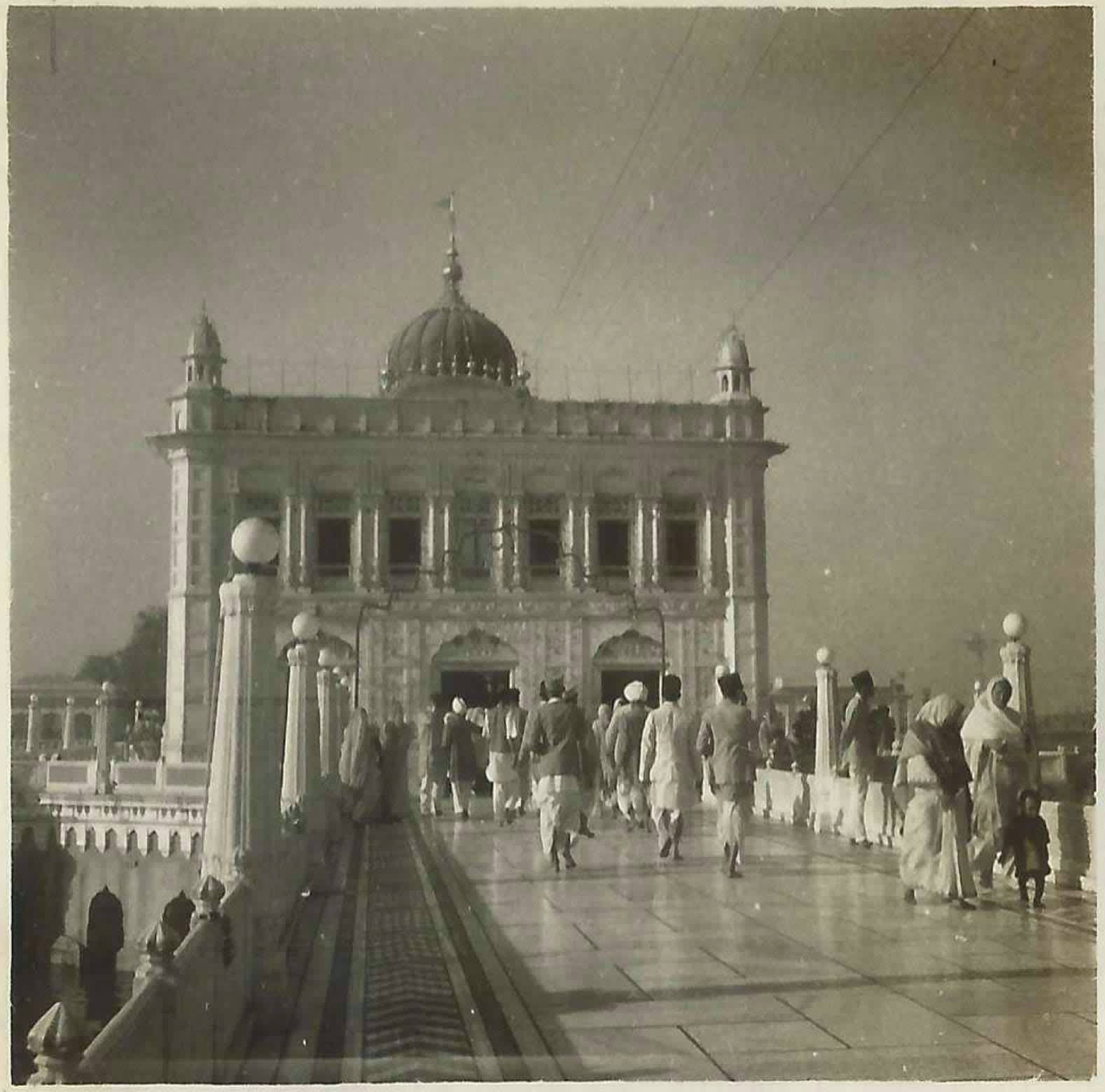
Durgiana rises from the middle of its tank. You reach it along a causeway. There is a gilded central dome, there are canopied turrets at the corners, there is marble, and the entrance carries a set of very large, very worked silver doors — which is why half of Amritsar calls it the Silver Temple and nobody minds.
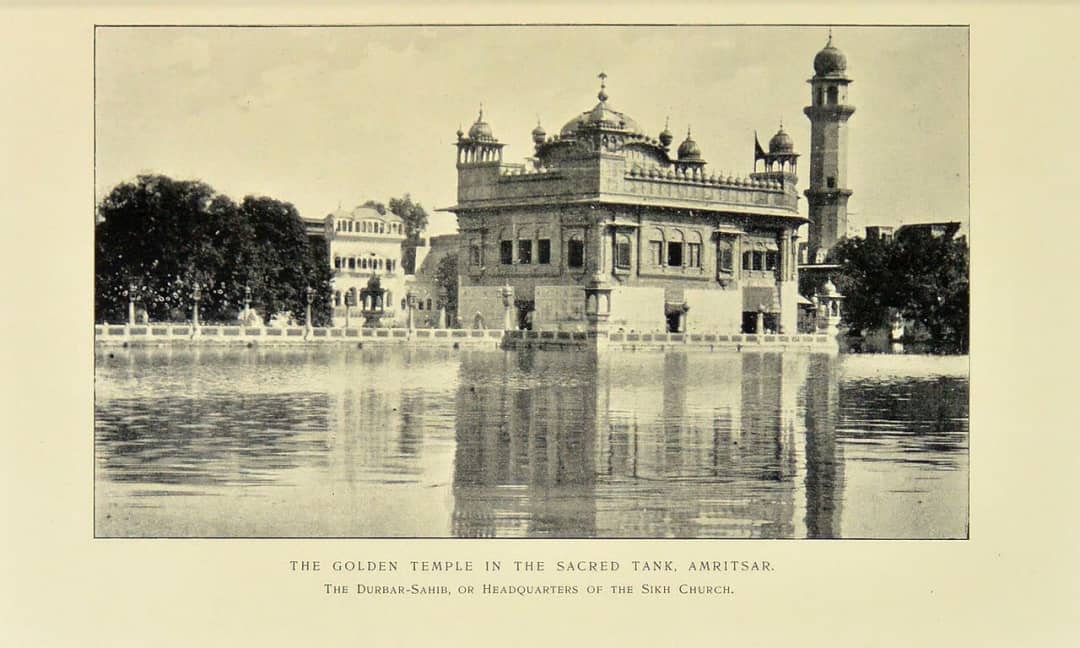
It is a Hindu temple built in the architectural grammar of a Sikh one, and it is worth being precise about what that means. It is not a copy and it was never a rebuke. It is a building put up in Amritsar by people from Amritsar, in the visual language that Amritsar already spoke. If you had asked a mason in this city in 1921 what a serious place of worship looks like, he would have described a structure standing in water, reached by a walkway, with a dome that catches the first light. That is simply what the word meant here.
Cities do this. The shape of the most loved building in town becomes the local dialect, and everything built afterwards speaks with the accent.
What a Tuesday actually sounds like
Go on a weekday morning and the complex is running at a low idle. There is a bell near the entrance that somebody strikes every ninety seconds or so — it never quite settles into a rhythm. There is the flap of pigeons off the parapet. There is the specific scuffing sound of a lot of bare feet on wet marble, because the parikrama is always a little damp.
And there is smoke, more or less constantly, from the shrines around the edge of the tank. The main sanctum keeps Durga, with Lakshmi and Vishnu worshipped here as well, and there are smaller shrines around the complex — Sitla Mata among them — each with its own thin blue thread going up.
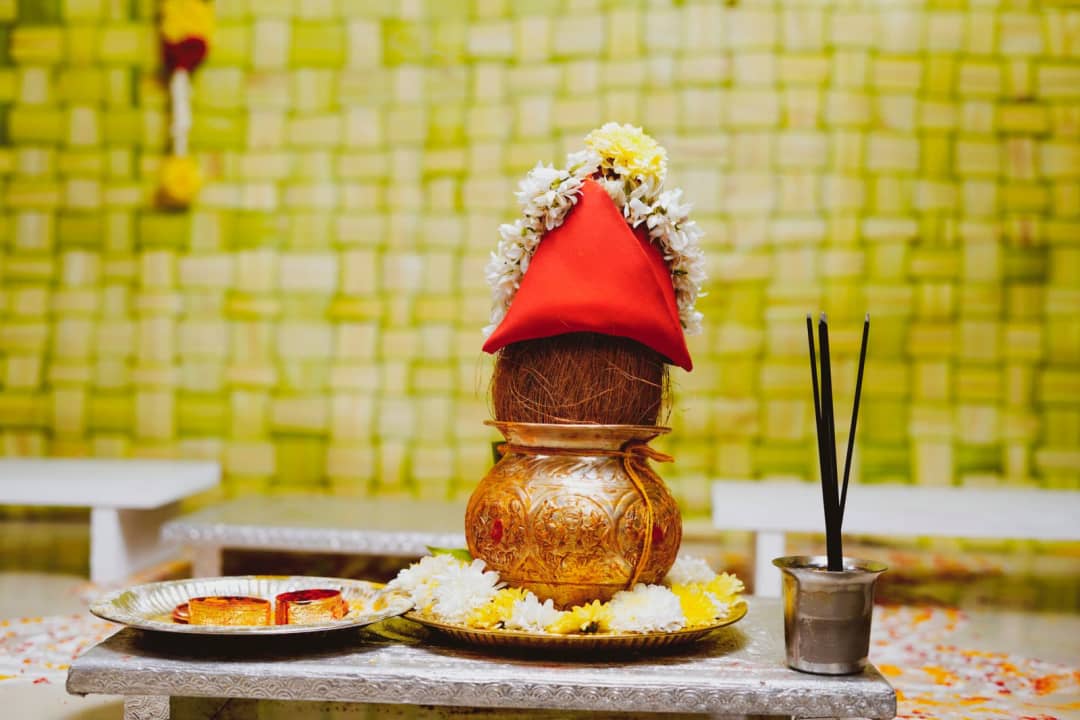
The lane leading in sells what every temple lane sells: marigold strung into arm-lengths, coconuts, red cloth, and bundles of agarbatti stacked in every direction — including the hand-rolled kind still made in Samastipur, which travels further than people assume. Nobody here is agonising over fragrance notes. They buy the bundle, they light three, they move on.
A mile away, nothing is waved
This is the part visitors find strange, and it is worth understanding rather than glossing over.
At Harmandir Sahib, the other temple on the other tank, you will not see an aarti thali circling a flame. The Sikh Rehat Maryada, the code of conduct, is explicit that performing aarti with burning incense and lamps, offering eatables to the Guru Granth Sahib, and beating gongs are contrary to Gurmat. What it also says — and this gets dropped in the retelling — is that for the perfuming of the place, the use of flowers, incense and scent is not barred, and lamps may be lit for light.
The line is not between fragrance and no fragrance. It is between fragrance as atmosphere and fragrance as an act of worship performed at an object. One city, two tanks, two grammars, and both of them entirely internally consistent. I am not going to adjudicate between them, and neither should a travel blog.
The corner nobody photographs
At the north-western corner of the Durgiana complex is Shri Bada Hanuman Mandir, and this is the part of the site with the deepest roots.
The temple's own account places Rama's Ashwamedha ceremony here, and holds that Sita lived nearby with Lav and Kush. In that story the twins seize the ceremonial horse, and when Hanuman arrives to recover it, they tie him up. The idol here shows Hanuman seated — unusual enough that the temple describes only one other like it, at Hanuman Garhi in Ayodhya.
Most visitors walk past this shrine on their way around the tank. For nine days a year, it is the only thing anyone comes for.
And then, for nine days
Navratri in 2026 runs from Sunday 11 October, with Ghatasthapana that morning, through Maha Navami on 19 October; Vijayadashami falls on Tuesday 20 October.
Through those days, Amritsar keeps a festival that is not garba and is not a golu. It is the Langoor Mela, and it works like this. A family makes a vow at the Bada Hanuman Mandir — for a recovery, for work, for a child. If the thing they asked for happens, they bring the child here dressed as a langoor: a silver costume, headgear, ornaments, bells. The child is bathed first, then walked to the temple in a small procession, and returns every day for the nine days.
The household keeps rules while it lasts. Barefoot. Sleeping on the floor. Sattvic food. Not staying in other people's houses. Thousands of families do it, some flying in from abroad to do it, and the lanes around that quiet tank fill up with small silver figures moving in the wrong direction against the crowd.
I should be plain here: I have walked past the mela. I have never been one of the families keeping the vow, and what I have written above is what the temple and those families say about it, not something I can report from the inside.
Go on a Tuesday
If Amritsar is on your route, the sensible plan is not to choose between the two tanks. They are a short auto ride apart and they are both free and they are both open early.
But if you can, see Durgiana on a nothing sort of day, when the bell is irregular and the marble is wet and there are eleven people on the causeway. A place tells you more about itself when it is not performing. Then, if your dates happen to fall in October, come back and watch it turn into somewhere else entirely.


