
Gangotri: The Long Road to the Source of the Ganga
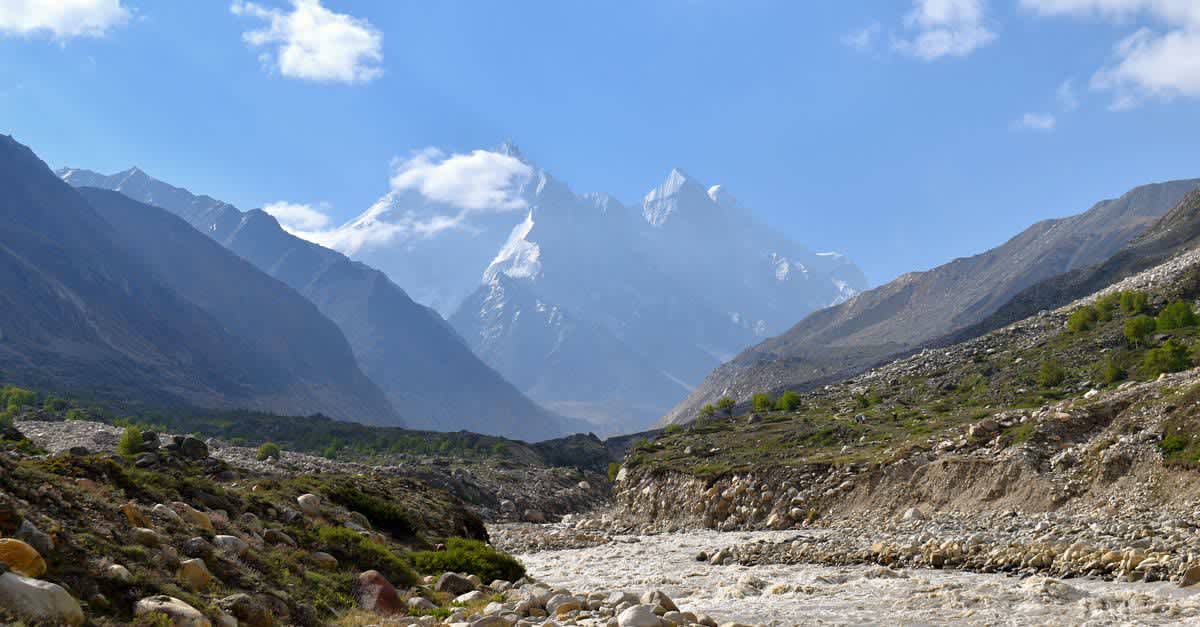
Where I come from, in the flat green paddy country of Mithila, the Ganga is an old, wide, patient thing. By the time she reaches Bihar she is a kilometre across in the rains, brown with the silt of half a subcontinent, carrying boats and funeral ash and the prayers of a hundred towns. You grow up thinking that is what a river is. It takes a journey to the mountains to unlearn it — to see the Ganga before she is the Ganga, when she is still a cold grey child running out of the ice.
That place is Gangotri, and getting there is half the point.
The road that keeps climbing
You leave the plains behind at Rishikesh and follow the river upward. For a long time it is the ordinary hill road — switchbacks, tea stalls, the smell of diesel and pine — and then somewhere past Uttarkashi the country changes. The valley narrows. The Bhagirathi, which is what the Ganga is called this high up, stops being a river you look down on and becomes a noise you live inside: white water crashing over grey boulders, loud enough that pilgrims stop trying to talk.
There are places to stop and remember. At Gangnani a hot spring steams out of the mountainside, and tired travellers climb down to bathe before the last stretch. Higher still, near Bhaironghati, the road crosses the Jadh Ganga gorge on a bridge so far above the water that looking over the rail makes your stomach turn — one of the highest bridges in the country, they will tell you, and you believe it. The forest here is deodar and blue pine, and the air has that thin, clean edge that means you have come a long way up.
Then, at a little over three thousand metres, the town of Gangotri appears — a huddle of guesthouses and dharamshalas and shops selling rudraksha and woollen caps, clinging to both banks of a river that is now the colour of the sky.
The white temple
The temple itself is smaller than a first-timer expects. It sits on the left bank, white granite, perhaps twenty feet high, with a modest shikhara — no towering gopuram, no gold. It was built, they say, by the Gorkha general Amar Singh Thapa in the eighteenth century, and rebuilt later by the royal house of Jaipur. For a shrine that marks the source of the holiest river in the Hindu world, its plainness feels exactly right. The Ganga does not need a palace. She has the mountains.
Inside, the deity is Ganga herself, worshipped as a goddess. And here is a detail that says everything about how life works at this altitude: the temple is only open for about six months. It opens on Akshaya Tritiya in spring and closes around Diwali, and when it closes the priests carry the goddess down the valley to the village of Mukhba, her winter home, where she is worshipped through the snow-bound months. The gods, like everyone else in these mountains, come down before the passes shut.
Near the temple the river drops through two rock basins the pilgrims call Gauri Kund and Surya Kund, the water so cold and fast it is white. And on a boulder in the stream, when the level is low in winter, you can sometimes see a natural rock shaped like a Shivling — the exact spot, tradition holds, where Shiva stood.
Bhagirath's penance
Because that is the story woven through this whole valley, and it is worth telling as the pilgrims tell it.
The sage-king Bhagirath, the story goes, did penance here for the sake of his ancestors, whose ashes needed the touch of the celestial Ganga to find peace. He stood in prayer so long that the river agreed to descend from heaven. But her fall would have shattered the earth — so Shiva stepped in and caught her in the coils of his hair, letting her down gently, threading her out through his locks so the ground could bear her. That is why the Ganga is also called Bhagirathi, after the king whose stubbornness brought her down, and why, in a Mithila painting of the descent, you will see the river drawn as a woman pouring out of the god's hair in a single unbroken line.
I grew up watching the women of my district paint that line — the aripan drawn on the courtyard floor, the fish and the lotus and the flowing water rendered as pattern, the same way for a thousand years. Standing beside the real Bhagirathi at Gangotri, watching her come down white and furious out of the rock, you understand where the pattern came from. Someone stood here first, and tried to draw what they saw.
Not far from the temple is the Bhagirathi Shila, the rock where the king is said to have sat in penance. Pilgrims touch it. Some sit for a while, as if to borrow a little of that patience.
On to Gaumukh
But Gangotri town is not quite the source. The true source is another nineteen kilometres upstream and on foot — a trek through the high meadows and moraine of the Gangotri glacier to a place called Gaumukh, the "cow's mouth," where the Bhagirathi actually emerges from beneath the ice. The glacier snout is shaped, or was once shaped, like a cow's face, and out of it the river is born: not a trickle, but a full grey torrent already, boiling out of a cave of blue ice with the great Bhagirathi peaks standing over it like guardians.
Many pilgrims do not make the walk; the altitude is serious and permits are required now, to protect a glacier that is retreating year by year. But those who do stand at Gaumukh come back changed. To have followed a river from the wide brown mouth of it in the plains all the way up to the cold place where it leaves the mountain is to have read the whole life of something in reverse.
Home fragrance and the incense trade have their own quiet link to these dhams — our own Char Dham range borrows Gangotri's name, the way households far from the mountains keep a little of a place they may never reach. But the river needs no such help to be remembered. She carries her own name down four hundred miles of plain.
What you carry back
You go up to Gangotri for the darshan, for the goddess, for the cold clean air and the story. You come back with something plainer than any of that: the memory of water so young it has not yet learned to be calm. In Bihar the Ganga is a mother — heavy, forgiving, slow. At Gangotri she is a girl running out of the ice, and it is good, once in a life, to have met her there before she grew up.


