Harsiddhi Deep Stambh: How Ujjain Lights 1,011 Lamps
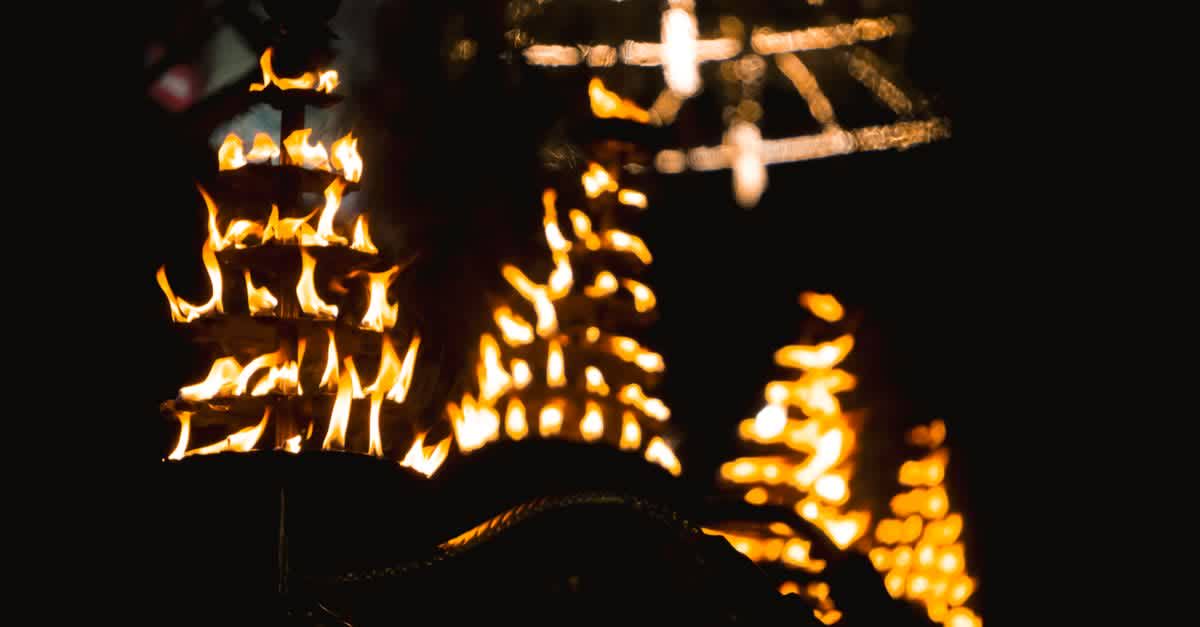
Before the first flame goes up at Harsiddhi, there is a sound. Tin oil cans set down on stone, and then a long scrape as a ladder is walked into position against one of the two pillars. If you are in that courtyard in Ujjain at around six in the evening, the sound reaches you before any light does, and the crowd goes quieter for it.
The pillars are the reason to be there. Most people come to Ujjain for Mahakaleshwar and give Harsiddhi twenty minutes in the afternoon, which is the wrong twenty minutes. The shrine at midday is calm and plain. The shrine at dusk is a different building.
What the temple is
Harsiddhi Mata stands a short walk from Mahakaleshwar, off the lane that runs toward the Rudra Sagar tank. It is counted among the Shakti Peethas, the places where, in the telling, parts of Sati fell to earth; here the relic is said to be her elbow. Lists of these sites disagree with each other, as they always have. Most of the local ones place Harsiddhi thirteenth of fifty-one.
The arrangement inside is worth a slow look. The central image is Annapurna, painted in a deep vermilion that gets renewed rather than restored, seated between Mahalakshmi and Mahasaraswati. A Sri Yantra is set before the deity. Tradition credits the original shrine to Vikramaditya, whose name is attached to a great many things in this city. The building you actually walk into is Maratha, rebuilt in the eighteenth century, and the lamp pillars belong to that rebuilding. They are not ancient. Nobody at the temple claims otherwise, and it does not diminish them.
The pillars, and the argument about the number
Two of them, one on each side of the courtyard, black stone, the surface broken into small projecting cups from base to crown. Ask three people how tall and how many cups and you will get three answers. The height is usually given as about fifty feet. The count is usually given as 1,011 across the pair — that is the figure the temple itself tends to use, and the one printed on most boards in the city. Some accounts say 1,111. At least one careful survey counts 726 holders. Nobody appears to have settled it, and once the lighting starts you will understand why nobody has tried very hard.
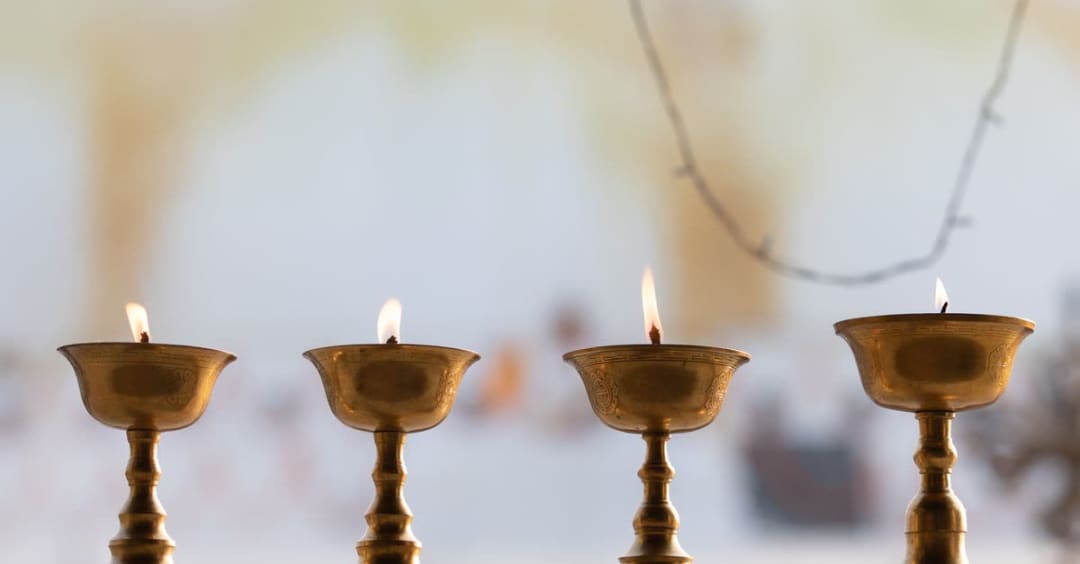
What matters practically is that a cup is small. It takes a spoon of oil, not a cup of it, and a wick about the length of a finger joint. Multiply that by a thousand and you have the whole job.
How the half hour before aarti is actually spent
The preparation begins long before the crowd notices. Each cup carries carbon from the previous night, and carbon in the bottom of a lamp makes the next wick sit wrong and gutter early, so the cups get wiped out. This is unglamorous, repetitive work done in the afternoon heat by people you will not see when you arrive at dusk.
Then oil. It is measured rather than poured freely, and for a reason at each end. Overfill a cup and the oil creeps over the lip and runs down the face of the pillar, which wastes it and leaves a streak that has to be cleaned. Underfill it and the wick drinks the lot and dies partway through the aarti, which leaves a dark gap in a tower of light — the kind of gap that photographs badly and, more to the point, looks like carelessness in front of the goddess.
Wicks are cotton, twisted rather than bought, and they are set leaning against the inner edge of the cup so the flame stands clear of the stone. Ladders go up. Several men work at once, each taking a band of the pillar, and the flame travels from cup to cup on a long taper. The lighting is not synchronised and does not try to be. What you watch is a slow filling-in, one horizontal band brightening while the band above it is still dark, until the pillar has no dark left in it.
This takes roughly half an hour. It begins somewhere around a quarter to seven and moves with the season, because it is timed to the aarti and the aarti is timed to sunset, not to a clock. Then the aarti begins, and the two pillars burn through it.
The thing worth knowing, and the thing most visitors get wrong, is that this happens every evening. It is not a Navratri event. The lamps are lit on an ordinary Thursday in June with nobody much watching.
What Navratri actually changes
This year the nine nights run from Sunday 11 October, when the ghatasthapana is done, to Monday 19 October, which is Maha Navami. Dussehra falls on Tuesday 20 October.
Across those evenings the lighting itself is the same work. What changes is everything around it. The courtyard fills by late afternoon rather than at dusk. The lane in is managed, sometimes in one direction only. The temple keeps longer hours and the aarti runs against a wall of sound rather than in relative quiet. Families who come once a year come now, which means children on shoulders and a great deal of patient standing.
Ashtami and Navami are the two nights when the crush is real. If you have a choice and you want to actually see the pillars rather than the backs of heads, take one of the first four evenings. The lamps do not know which night it is.
There is also more incense in the air in that week than in any other, and it is worth noticing what it is doing. A lamp is offered light; the smoke is something else, a marker that the space has been made ready. In our own workshop the stick named Mahakaleshwar belongs to the Jyotirlinga range, and it exists because the temple a few lanes from here has a character people want to keep at home.
If you are going
Come at six, not at quarter to seven. The preparation is the interesting part and you cannot see it once the courtyard is full.
Stand near the base of a pillar first, where you can watch the hands and the tapers. Move back afterwards if you want the whole tower in one view — the far side of the courtyard is where that works.
Do not offer to help and do not try to light a cup. It looks like devotion and it is a hazard on a ladder in a crowd.
Ask at the temple for that evening's timing rather than trusting a number you read somewhere, including this one. It moves with sunset, and it moves again during the nine nights.
The small version of it
Most people reading this will not be standing in Ujjain on 13 October, and the point of the pillars does not depend on scale. One lamp on a threshold is the same act.
If you want it to burn properly for an evening rather than for ten minutes, the same rules apply as on the pillar. Wipe the cup out first. Use oil rather than ghee if it has to last. Twist your own wick, keep it thin, and lean it on the rim so the flame stands off the clay. Fill to a little below the lip.
That is the whole technique, and it is unchanged between a fifty-foot tower and a saucer on the floor by your door. Somebody works out the details once, and then a thousand evenings follow.