
Hartalika Teej Away From Home: A Letter to My Niece
Dear Rinki,
So you are keeping Teej this year. In Toronto. Without your mother in the next room to tell you exactly what you are doing wrong. Your message made me laugh — married eight months and now, suddenly, you want the whole Hartalika procedure, step by step, "before it's too late." Beta, you had twenty-four years to watch your mother do it, and you spent most of them on your phone. But never mind. I am not one to lecture. I will tell you everything I know, and a few things I only learned by watching the women in this house get quietly annoyed at the men.
First, the practical bit. This year Hartalika Teej falls in the middle of September — the Tritiya of Bhadrapada, the third day of the bright fortnight. Panchang timings shift by a few hours depending on where you are, so check a proper calendar for Toronto and do not just trust what your friend in New Jersey tells you. The tithi is short. Miss the window and the whole fast slides to the wrong day.
What Teej actually is
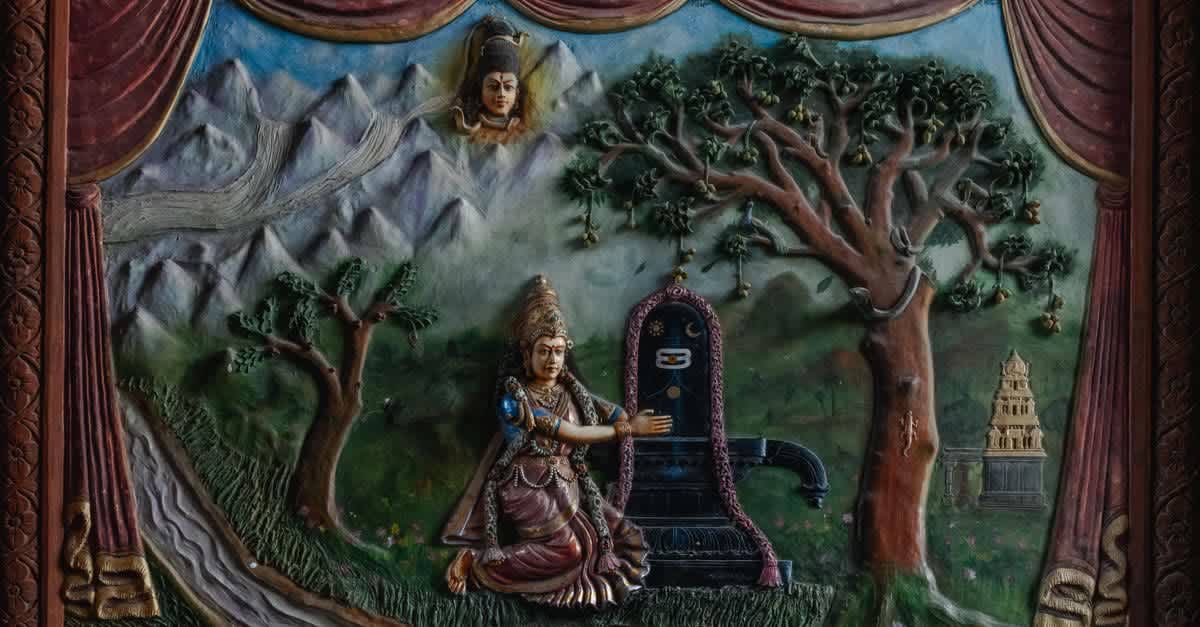
You know the shape of the story even if you have forgotten the details. Parvati wanted Shiva and no one else. Her father had other plans — one telling says he had all but promised her to Vishnu. So her friends did something drastic: they carried her off into the forest so the marriage could not happen. That is where the name comes from — harat, taken away, aalika, the girl friend. In the forest she made an idol of Shiva out of river sand and sat in penance until he agreed to have her.
That is the whole point of the day. Married women keep the fast for a long life for their husbands. Unmarried girls keep it asking for a good one — though in your case, beta, that ship has sailed, and by all accounts you did fine. It is Parvati's fast, and it is done the way she did it: with sand, with patience, and with more stubbornness than food.
The fast is the hard part, and I will not pretend otherwise
Hartalika Teej is nirjala. No food, no water, for a full day and night and into the next morning. Not "no rice, but some fruit." Nothing. Not even water. This is one of the strictest fasts a woman in our part of the country will keep all year, and she keeps it in September, when Bihar is still sweating.
I will be honest with you, because your mother will not: I have never once managed a nirjala fast past noon without inventing an emergency. Neither has your uncle. Neither, if you ask him after two cups of tea, has the pandit. The men in this family talk a great deal about devotion and then go looking for the water pot by eleven. The women simply do it, every year, without announcing it. Your nani kept this fast into her seventies. So when your husband tells you it is "just skipping meals," you may show him this letter.
A word of sense, though, since you are far from home and no doctor of ours can look at you: our tradition is strict, but it is not stupid. If you feel faint, if your body genuinely cannot, you sit down and you take water. Parvati was testing her own resolve, not punishing herself into the ground. Keep the fast as fully as your health allows and not one inch further. The intention is what is being weighed, not your stubbornness.
The clay Shiva and Parvati
This is the part people abroad skip, and it is the part that actually matters. You do not worship a photo for Teej. You make the deities. Sand or clean clay, shaped by hand into a little Shiva and a little Parvati — Gauri and Shankar — and usually a small Ganesha beside them. Nothing fancy. They are meant to be humble and made by you, because that is exactly what Parvati did in the forest.
Then you offer what the season gives: belpatra if you can find it, flowers, whatever fruit you have, the sixteen items of a married woman's shringar if you are keeping it fully — bangles, bindi, sindoor, comb, the small things. In Toronto you will not find bilva leaves at the corner shop. Do not tear yourself apart over it. Offer flowers you can actually get. Parvati made do with a riverbank. You can make do with a Canadian September.
The night, and what the house smells like
The evening before, the women eat a proper meal after moonrise — light, satvik, no onion or garlic — because once the fast begins there is nothing until it is broken. Then comes the long part: the jagran. You are supposed to stay awake through the night near the deities, singing, telling the Hartalika katha, keeping the lamp going. In our lane the older women gather in one house and it turns into something between a prayer and a very slow party. There is a lot of singing and, I suspect, a fair amount of gossip between verses. This is not a failing. It is how the night passes.
And there is the smell. I make incense for a living now — you know this, the whole family teases me for it — so you will forgive an old man his one professional opinion. Through a Teej night in this house it is chandan in the evening and mogra later on. Sandalwood settles a room; mogra fills it. If you want the night in Toronto to feel even a little like the one you grew up half-asleep through, light something honest and floral rather than the chemical thing from the supermarket. A clean-burning mogra or sandalwood stick does more to carry you home than you would think. Your nose remembers what your calendar forgot.
Doing it in a flat in Toronto
Here is my real advice, now that I have given you the textbook. You are going to be doing this alone, or nearly, in a small apartment, tired from work, with no river and no lane full of aunties. So keep it simple and keep it true.
Make your little clay Shiva and Parvati on a steel plate. Keep water nearby in case your body needs it. Light your lamp and your incense. Do the fast as fully as you sensibly can. Sing if you know the songs; play your mother's recording if you do not. Break the fast the next morning the way she taught you — she will tell you the exact minute if you call her, and she will be delighted you asked.
Do not perform it for a phone. Teej was kept in a forest with no audience at all. That is the model.
One last thing
You wrote that you were worried you would "do it wrong." Beta, listen. Your mother is going to keep this same fast on the same day, half a world away, and somewhere in it she will be thinking of you keeping yours. That thread between the two of you — the same clay, the same lamp, the same going-without on the same afternoon — is the entire festival. The rituals are just how we hold onto the thread.
Get the date right, keep the fast honestly, be kind to your own body, and let the rest be love. You will not do it wrong.
Write to your mother. And send a photo of your little Gauri-Shankar so we can all judge your sculpting.
With love, Your Manish chacha Muzaffarpur


