
Lolark Shashthi: Varanasi's Oldest Sun Shrine
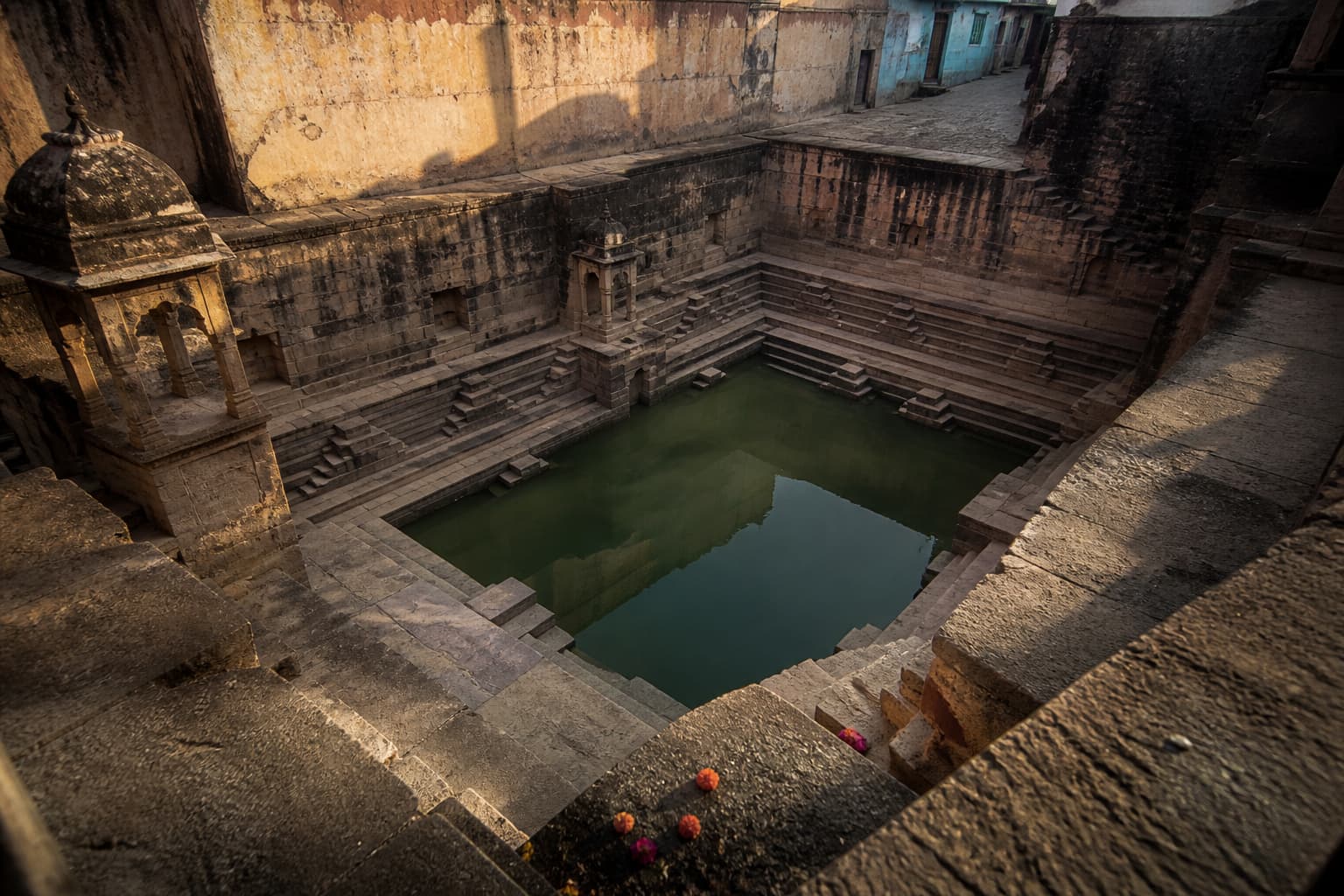
There is a corner of Varanasi that most visitors walk straight past. It sits a little south of Assi Ghat, in the lane at Bhadaini, and for most of the year it is quiet — a deep, rectangular tank sunk well below the level of the street, its stone steps descending steeply into green water. Ask directions and people will point you to it without much ceremony. Then, on one morning in the month of Bhadrapada, the same lane cannot hold the crowd. Families arrive in the dark, some having travelled two days by train, and by first light the steps are packed shoulder to shoulder. This is Lolark Kund on Lolark Shashthi, and it is one of the oldest continuously used sacred sites in a very old city.
What is being observed
Lolark Shashthi is a festival of the sun. The name tells you so plainly if you know the words: arka is one of the old Sanskrit names for the sun, and lola means trembling or restless. The "restless sun" — the light that shivers on moving water at dawn. Lolark is counted among the twelve Adityas, the twelve forms of Surya, and this kund is his shrine in Kashi.
That is worth pausing on, because Varanasi is a city of Shiva. Everything here bends toward the Vishwanath temple and the Ganga. Yet under that Shaiva surface runs an older, quieter layer of sun-worship, and Lolark is its most stubborn survival. Long before the ghats took their present shape, pilgrims were coming to this water to face the rising sun. The Kashi Khanda, the medieval text that maps the sacred geography of the city, already treats Lolark as an ancient tirtha — old even to writers who were themselves writing centuries ago.
When it falls
Lolark Shashthi is kept on the sixth day of the bright fortnight of Bhadrapada — Bhadrapada Shukla Shashthi. In 2026 that day falls in the middle of September, on the 16th, a couple of days after Ganesh Chaturthi. Because it follows the lunar calendar the date moves every year, so it is always worth checking a current panchang rather than trusting last year's memory; the tithi can shift the observance by a day depending on when the sixth day touches sunrise.
Bhadrapada is the tail of the monsoon here. The Ganga is high and brown, the mornings are warm and wet, and the sun, when it burns through, is fierce. It is a fitting month to turn back toward Surya after the rains.
Why families come
Most who come to Lolark Kund on this day come with a single, particular prayer: for a child. Lolark Shashthi is, above all, a fertility vow. Couples who have not been able to conceive bathe together in the kund at dawn, offer arghya — water lifted in cupped hands and poured back toward the sun — and take a vow to return.
There is a custom attached to the bathing that outsiders often find striking. A couple descends into the water in the clothes they arrived in, bathes, and then leaves those worn clothes behind at the kund, climbing back out in fresh ones. The old garment is given up on purpose. The meaning people attach to it is straightforward enough: you shed the old life, the old waiting, and step out changed, asking to be given something new. Alongside the clothes, families offer fruits and vegetables of the season — pumpkin, cucumber, gourd — set down at the water's edge.
Those who conceive after making the vow are expected to come back with the child, to bathe it in the same water and complete what was begun. Talk to the older women managing the crowd and they will tell you, matter-of-factly, which families are first-timers and which have returned with a toddler on the hip. Whatever one makes of the belief, the continuity is real: the same water, the same steps, the same month, held across more generations than anyone can count.
The kund itself
The tank is the thing to understand. Lolark Kund is not a pond at ground level; it is a well of stone that drops perhaps fifteen metres below the street, with steep flights of steps running down all four sides to the water. Standing at the top rail you look down into it as into a stepped pit. On an ordinary day the scale is quietly impressive. On Shashthi, with the steps full of people moving down to bathe and back up dripping, it becomes something else — a slow, dense, careful choreography, everyone mindful of the drop and the crowd.
Its age is the point. Kashi has been razed and rebuilt many times; a great deal of what a visitor sees is only a few centuries old. Lolark Kund is one of the places that kept its spot through all of it. To stand at its edge is to stand where sun-worshippers have stood for a very long time indeed, which is a rarer thing than it sounds.
The wider thread
If any of this feels familiar to a reader from Bihar or eastern Uttar Pradesh, it should. The heart of Lolark Shashthi — standing in water at dawn to offer arghya to the sun, a vow made for the family's future — is the same heart that beats in Chhath, the great sun-festival of our region a few weeks later in the year. They are not the same festival, and the scale is very different, but they draw on one old current: the sun as the plainest, most reliable god there is, the one who actually rises every morning whether or not anyone is watching.
That current runs quietly under a lot of what we do here. In our own workshop in Samastipur, the day still starts before the sun is properly up, and the first thing lit is not electric. There is something in facing the east at that hour — with a lamp, with a stick of Kashi Vishwanath incense, with cupped water at a kund — that people have found steadying for as long as there have been mornings. Lolark Shashthi is one of the oldest surviving forms of that instinct, kept alive in a single sunken tank in a city that is otherwise entirely given over to Shiva.
If you want to see it
Go early. The bathing begins well before dawn and the lane is easiest before the full crowd arrives. It is a working pilgrimage site, not a monument — people are there to keep a vow, not to be watched — so it asks the ordinary courtesies: dress plainly, do not photograph people at the water without asking, keep out of the way of anyone carrying a small child down those steep steps. Lolark Kund is a short walk from Assi Ghat, which makes it easy to fold into a morning that also takes in the river.
And if you cannot go — if you are reading this in a flat in London or Toronto, far from any kund — the festival still gives you something to keep. The sixth morning of the bright fortnight of Bhadrapada, you can turn to the east yourself, at your own window, and mark the sun's return. That, in the end, is all Lolark ever asked of anyone.


