
Narali Purnima: The Coconut Given Back to the Sea
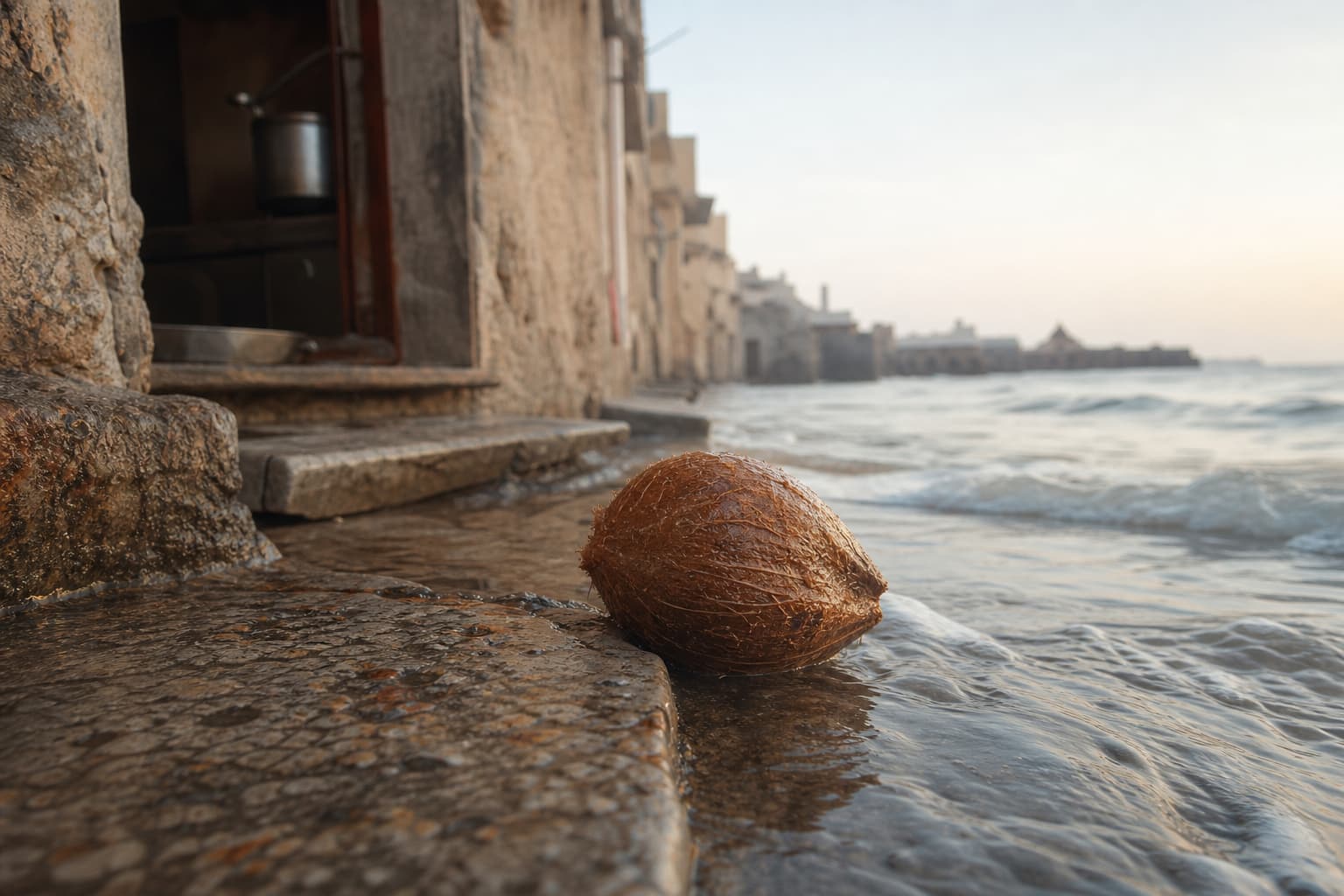
My grandmother could hear the tide from her kitchen. I could not, for years, and I thought she was making it up — an old woman's way of saying the morning was late. But she was right. The house in Dwarka stood four lanes back from the water, and if the doors were open and the town was quiet, the sea came in under everything else, a long even breathing that she used the way other people use a clock. On the full moon of Shravan she would stand at the stove with her head slightly turned, listening past the jaggery, and say it was almost time.
That full moon has three names on our coast. The pandit calls it Shravan Purnima. The rest of India ties rakhis and calls it Raksha Bandhan. But among the boat families of Saurashtra and Kutch it is Narali Purnima — naral is coconut — and it is the day the sea is given a coconut and asked, politely, whether the men may come back onto it.
Why the sea gets asked first
Through the monsoon the boats do not go out. The weather is against them, the water is unsafe, and for generations the fishing communities of this coast — the Kharwa families, above all — have simply kept ashore from the rains until Shravan. Narali Purnima is the morning that hold breaks. It marks the end of the monsoon season and the opening of the seafaring one. The nets that have been mended all through July are carried down. The boats that have sat pulled up on the sand, repainted, blessed, are pushed back toward the water.
You do not do that without asking. The sea here is not scenery; it is the thing that feeds you and the thing that can keep you. So before a single boat goes out, the coast brings the sea a gift. A whole coconut — husked or in its fibre, depending on the family — carried down at high tide and offered to the water. With it go flowers, a little rice, and incense lit at the shoreline, the smoke bending flat in the sea wind. The prayers are made to the sea itself: to Varuna, to Samudra, and in the Kharwa households to Dariyalal, the sea-lord they have carried in their own line for as long as anyone can name. The coconut, three-eyed and unbroken, stands in for a head bowed. We are asking. Give us a good season, and give us the men back.
I did not understand any of that as a child. What I understood was the kitchen.
The kitchen, two days before
My grandmother started two days early, because the coconut on Narali Purnima is not only for the sea. It comes back into the house as sweets, and those take time. She would sit on the low wooden patlo with the dark half-coconut and the iron scraper fixed to it, and turn out a soft white heap of fresh coconut that we children were forbidden to touch and stole anyway. The jaggery went into the heavy pan. Then the coconut, then a thread of cardamom, and the whole kitchen would turn warm and brown-sweet, the smell getting into your clothes so that you carried it to school.
Narali bhaat — the sweet coconut rice — was the one she was known for, glassy with jaggery, the rice grains standing separate. And the round naralache ladu, coconut and jaggery pressed in a wet palm. She made far more than we could eat, and I only understood why much later: half of it went out of the house. To the boat families down the lane, to the widow two doors along, to the temple. On this coast you do not keep the whole coconut. That is the entire point of the day. You give some of it back.
Somewhere in those two days she would open the tin where she kept the year's incense and set a few sticks aside for the morning of the walk — the same shore-facing offering the boat families made, only ours was made from a doorstep. It is a small thing, and I am putting it here plainly because it is true: making incense for exactly these mornings is the trade my own family later took up, and among the temple fragrances we roll there is one carried under the name of Dwarkadhish himself, the lord of this town. But the coconut came first, and the incense only walked beside it.
The walk down at high tide
The offering waits for the water to come in. You do not give the sea a coconut at low tide and make it reach for it. So the walk down is timed to the high water, and on a full-moon morning that tide is a big one — the moon pulling it up the sand further than on ordinary days. That is the tide my grandmother heard from her stove.
We went down in a loose line, the coconut carried in front, past the boats lying on their sides with their eyes painted on the bows. The Arabian Sea at Dwarka is not gentle-looking water; it is wide and grey-green and busy, and the town's temple flag stands up over it, changed and changed again through the day so it is never still. At the waterline the older men said what needed saying. The coconut went out on the next big wave, sometimes swimming, sometimes carried a little way and set down. The incense was lit and pushed into the wet sand so it stood, and the smoke went sideways and was gone almost at once, which the sea wind does to all incense and which nobody minds — the offering is in the lighting, not the lasting.
Then it was done, and it was Raksha Bandhan again, and there were rakhis and the coconut sweets and the rest of an ordinary festival day. But the sea had been asked, and for the boat families that was the hinge the whole year turned on.
What the day is actually about
I have come to think Narali Purnima is the most honest festival on our coast, because it admits what it wants. It does not pretend the sea is safe. It does not thank the water for a season already had; it asks, at the start, before anything is owed. The coconut is not a decoration. It is a bargain made in the open, at high tide, in front of the boats that will carry it out.
If you are far from any coast this Shravan Purnima, you can still keep the shape of it. Set a whole coconut out on the full-moon morning. If you scrape it for sweets, give half the plate away — to a neighbour, to whoever has less. Light your incense early, while the house is quiet, and if you happen to live where you can hear water, stand a moment with your head turned and listen past the stove.
My grandmother is gone now, and I live inland, and I cannot hear the tide from my kitchen. But on Shravan Purnima I still start the coconut two days early, and I still give most of it away, and for a few minutes the whole house smells the way hers did — jaggery, cardamom, and, from the doorstep, the thin blue thread of an incense stick lit for a sea I can no longer hear.


