
Navratri Vrat: Is Fasting Really What a Vow Means?
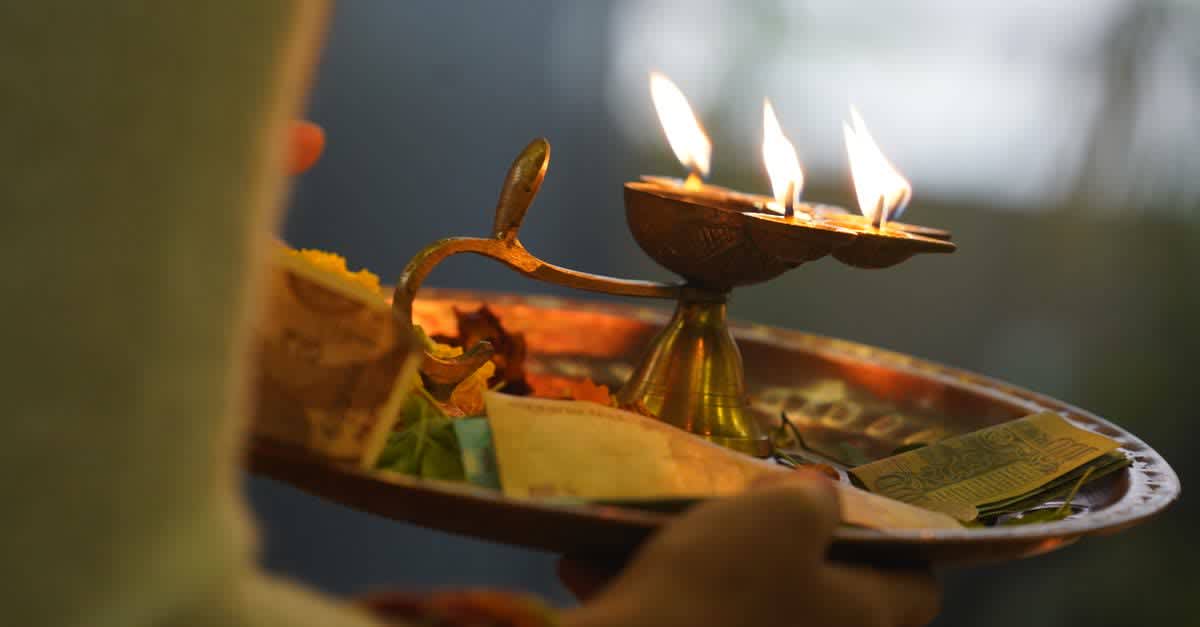
In Patna, when the shops begin stacking sacks of kuttu flour in the last week of September, the question people ask each other is not whether they are keeping the Navratri vrat. It is what they are eating. Sendha namak or nothing. Sabudana or singhara. One meal or two. Fruit only, or fruit and milk.
Somewhere along the way the vrat became a menu.
This year Navratri runs from 11 to 19 October, with Vijayadashami on the 20th, and by the first week of the month that same conversation will start again on every lane in the neighbourhood. I want to put a question against it, because I think the conversation has quietly swallowed the thing it was meant to serve. The widely held belief is simple: the fast is the vrat. Keep the food rules cleanly and you have observed Navratri. Break them and you have not.
I do not think that is quite true. I also do not think it is nonsense, which is exactly why it is worth laying out properly instead of waving away.
The word is older than the menu
Vrat carries the sense of a vow — an observance you bind yourself to for a stated stretch of time. The food restriction is the form that vow usually takes. It is not, by itself, the vow. That distinction sounds academic until you watch what happens in a real household, where the two come apart all the time.
The case for taking the food rules seriously
Let me put the strongest version of the common belief first, because it is stronger than the people who dismiss it usually admit.
A rule you feel in your body will not let you forget. A resolution made in the head is gone by Wednesday. Hunger is not. If the point of nine days is to keep something in front of you, an empty stomach at four in the afternoon does that far better than any quantity of good intention.
It is shared, and that matters. The kitchen changes. The shopping changes. Someone is frying in the evening, someone else is asking whether the milk is finished, and a child is being told that today there is no rice. Nine days feel different from the other three hundred and fifty-six precisely because the whole household is doing something visible together. A private inner resolve does not do that for anybody but you.
It is checkable. You know by evening whether you kept it or not. Very little else in a religious life has that clean an edge, and edges are useful. Most people who abandon a practice do so because nothing in it was ever measurable enough to fail at.
And in Bihar we have a fairly unanswerable example. Chhath is the most demanding vrat many of us will ever witness — the nirjala fast, no food and no water, the long standing in the river at sunset and again before sunrise. Nobody who has watched their own mother do it comes away thinking the body is beside the point. The body is very much the point.
So the food rules are not a husk left over from something better. They are real, they are old, and they work.
And yet nobody quite agrees on what they are
Here is the first crack in the common belief, and it is worth sitting with before the larger objection.
Ask ten households on one street what the Navratri fast consists of and you will get ten answers. Some keep all nine days; many keep only the first and the last. Some allow milk and curd freely, some allow only fruit, some take one cooked falahari meal after sunset. Some families fast strictly on Ashtami and eat normally the rest of the week. In Bengali homes the same ten days are the biggest festival of the year, and the fast that carries the most weight is the one held on Ashtami morning until the anjali has been offered — not nine days of altered food at all.
None of these households thinks the others have failed. They are simply the practices their families carry. If the food rule were the whole substance of the observance, this much variation would be a scandal. It is not treated as one, and that tells you something about where the substance actually sits.
The case against treating the fast as the whole thing
The falahari plate has grown. Fried sabudana, kuttu puris, potatoes in ghee, fruit cream, and by the last week of September an entire shop aisle of packaged vrat namkeen. There are fasting days now that carry more on the plate than an ordinary Tuesday dinner. Something has drifted when the abstention arrives with a dessert.
It turns into a scorecard. A grain eaten by accident and the whole day is declared spoiled. Worse, people who cannot keep the food rules at all — someone on daily medication, an expectant mother, a person working a twelve-hour shift — conclude that Navratri is simply not available to them, and then observe nothing whatsoever. That is a real loss, and it comes directly out of believing the fast is the whole thing.
The visible half is the half that gets judged. Relatives ask what you ate. Nobody asks whether you were short with the neighbours, whether you gave anything away, whether you actually stood in front of the lamp for ten minutes on any of the nine evenings.
The kitchen can swallow the entire festival. This is the one I mind most. The person cooking the falahar is usually a woman, and she is very often fasting herself. She spends nine days frying for everyone else and gets less time at the mandir than anyone in the house. Fasting all day and standing at the stove all evening is not what the observance was ever for.
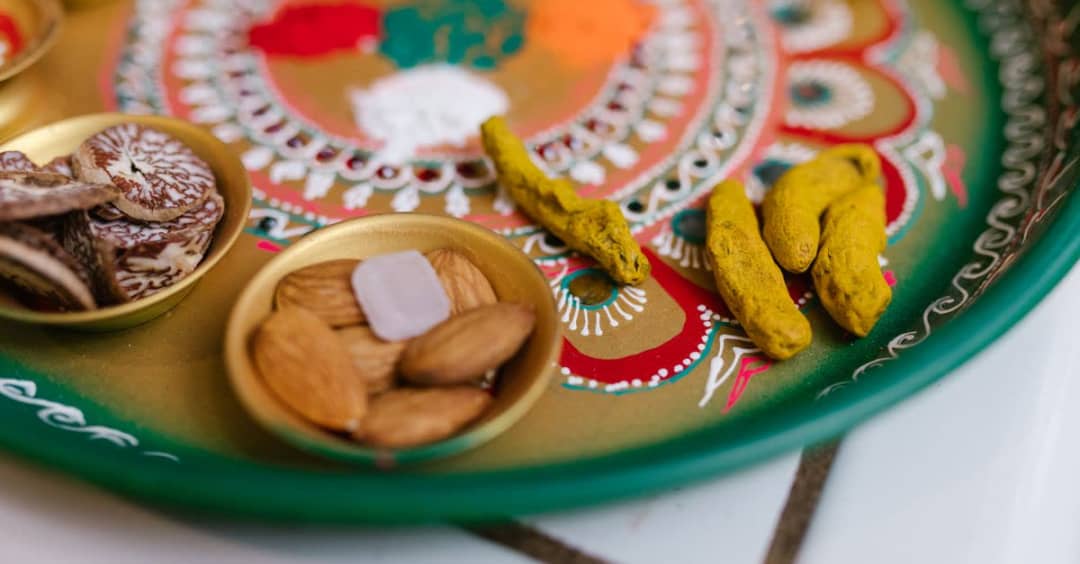
What the other half actually asks
If the fast is the frame, here is the picture it was meant to hold. None of it is difficult, and none of it takes long.
Say it out loud. The sankalp — naming the vow and its length before you begin — is the part most easily skipped and the part that makes it a vow at all. A vrat you never stated is a preference.
Stop one thing and start one thing. Abstention on its own leaves a hole. Pair it with an addition: a stotra you will read each evening, a person you will call, a plate you will send next door.
Keep one anchor at the same hour. Nine days hold together when there is a single fixed point in each of them. In my mother's house that was the evening lamp, and one agarbatti kept aside for Navratri and not opened again until the following October — the hand-rolled kind still made in Samastipur, a couple of hours north of Patna. That scent did more to mark the nine days as different than the sabudana ever managed.
End it deliberately. The paran, the concluding meal, is not an afterthought. A vrat allowed to fizzle out quietly teaches you that your own vows do not have edges.
Let somebody else cook one evening. If the fasting person is also the cooking person for all nine days, the observance has been handed to the wrong half of her day.
So here is what I actually think
The common belief is not wrong. It is half of a true thing, which is the hardest kind of error to argue with, because everything it says is accurate.
The food discipline is genuine. It is not a technicality and not a leftover custom, and if your body allows it, keep it properly — sendha namak, no grain, the whole of it. Most of the people I love keep it, and the house is better for it.
But it is the frame, not the picture. If you can only manage one half of the observance, keep the vow: state it, hold to it across the nine days, put something in the place of what you gave up, and close it properly at the end. A person who ate a chapati on the fourth day and stood before the lamp every single evening has observed Navratri. A person who ate nothing but singhara for nine days and never once stood still has eaten a great deal of singhara.
And if you are managing both, good. Only check, some evening around the sixth day, that the fast is still earning you something. If it has left you tired, short-tempered and entirely inside the kitchen, the rules have taken over the thing they were meant to serve.
Nine days is not very long. The lamp takes two minutes.


