
Panchakroshi Yatra: the Sacred Circle Around Kashi
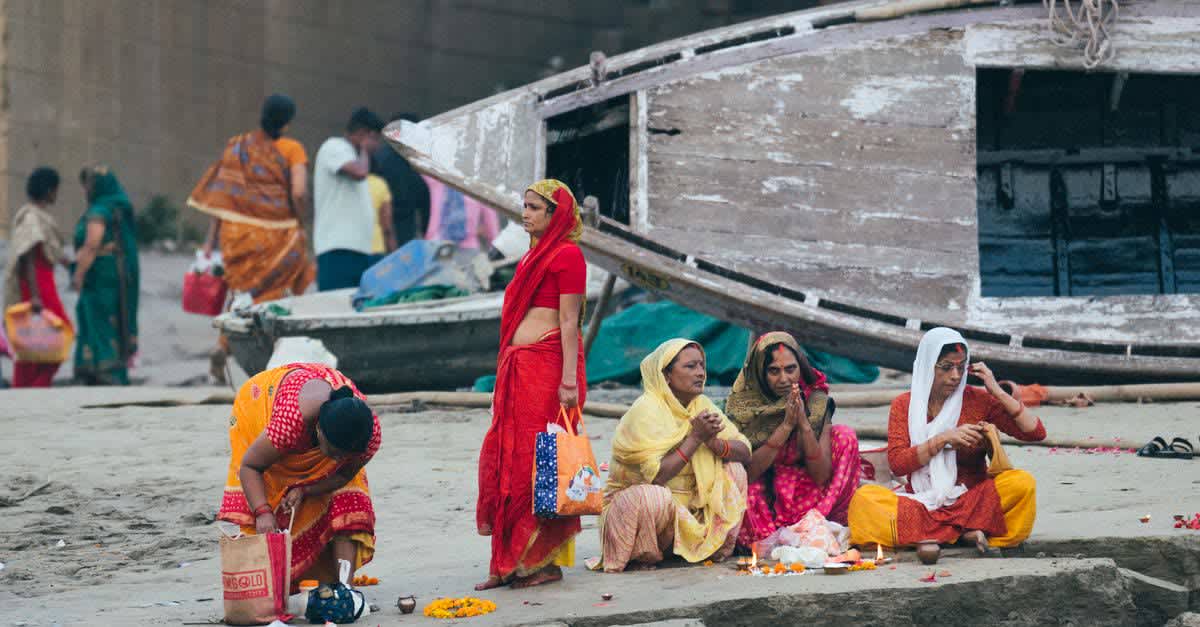
On a cold morning in Magh, before the lanes near my house in Varanasi have properly woken, there is a sound on the roads leading out of the city that you learn to recognise: bare feet, a great many of them, moving at the same unhurried speed. The people making it are not travelling anywhere. In five or six days they will arrive back at the same stretch of river they left from, having gained no distance at all.
That is the Panchakroshi Yatra, and it is one of the older things this city does. It is also one of the stranger ones, because its entire purpose is to draw a line.
A city with a measured edge
Most sacred places are vague at the boundaries. Kashi is not. The tradition holds that the holy territory of the city is a circle with a fixed radius, and it gives you the number: five krosha, a krosha being an old unit of roughly 3.2 kilometres. Five krosha comes to about 17.6 kilometres, or eleven miles. The centre of that circle is taken to be the shrine of Madhyameshvara, whose name simply means "the lord in the middle", and the point where the radius meets the edge is marked in the north by the shrine of Dehli Vinayaka — dehli as in threshold, the doorstep of the city.
Walk the circumference of a circle of that radius and you have covered twenty-five krosha: 88.5 kilometres, or 55.2 miles. That is the route. The name comes from the radius, not the distance — panch krosha, the five-krosha city, walked around its rim.
I find this quietly remarkable. Long before anyone in India was drawing municipal boundaries, somebody sat down and decided that holiness here had an edge, that the edge could be measured, and that the way to know it was to put it under your feet.
The texts that fixed the route
The circuit is described in the Kashi Khanda, the section of the Skanda Purana given over to the praise of Varanasi, and again in the Kashi Rahasya, a text usually placed in the sixteenth century. Between them they name the shrines, the halts and the vows, and later pilgrim manuals copied the sequence down more or less unchanged.
What interests me more than the scriptural sources is the evidence that people were actually doing it. From at least the fifteenth century the record of continuous performance is reasonably firm. And in 1538 a Marathi work, the Guru Charitra, describes the pilgrimage in enough practical detail that you can tell the author or his informants had walked it — where you stop, what you carry, how long it takes. A devotional text that bothers with logistics is a text about something people really did.
By the eighteenth century the walk had acquired permanent infrastructure, which is the surest sign of all that a tradition has taken hold. Somebody was paying for buildings.
The five halts
The route is divided into five legs, with a night's rest at the end of each. The stations, in sequence, are Kandwa, Bhimchandi, Rameshwar, Shivpur (also called Tarna) and Kapildhara, and from the last of these the road turns back toward the Ganga. The legs are not equal. Two of them run to something like sixteen kilometres, which on a winter day with no shoes is a long walk; others are short enough to finish before the heat arrives.
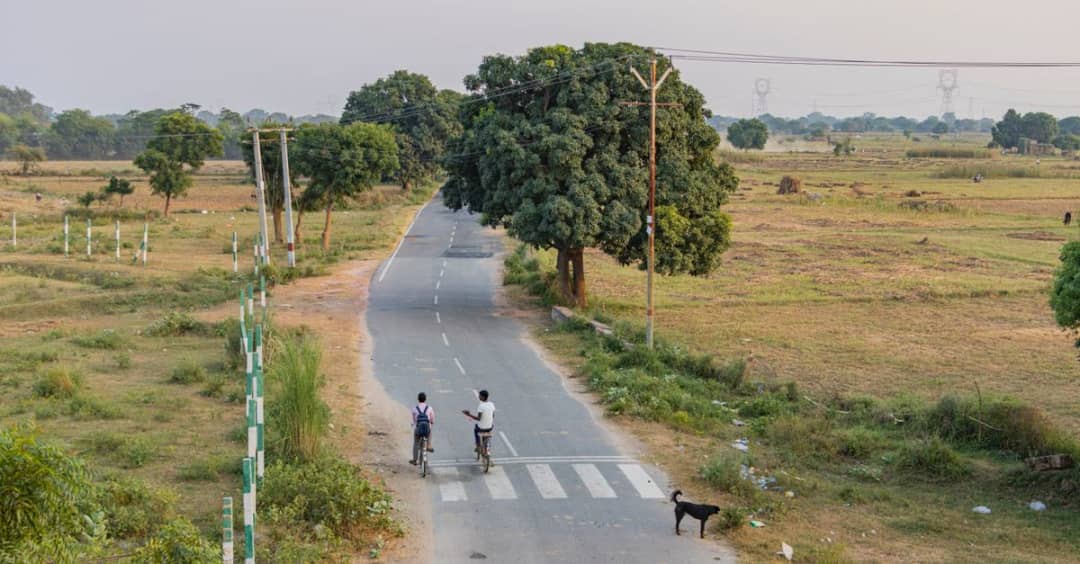
The first halt is the one I would send anybody to, even if they never walk another step of the circuit. At Kandwa stands the temple of Kardameshvara, and it has a distinction nothing else in Varanasi can claim: it is the oldest temple in the city still standing and still in use. The fabric you see is generally assigned to the twelfth or thirteenth century, to the period of the Gahadavala kings who ruled from here before the sultanate took the region; some of the sculpture on the outer walls is read by scholars as considerably older, in a style associated with the centuries around the Gupta period, and may have been reset into the later building.
What matters is what happened next. The demolitions of the seventeenth century took the great shrines of the city centre one after another, and the famous temples you visit in Varanasi today are, almost without exception, later rebuildings on older ground. Kardameshvara is the exception. It sat four kilometres out, on the pilgrims' road rather than in the city, and it came through. Standing in front of it you are looking at the only piece of medieval Kashi that was never knocked down — and it survived precisely because the walk went past it.
A hundred and eight stops
Along the circuit are counted 108 shrines. Thirty-six of them are associated with the bank of the Ganga, which tells you that a good part of the last stage runs within sight of the water.
If you go expecting 108 temples you will be puzzled. Many of these are small — a slab of stone under a pipal tree, a niche in a compound wall, an image no taller than your forearm, a tank with steps going down into it. Some sit inside somebody's field. The number itself is doing familiar work: 108 recurs through Indian counting of sacred things, tied to the lunar mansions and to the count of a rosary, and a pilgrim who touches all of them has said something with his feet that he might not be able to say in words.
What a halt looks like at night
Across the five stations there are, by one careful count, forty-four dharmashalas — pilgrim rest houses, most of them simple: a courtyard, a colonnade, rooms on two or three sides, a well or a tap. They were built by patrons who wanted the walk to be possible for people who could not afford to arrange anything for themselves, and they are still used exactly as intended.
The evening at a halt is the part of the yatra that travel writing tends to miss. Feet are washed and looked at. Someone starts a chant and a hundred tired people join in without being asked. There is usually a discourse, often on the very text that describes the route being walked. And there is smoke — lamp oil, camphor, and agarbatti of the ordinary hand-rolled kind, the sort still made a few hundred kilometres east of here in Samastipur, burning in a brass plate on a courtyard floor. By nine o'clock most of the courtyard is asleep.
When people walk it
The season is the cool half of the year — Magh and Phalgun through the winter, then Chaitra and Vaishakh in spring. Nobody sensible attempts it in June.
The heaviest years are the intercalary ones. The Hindu lunar calendar inserts an extra month roughly every third year to keep itself aligned with the solar year, and that month — malamasa, or adhimasa — is held to be an especially fit time for this particular circuit. In such a month the road out of the city carries something like seventy thousand people. There is also a compressed version, done in a single day around Mahashivratri, for those who cannot give the walk a week.
Ending where you began
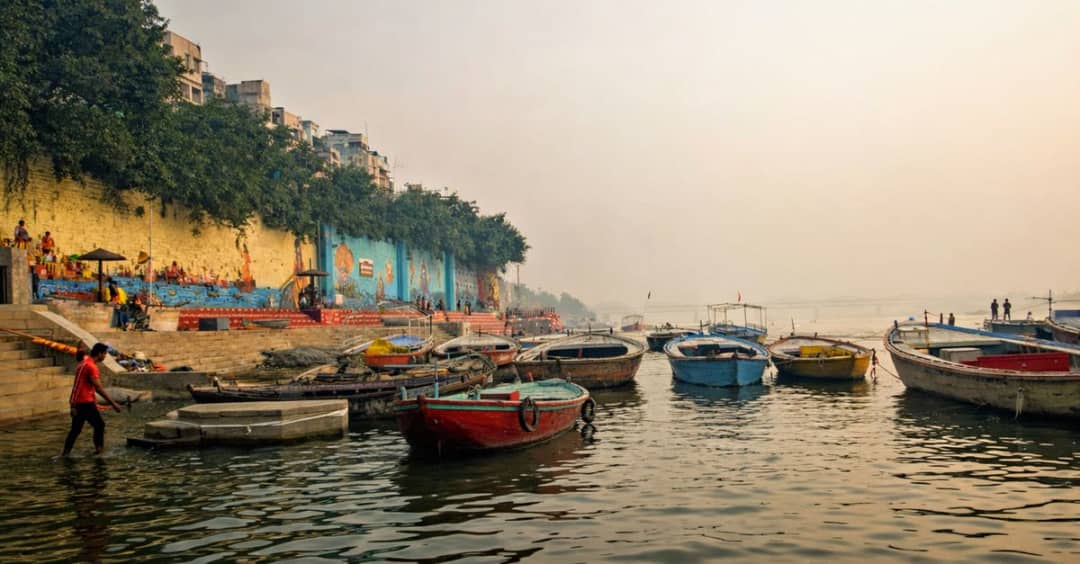
The vow is taken at the river before setting out, customarily at Manikarnika, and it is set down again at the same ghat when the circle closes. Nothing has been acquired. No new place has been reached. The pilgrim comes back to the step he was standing on six days earlier, having touched every marker on the edge of the territory he already lived inside.
I have always thought that is the honest shape for a pilgrimage in a city like this one. Kashi does not ask you to go somewhere else to find it. It asks you to walk all the way around what you have, slowly enough to notice where it ends.


