
Pavitrotsavam at Tirumala: the Festival of Purification
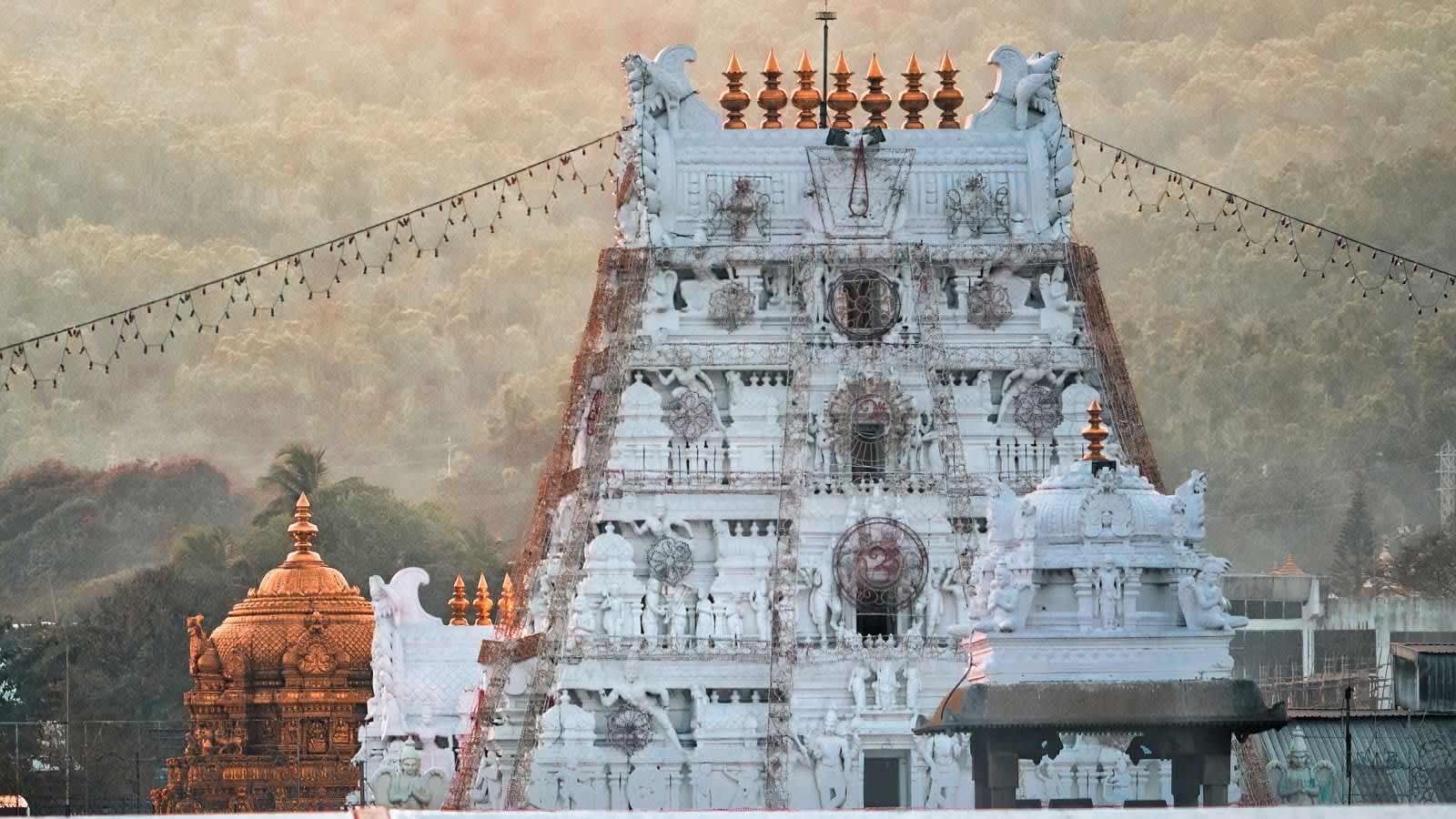
A family will arrive at Tirumala on the morning of 24 August with a printed Kalyanotsavam ticket, having booked it months ago and travelled two days for it, and they will be told, politely and without much explanation, that there is no Kalyanotsavam that day. There will be some standing about. Someone will go and ask at a counter and come back with a word that means nothing to them yet.
Pavitrotsavam.
It happens every year, and every year a number of people find out the hard way, at the top of the hill. Which is a pity, because these are among the most interesting three days in the temple's calendar, and almost nobody outside Andhra plans a trip around them.
What is actually being purified
The name is plain enough once you take it apart: pavitra, holy or purifying, and utsava, festival. The festival of purification. The natural assumption is that it purifies the people who come — that it is one more opportunity, like a bath in a river, to have your own accumulated failings washed off.
It is not that. And this is the thing about Pavitrotsavam that makes it worth a paragraph of anyone's attention, whether or not they will ever stand in the Tirumala queue.
Pavitrotsavam purifies the temple's own worship. Over the preceding year, the priests of the temple have performed many thousands of rituals — the daily Suprabhatam before dawn, the abhishekams, the naivedyam offerings, the archanas, the processions, the rites for every festival on the calendar. In all of that, things will have gone wrong. A mantra will have been mispronounced. A step will have been taken out of order, or hurried, or skipped because of the crowd. Something will have been offered at the wrong moment or with the wrong hand. Some of it the priests will know about. Most of it they will not.
So once a year the institution stops and says, in effect: we have served you for twelve months and we have certainly made mistakes, known and unknown, and here is the rite by which we ask you to overlook them.
It is an annual audit of its own conduct, performed by the people responsible, in public. Very few institutions of any kind do that.
The dates this year
In 2026 the Srivari Annual Pavitrotsavam runs from 23 to 25 August, with Ankurarpanam on 22 August as the preparatory rite that formally begins things.
The dates move each year because they are fixed by the lunar calendar, not the civil one: Pavitrotsavam is observed on the Ekadashi, Dwadashi and Trayodashi — the eleventh, twelfth and thirteenth days — of the bright fortnight of Sravana. That is why it lands in August or thereabouts, and why you should always check the year's actual dates rather than assuming last year's.
Ankurarpanam, the day before, is the seed-sprouting rite that opens most major South Indian temple festivals: nine kinds of grain sown in earthen pots in the yajnasala and left to germinate. It means that by the time the main days begin, something is already growing in the enclosure.
The threads
The visible centre of the festival is a set of threads called pavitras.
They are made of cotton, spun for the purpose. Tradition holds that the cotton should be of a particular quality and grown in ground kept for tulsi, though I would treat the details of that as tradition rather than as a procurement specification. What matters ritually is that the thread is knotted. The Agama texts prescribe that a pavitra must carry knots — accounts give a range from a minimum of eight to as many as a hundred — and each knot is understood to bind up one of the defects being atoned for. The threads are made in several colours and are tied on the processional deity at the head, the neck and the waist, and then carried through the temple so that the other shrines within it receive them too.
Accounts differ slightly on which day the tying falls and on the exact colour scheme, and I would rather say that plainly than smooth it over. What is consistent everywhere is the logic: the year's errors are gathered into a knotted thread, the thread is offered to the deity, and at the end of the festival the whole thing is concluded with a final oblation.
There is something very direct about it. The mistakes are not argued away or explained. They are tied into a string and handed over.
How the three days run
Each of the three days has the same broad shape, and the shape is worth knowing because it tells you when the temple will be busy with itself.
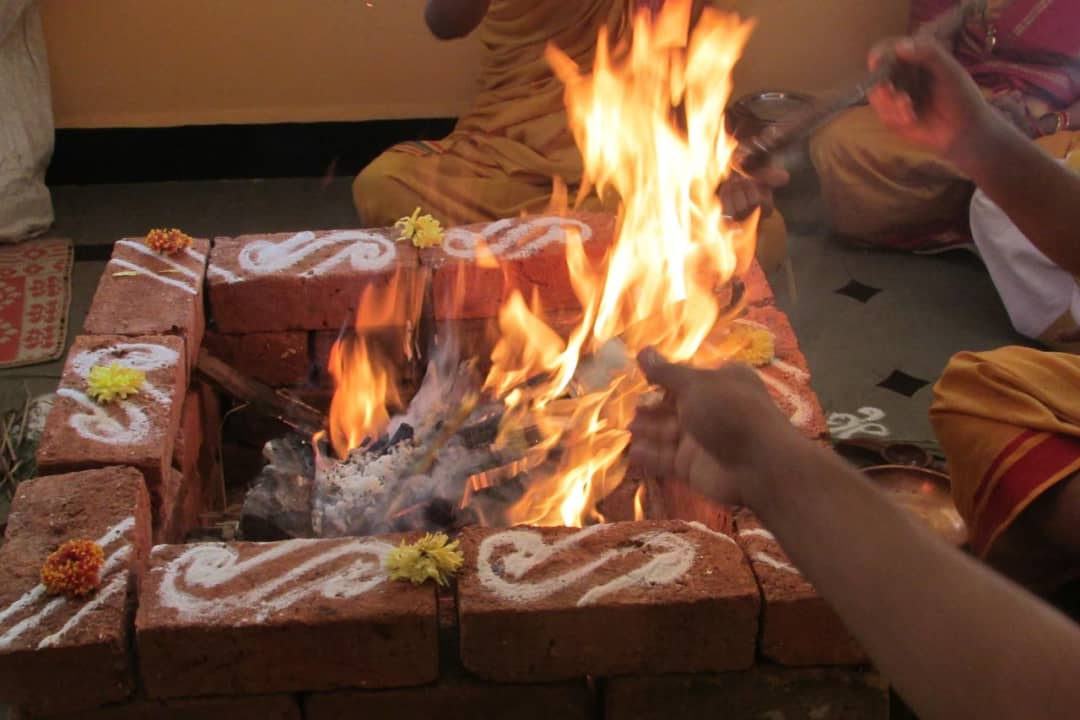
A homam is performed in the yajnasala in the morning — the fire ritual, with the offerings made into a built-up kunda. That is followed by Snapana Thirumanjanam, the ceremonial bathing of the processional deities, which at Tirumala is held in the Sampangi Prakaram and runs for around two hours through the middle of the morning. The bathing substances are the familiar ones of a Vaishnava abhishekam — sandalwood, turmeric, milk, curd, honey — and the smell of that combination in a stone enclosure is one of the things people who have attended remember longest.
In the evening, Sri Malayappa Swamy, the processional form of Venkateswara, goes out with his consorts through the mada streets around the temple.
The first day installs the pavitras, the second offers them, and the third concludes with Purnahuti, the final oblation, inside the main temple. Then it is over, and the ordinary year begins again.
What this means if you are on the hill
This is the practical part, and it is the part the family with the Kalyanotsavam ticket needed.
During Pavitrotsavam the temple suspends most of its paid arjitha sevas, because the priests and the sanctum are occupied with the festival itself. For 2026 the pattern announced is roughly this: Sahasra Deepalankara Seva is cancelled on 22 August; Kalyanotsavam, Unjal Seva, Arjitha Brahmotsavam and Sahasra Deepalankara Seva are all cancelled from 23 to 25 August; Ashtadala Pada Padmaradhana is additionally cancelled on 25 August; and Kalyanotsavam remains cancelled on 26 August, the day after, while things are put back in order.
Ordinary darshan continues. The hill does not close. But if the whole point of your trip was a seva you had booked, those are the dates to avoid — or, if you would rather see something most visitors never do, exactly the dates to choose. There is a separate ticketed arrangement for attending Pavitrotsavam itself, released well in advance through the Devasthanam, and a single ticket covers all three days.
An old habit, interrupted and resumed
Temple records place Pavitrotsavam at Tirumala a long way back. An inscription is cited for the year 1463, in the Saluva period, naming the patron who established it. The observance was kept through the fifteenth and sixteenth centuries, fell away at some point in the long middle, and was revived by the Devasthanam in the last century — 1962, by most accounts.
That gap is oddly reassuring. Even the institution whose job is to not forget, forgot, and then started again.
For anyone planning further ahead: the great annual Brahmotsavam at Tirumala falls on 15 to 23 September 2026, with Garuda Seva on the evening of 19 September and Rathotsavam on the 22nd. Because of an adhika masa there is a second, Navaratri Brahmotsavam in October as well — an uncommon year, with two of them.
The part worth taking home
Most of us keep some small practice at home — a lamp, a stick of incense, a few minutes in front of a shelf in the morning. And most of us are, if honest, fairly casual about it. Days get missed. Things get done in the wrong order because the bus is coming. The thought wanders completely while the hands carry on.
The instinct is either to feel vaguely guilty about that or to decide the whole thing does not matter much. Pavitrotsavam suggests a third option, and it is a very practical one: assume the errors. Assume that a year of anything done daily will accumulate mistakes, most of which you will never identify. Then set aside a day, once, to acknowledge that and start clean — not to fix each error, which is impossible, but to stop carrying the ledger.
One of the most visited temples on earth does this every August, in public, for three days. It is hard to argue that a household shelf is held to a stricter standard.


