
Srisailam: Where Shiva and Shakti Live on One Hill
Dear Divya,
You asked me a simple question on the phone last week and I have been turning it over since. You said you are bringing the children home in December — only two weeks — and you want to take them to one temple. One, not ten. Something that will actually stay with them, so that years from now, back in Seattle, the smell of incense in a stranger's house makes them turn their head.
I could have answered in a text. Instead I am writing this on the balcony, the Bay of Bengal doing its slow grey work below me, because the place I want to send you to deserves more than a text.
Go to Srisailam.
I know you expected me to say Simhachalam. It is closer, it is ours, the sandalwood paste on the god's body is a beautiful thing. But Simhachalam you can do in an afternoon. Srisailam asks something of you — and children remember the places that ask something.
The drive is half of it
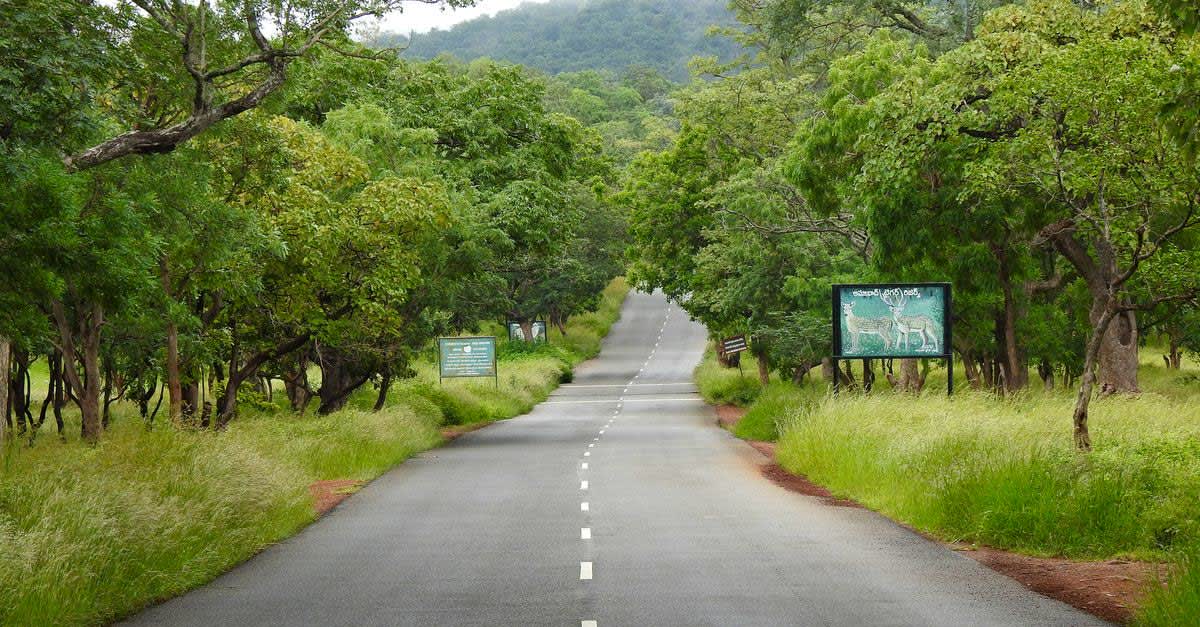
It is a long way from the coast. You leave the sea behind and climb inland, and the wet salt air of Vizag gives way, hour by hour, to the dry folded hills of the Nallamala. The last stretch is forest. This is a tiger reserve, one of the largest in the south, and though you will almost certainly not see a tiger, the road knows they are there. The trees close over the car, the light goes green, the temperature drops. The children will feel the change before you can explain it to them. Let them feel it. A temple you have to travel into the forest to reach is already teaching them something no city shrine can.
Two presences on one hill
Here is the reason I chose Srisailam over anywhere else, and the one thing I most want the children to understand.
Most great temples hold a single presence. Srisailam holds two. On this one hill Shiva is worshipped as Mallikarjuna — one of the twelve Jyotirlingas, the self-born lingas of light that are counted as the most sacred Shiva shrines in the land. And in the same complex, a short walk from him, Parvati is worshipped as Bhramaramba — and hers is one of the eighteen Maha Shakti Peethas, the great seats of the goddess. Jyotirlinga and Shakti Peetha, Shiva and Shakti, sharing one hilltop. There are very few places in the country where the two traditions sit together like this. Tell the children plainly: you are going to a place where the god and the goddess kept house together.
A god named for a flower
The name itself is a small story worth telling them. Mallika is the jasmine flower — and it is also an old name for Parvati. Arjuna is a name for Shiva. Fold the two together and you have Mallikarjuna: the wife and the husband inside a single word. They say the linga was first worshipped buried in jasmine — mallika in our Telugu — and the name settled from there. It is a rare thing, a god named for a flower and for a marriage in the same breath. Of all the shrine names in the Jyotirlinga incense we make, Mallikarjuna is the one I am fondest of, for exactly that reason — a deity named after the flower his devotees lay on him.
Why they came to the hill
The old story of how they came there is not a war or a boon. It is a family quarrel. The two sons, Ganesha and Kartikeya, fell into a contest; Kartikeya felt wronged by how it ended and left home in anger for a far mountain, Krauncha, to live alone. The parents, unable to bear the distance from their son, followed him south and made their home on Srisailam to be near him.
I like that this mighty double-shrine begins with nothing grander than a mother and father who could not stand being so far from their child. You will understand that story better than I do, Divya — raising yours an ocean away from all of us.
Let them touch the god
One thing at Srisailam will matter to the children specifically. At most of the twelve Jyotirlingas you see the linga from a distance — across a rail, over the heads of the crowd. At Srisailam there is a darshan in which you are allowed to touch it: to lay your own hand on the stone and pour water over it yourself. For a small child this is everything. Not a god behind glass, but a god you are permitted to put your palm on. Whatever the wait for that queue, stand in it. Let them touch it.
Down to the river
Below the temple the Krishna runs at the foot of the cliff. They call that reach of it Pathala Ganga — the Ganga of the lower world — and there is a ropeway down. Go down. Let the children put their feet in the water. After the dark and the crush of the sanctum, the light coming off the river is the other half of the day, and they will need it.
When you stand before Bhramaramba, it is worth knowing that Adi Shankara stood there too, some twelve centuries ago, and was moved enough to compose eight verses for her on the spot. You do not need to know the verses. It is enough to feel that a place has been pulling people to say something, for that long.
Plain advice, because I know you
December is the right month — you chose well without knowing it. The forest is cool and dry then, not the running-wet green of the monsoon, when the ghat road comes down in sheets and the mist sits on the hill all day. Go early. Carry the children's own small bottles for the abhishekam. And do not try to bolt two more temples onto the day. You asked me for the one that stays, and Srisailam only stays if you give it the whole day and drive back tired in the dark.
When you are home in Seattle again and you light something in the evening — you told me you do that now, on the harder days — I hope a little of that hill is in it. The forest, the two of them on their shared hilltop, the cold stone your children laid their hands on. That is what I would want them to carry away. Not that they saw a famous temple. That they touched a god, and the god let them.
Come safe. Bring them to the balcony first — the sea will want to see how big they have grown.
With love, Siddharth


