
The Story of King Mahabali and the Myth Behind Onam
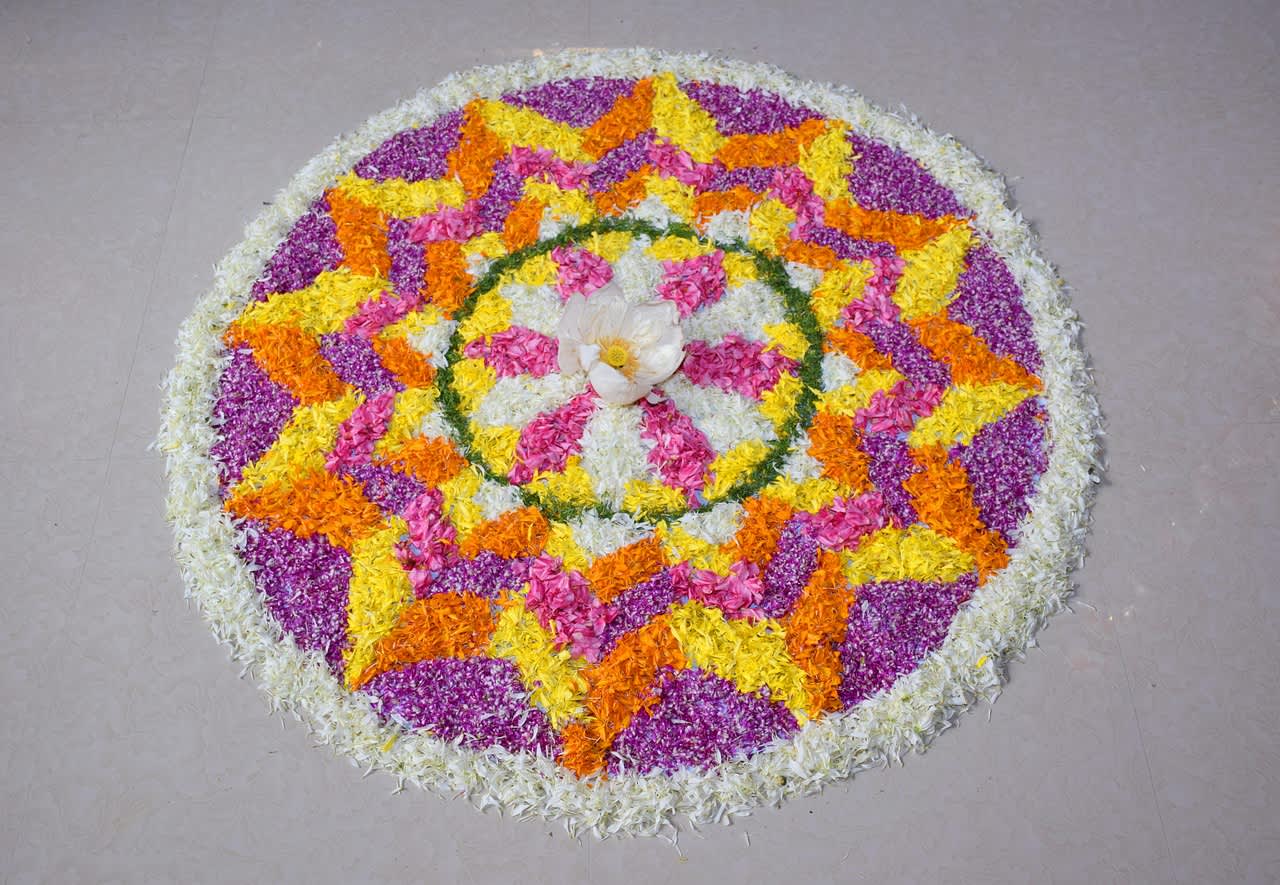
There is a song children in Kerala learn before they understand it. Maveli nadu vaneedum kalam — when Maveli ruled the land. It describes a time when all people were equal, when there was no lie and no fear, when no one went hungry and no one was cheated in the market. It is sung every year in late summer, in the days leading up to Onam, while the front yard is being swept and the first flowers are being pressed into the ground.
Maveli is Mahabali. And the strange thing about the song is that the king it praises is, in the old texts, an asura — one of the beings usually cast as the adversaries of the gods. Kerala remembers him anyway, and not grudgingly. It remembers him as the best king it ever had. To understand why a whole state lays flowers at its doorways for him, you have to go back to the story, and tell it plainly, the way it was handed down.
A good king, and the problem with a good king
Mahabali was the grandson of Prahlada, and Prahlada is remembered as one of the most devoted figures in the old stories — a boy who held to his faith even against his own father. That devotion ran down the line. Mahabali grew into a ruler who was generous, truthful, and just. Under him the world prospered. There was no distinction of high and low. His people lacked for nothing.
The trouble, in the logic of the myth, is that a king this powerful and this good does not stay contained. Mahabali's rule spread outward until it reached beyond the earth, into the realms of the devas themselves. He had not seized those realms by cruelty. He had simply grown, and his growth left the gods with less. Aditi, the mother of the devas, watched her sons displaced and grieved for them.
This is the knot the story ties and then has to cut: the man being set aside is not a villain. He has done nothing wrong. He is only too large, and too generous, and his generosity is about to become the very thing that undoes him.
The small brahmin at the sacrifice
Mahabali announced a great sacrifice, a yajna, and with it a vow that during those days he would refuse no one who came to him asking. Whatever was requested, he would give.
Into that gathering walked a young brahmin boy, short of stature, carrying only a wooden umbrella and a water pot. This was Vamana — Vishnu, come down in the fifth of his descents, though no one at the sacrifice knew it. He was unhurried. He asked for nothing grand. He asked only for three paces of land, measured by his own small feet.
Mahabali almost laughed. Three paces? Ask for villages, the king said, ask for gold, ask for elephants. But the boy held to his measure: three paces, no more.
The king's teacher, Shukracharya, saw what the others could not. He warned Mahabali that the boy was no boy, that this was Vishnu himself, and that the three paces would cost him everything. Refuse, the teacher said. Break the promise. Better a broken word than a lost kingdom.
Mahabali refused to refuse. He had given his word during the sacrifice, and to him a word given was not a thing you could take back because it had become inconvenient. He took up the water pot to seal the gift by pouring water over the boy's hands — and this is the moment the story turns. He chose his own honesty over his own throne, with his eyes open, knowing the price.
Three steps
Then the small brahmin began to grow.
He grew past the sacrificial ground, past the palace, past the mountains. With his first stride he covered the whole of the earth. With his second he covered the sky and the heavens and everything above. Two paces, and the three worlds were gone — measured, claimed, filled entirely by the form of the god.
And then Vamana stopped, because a promise is a promise on both sides, and asked the question the whole story has been walking toward: where do I place the third step?
There was nowhere left. Mahabali had given away, in two strides, everything he had ever ruled. He did not argue and he did not bargain. He bowed his head and offered it — put your third step here. Place your foot on me.
The god set his foot on Mahabali's head and pressed him down, gently in most tellings, into Sutala, one of the realms beneath the earth. Not as punishment. The old texts are careful about this. Sutala is described as a place finer than the heaven of the gods, and Mahabali is granted lordship over it. What looks like defeat is, in the telling, a kind of honouring — the surrender itself is what is being rewarded.
The one condition
Before he went down, Mahabali asked for one thing, and it was not for himself.
He asked to be allowed to return, once every year, to look upon his people and his land. The god granted it. And so the story does not end with a king pushed underground. It ends with a standing appointment. Once a year, in the Malayalam month of Chingam, Mahabali is permitted to rise and walk his old country again, to see whether his people are still well, still fed, still honest with one another.
That single day of return is Thiruvonam. Everything Kerala does for Onam is done for that visitor.
Why the flowers, why the feast
Once you know the story, the customs stop being decoration and become a welcome.
The pookalam, the carpet of flower petals laid at the threshold and grown a little larger each of the ten days, is a doorway made beautiful for a guest who is coming. The Onasadya, the great vegetarian feast served on a banana leaf, is the meal you set out for a returning king — and the point of it is that everyone eats the same feast, servant and master, poor house and rich, exactly as it was under his rule. The new clothes, the cleaned house, the lamp lit at the front of the home in the quiet of the morning: all of it says the house is in order, the people are well, you may see for yourself. In many homes the morning is marked simply — a swept threshold, an oil lamp, a thread of incense at the doorway — the small signals a household has always used to say a space has been made ready.
Onam is often described from the outside as a harvest festival, and it is that too — it falls when the rice is ready and the rivers are high enough for the long snake boats to race. But at its centre is not the harvest. At its centre is a promise kept in both directions: a king who kept his word even when it cost him the world, and a god who let him come home to see that the world he loved is still standing.
That is what the children are singing about while the flowers go down. Not a defeat. A homecoming.


