The Story of Mahakal and the Demon Dushana
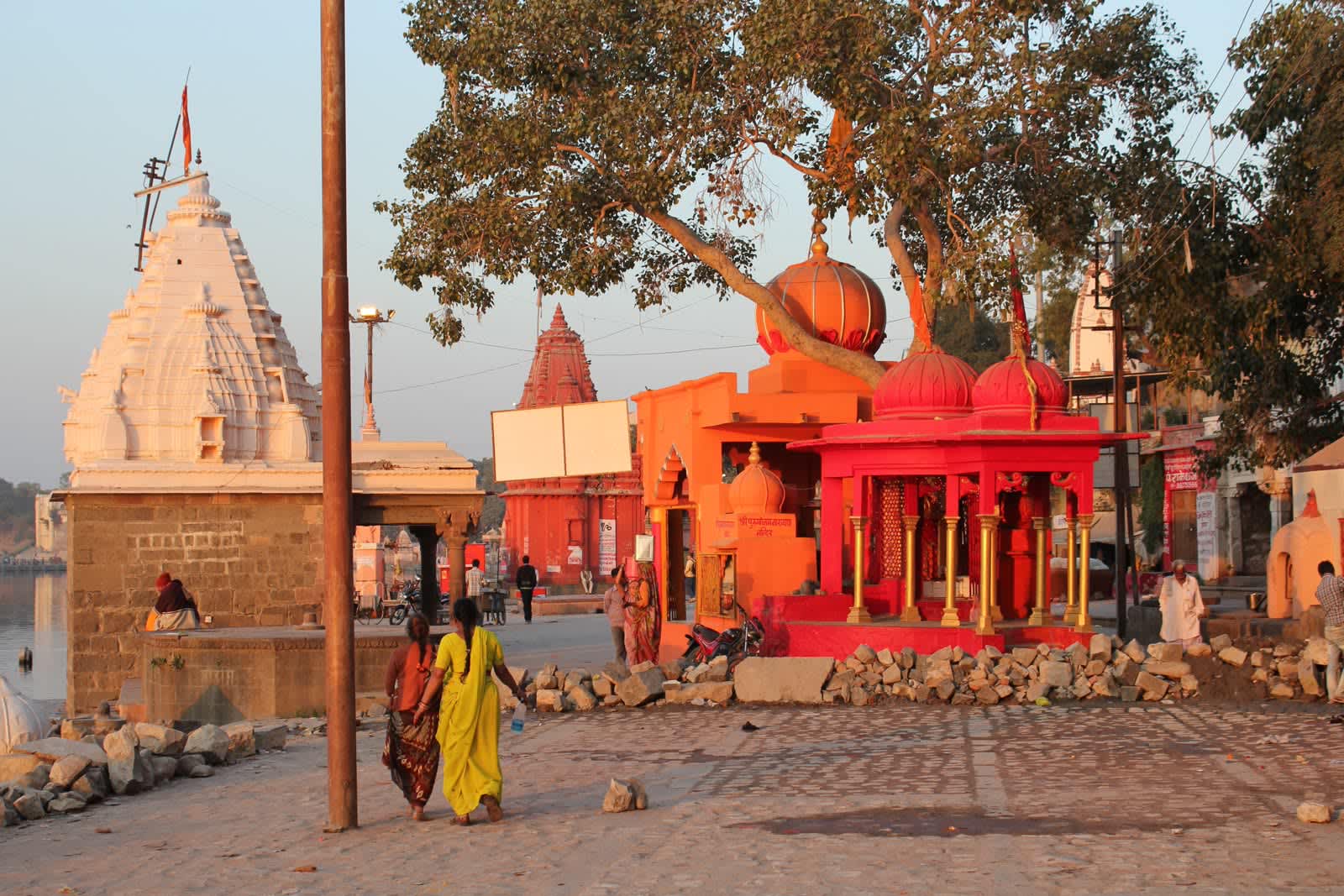
In Ujjain the story is not told as decoration. It is told the way a priest explains a procedure — because it accounts for something specific about how this shrine is worshipped, and if you do not know it, half of what you see in the sanctum will look arbitrary.
I want to set it down plainly. The account belongs to the Koti Rudra Samhita of the Shiva Purana, which is where the twelve Jyotirlinga narratives are gathered. I will tell it as the text tells it, mark the places where the tradition carries more than one version, and then say what part of it is still visible in the daily practice at Mahakaleshwar.
The city, and the man who made his linga every morning
The city in the story is Avantika — the old name for Ujjain, on the Kshipra. The Purana describes it as a place kept in good order by its own conduct rather than by its walls.
In it lived a brahmin named Vedapriya. What the text says about him is worth attending to, because it is not the usual formula. He worshipped a parthiva Shivalinga daily, and he maintained the agnihotra — the twice-daily fire offering — according to the rules.
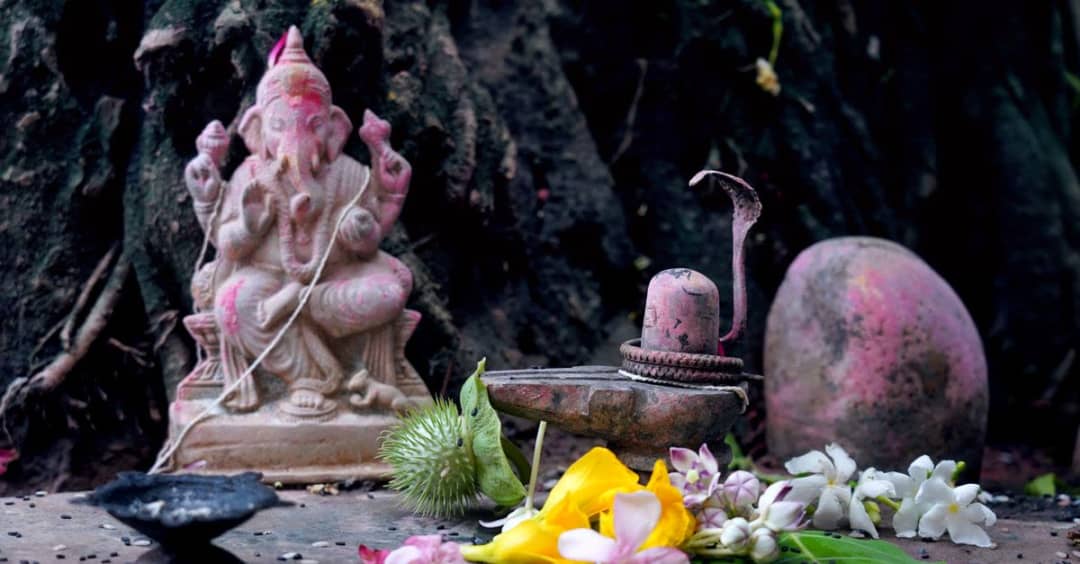
A parthiva linga is a linga of earth. You make it yourself, from clay, usually with water and sometimes with a little cow dung and ash mixed in; you worship it that day; and you return it to earth or water when the worship is finished. It is not an heirloom. It is not consecrated by anyone else. It is made and unmade in the span of a single observance. The tradition treats it as fully sufficient — not a substitute for a stone linga, but a form of its own with its own procedure.
Hold on to that detail. The story turns on it.
Vedapriya had four sons — Devapriya, Priyamedha, Sukrita and Suvrata — and the text says they kept the same practice as their father, so that the household's discipline became something the whole city was known for.
The boon on Ratnamala
Meanwhile, on a mountain called Ratnamala, an asura named Dushana had undertaken a long and severe penance directed at Brahma, and had been granted a boon. The Purana does not present him as a monster of appetite. It presents him as something more particular: he could not tolerate the Vedas being recited or the observances prescribed in them being kept. His campaign was against practice itself.
He came to Avantika with an army, and the text says he sent his forces to close on the city from four sides at once.
The brahmin and his sons were told what was coming. They did not arm themselves and they did not leave. They went on with the day's worship — the clay linga made as usual, the offerings placed as usual — and the Purana is unambiguous that this was not fatalism. It was the observance being kept precisely because keeping it was the thing under attack.
The ground opens
When the demons closed in to kill them, the account says the earth split at the very spot where the parthiva linga stood, with a great sound, and out of that opening Shiva appeared in a terrible form and named himself: I am Mahakala, and I have appeared to destroy men like you.
Dushana and his army were destroyed. In the plainest versions it takes only a sound — a hunkara, the syllable of a roar — and no weapon at all.
Then the four brothers asked for something, and their request is the hinge of the whole narrative. They did not ask for wealth, or for safety, or for the demon's kingdom. They asked him to stay — to remain at that spot permanently, for the good of the world. He agreed. That is the Jyotirlinga at Ujjain, and Ujjain is one of the twelve shrines whose names our Jyotirlinga incense borrows, though the temple long predates anyone's use of the name.
Notice what has happened. A linga a man shaped out of river clay that morning, intending to dissolve it by evening, is the place the god chooses not to leave.
The other half: the king, the gem and the cowherd's stone
The Ujjain tradition attaches a second episode to the same shrine, and you will hear the two run together as though they were one continuous tale. They are better kept apart.
In this one, Ujjain's king is Chandrasena, a scholar and a devotee of Shiva. He is given a jewel called the Sundara Chintamani by Manibhadra, an attendant of the Yaksha world. Rival kings demand the gem; he refuses; they besiege the city. Chandrasena's response is to go and worship rather than to negotiate.
A cowherd boy — Shrikar in most tellings — overhears the king at his worship and is seized by it. He is turned away from the temple by the guards and sent out towards the Kshipra, so he does the only thing available to him: he picks up a stone, treats it as the linga, and worships it with an attention so complete that he forgets to eat. His mother, frightened by the state he is in, throws the stone away and scatters what he has arranged around it.
The boy goes on worshipping the empty spot. And the stone he had picked up is said to have become a linga of light.
The story ends with the besieging kings giving up the siege — not because they are defeated in battle but because they conclude there is nothing at Ujjain worth taking from a place that is already holding what it holds — and joining Chandrasena in worship at Mahakal.
What I am not going to smooth over
Two honest notes, because this is a story people repeat with a great deal of confidence.
The first: the two episodes have different casts, and there is no character in common between them. Some published retellings — including good ones — fuse them into a single plot in which Chandrasena is besieged by Dushana. The Purana's own Avantika episode names no king. If you are going to tell the story, it is better to say "the tradition keeps two accounts of this shrine" than to invent a join between them.
The second: I am not going to convert either episode into a moral about being rewarded for devotion. The text does not do that, and the boy's mother throwing the stone away is exactly the detail that resists it. He is not compensated for the loss. He carries on with nothing in front of him, and the story treats that as the event.
What survives in the practice
Here is why the story is still functionally useful at Ujjain rather than merely ornamental.

The linga is south-facing. Mahakaleshwar is described as Dakshinamukhi — the only one of the twelve said to face south, the direction traditionally assigned to Yama. A shrine founded by a god who arrives announcing himself as Time faces the direction of death, and does not soften it.
The first offering is ash. The Bhasma Aarti before dawn covers the linga in ash — the substance that remains when time has finished with a thing. It is the same statement as the name.
And the parthiva linga is still made. In Shravan especially, in ordinary households across Malwa and far beyond it, people make a linga from clay in the morning, worship it, and return it to water the same day. It is a full observance with its own rules, not a poor man's version of a temple visit.
That last one is the whole story in domestic form. The most consequential linga in this city's memory was not carved, not installed, not endowed. It was made by hand, on an ordinary morning, by someone who intended to dissolve it before nightfall — and it was sufficient.
Whatever else you take from the account, take that.