
Meenakshi of Madurai: The Warrior Who Became a Goddess
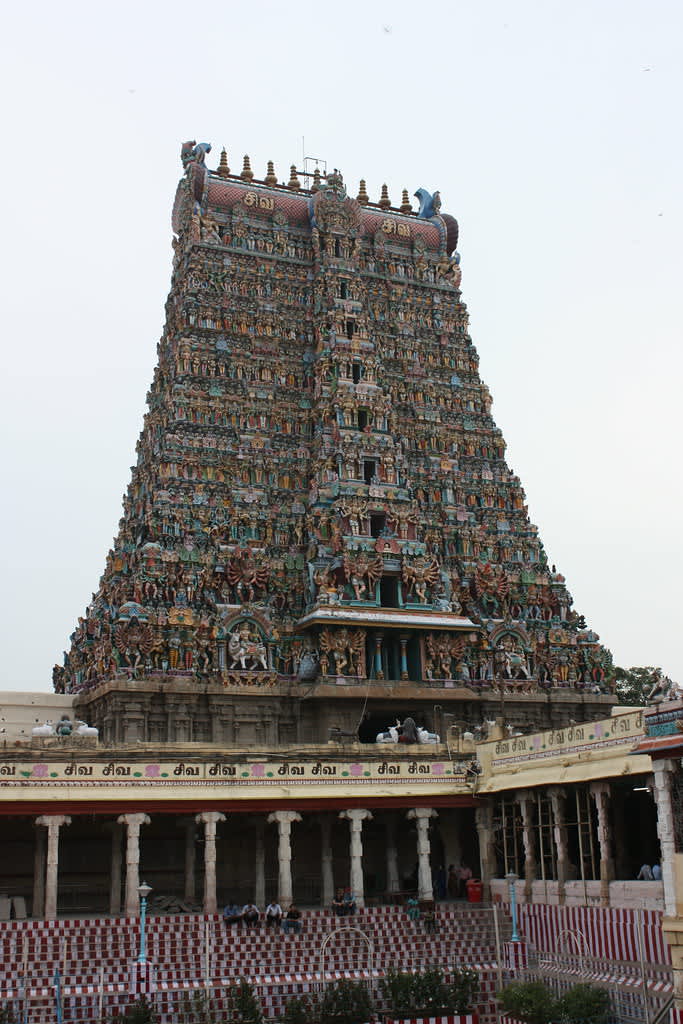
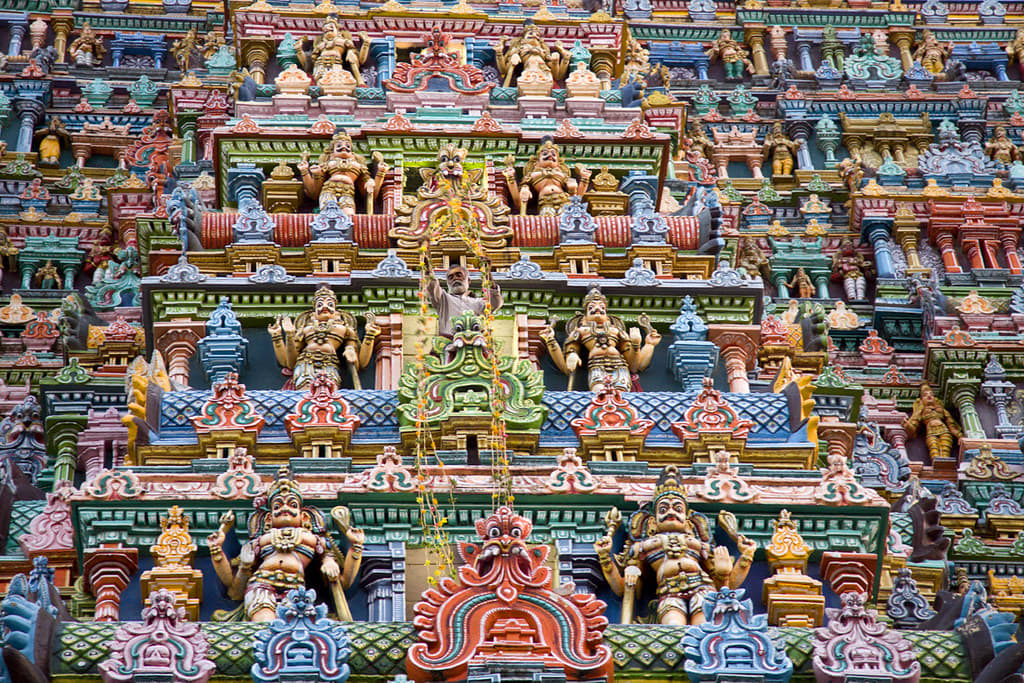
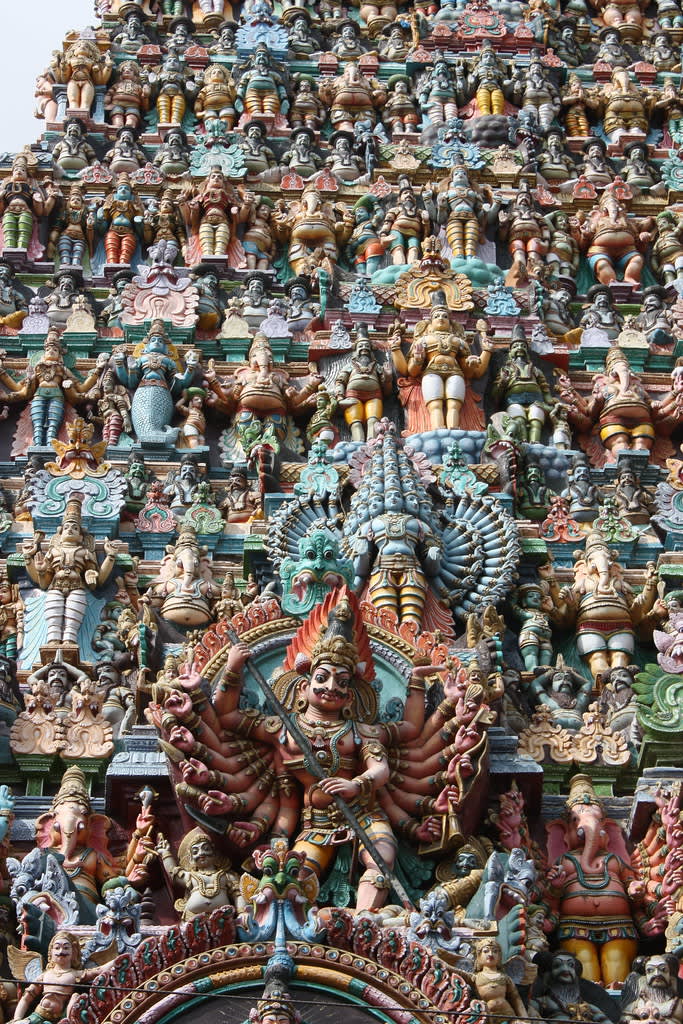
If you have ever stood at the foot of a Madurai gopuram and looked up, you know the feeling. The tower goes up and up, and every inch of it is covered in figures — gods, demons, kings, animals, dancers — thousands of them, painted in colours that have no business being that bright. People come and photograph it and move on. But the whole tower is telling one story, and the story belongs to the woman inside: Meenakshi, the fish-eyed goddess, who ruled this city before she was worshipped in it.
I grew up hearing her story the way children in other places hear about kings and battles. Here it is, told plainly, the way it is told in Madurai — not embellished, not turned into something it isn't. Take it as a story that a city has kept alive for a very long time.
A king who wanted a son
The old Pandya king of Madurai, Malayadhwaja, and his queen Kanchanamalai had no child. They wanted a son — a king always wants a son, someone to hold the kingdom after him. So they did what people did: they performed a great yajna, a fire sacrifice, and prayed.
And from that fire, the story says, a child stepped out. Not a baby — a girl of about three years, already walking. And she had three breasts.
The king was troubled by this. But a voice came, the way voices come in these stories, and told him plainly: raise her as you would raise a son. Teach her everything. The third breast will disappear on the day she meets the man she is to marry. Until then, she is your heir.
So he did. He called her Thadathagai, and because her eyes were long and beautiful, shaped like a fish, she came to be known as Meenakshi — meen, fish; akshi, eyes. The fish-eyed one.
Raised as a king, not a princess
This is the part I always liked as a boy. She was not raised to sit and wait. She was raised as the heir to the Pandya throne. She learned the sixty-four arts, she learned statecraft, and she learned war — the sword, the bow, the elephant. When her father died, she was crowned. Not a queen-consort. A ruling monarch of Madurai.
And then she did what an ambitious Pandya ruler was expected to do: she went to conquer the world. This is called a digvijaya, a conquest of the directions. She marched out with her armies and defeated the kings of the earth one after another — north, south, east, west. The story does not make her modest about it. She was undefeated. She kept going, all the way up to the mountains, to the abode of the gods, to Kailasa itself.
The one she could not defeat
At Kailasa she met Shiva's armies — the ganas, and Nandi the bull — and she defeated them too. Word went up the mountain that a queen from the south had come and was winning. And then Shiva himself came out to face her.
And here the story turns.
The moment she looked at him, the third breast vanished. Just like that — the way the voice had promised, all those years ago, at the fire. She understood, in that instant, who he was and who she was: not a conqueror before an enemy, but a bride before her groom. The warrior queen who had beaten every king on earth stood there, the story says, suddenly shy, looking at the ground.
I have always thought that was a strange and honest thing for a story to say. It does not pretend she was weak. She was the strongest person in the tale. It simply says she had met the one she was made for, and that changed the meaning of the whole conquest.
Shiva told her to go back to Madurai. He would come, he said, in eight days, as her husband.
The wedding the whole city still keeps
He came as Sundareswarar — the beautiful lord, whom Madurai also calls Chokkanathar. And the wedding that followed is, in this city, the wedding of weddings. Every god was said to have come to Madurai for it. The tradition holds that Vishnu himself gave the bride away — in these parts he is called Meenakshi's brother, Alagar, from the hill temple at the edge of the city — and that Brahma performed the rites.
That marriage, the Thirukalyanam, is not a thing of the distant past here. It is re-enacted every year at the Chithirai festival, when the streets fill and the images are carried out and the whole of Madurai turns up to watch the goddess be married again. Alagar's journey from his hill to the river, arriving for a wedding he is always just too late for, is its own beloved procession. People plan their year around it.
What stays with me is what the temple did with all this. Walk in, and you notice something unusual: it is her temple. Meenakshi's shrine is the principal one; Sundareswarar's stands beside it. In most Shiva temples the goddess is the consort, off to one side. Here the god came to the city to marry the queen who already ruled it, and the architecture never forgot that. The city is named for the god's other name — Madurai, they say, from the madhura, the sweet nectar Shiva let fall on it — but the heart of the temple is the goddess.
Reading the stone
That is why the towers are the way they are. Fourteen gopurams, the tallest of them rising past fifty metres, every surface crowded with figures. It is easy to see it as decoration. It isn't. It is the whole world of the story, set in stone and lime and colour — the gods who came to the wedding, the demons who were defeated, the scenes people already knew by heart, put up where everyone entering would pass beneath them.
Inside, the hall of a thousand pillars, the golden-lotus tank where the old poets are said to have tested their verses, the long corridors where the light falls in bars — all of it built around two shrines, side by side. And the air, always, carries camphor and the thin blue smoke of incense. In the Tamil temples the fragrance is part of the room; the sandal and the sambrani are not an afterthought but the way the space announces itself. It is the same instinct that makes people light a stick at home before the small brass lamps of their own Jyotirlinga shrines — Rameswaram, not so far down the coast, is one of them — long after they have left the temple gate behind.
I don't tell this story to convince anyone of anything. I tell it because it is a good story, and because when you know it, the tower stops being a wall of colour and starts being a page. Next time you are under a Madurai gopuram, find the queen with the fish-shaped eyes somewhere in that crowd of figures. She is up there. She was here first.


