
The Story of Neelkanth: Why Shiva Drank the Poison
I grew up in Hyderabad, in a house where more than one calendar hung on the wall. So I came to the stories of the temples a little sideways — as a neighbour rather than an heir, listening at the edge of things. Some of them stayed with me for years, and this is one. It arrives every summer, quietly, in the month people here call Shravan.
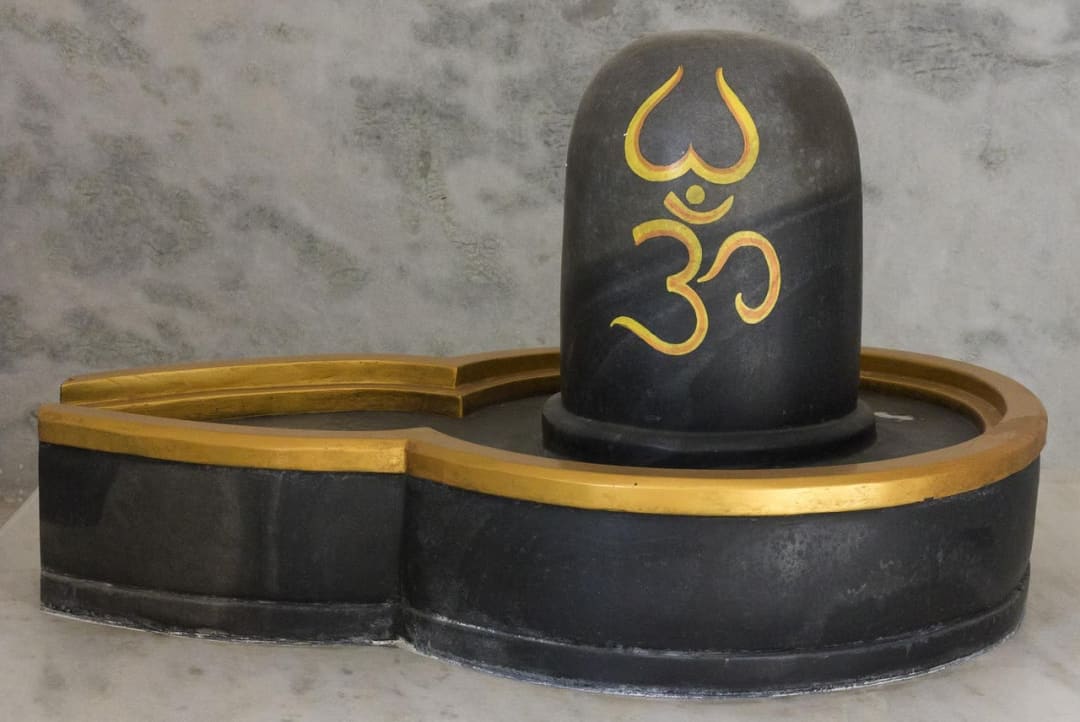
If you pass a Shiva temple in these weeks you will see the same small act repeated all day. Someone lifts a brass pot of water, or milk, and lets it fall in a thin steady thread over a plain dark stone — the lingam. No fireworks, no crowd noise, just water on stone, again and again, from morning into evening. It looks like the least dramatic thing a person could do in the name of God.
Behind it is one of the most dramatic stories India has ever told.
The ocean that had to be churned
The story is usually called the Samudra Manthan — the churning of the ocean. It is told in several old texts, and the tellings differ in their details, but the shape of it is remembered everywhere.
The gods, the tale goes, had grown weak. They had lost their strength and their fortune, and the one thing that could restore them lay hidden at the bottom of the cosmic ocean: amrita, the nectar that ends death. But the ocean would not simply give it up. It had to be churned, the way a village churns curd into butter — patiently, with force, for a very long time.
No single side was strong enough to do it alone. So the gods and the asuras, who were rivals in almost everything, agreed to pull together. For a churning-rod they used a mountain, Mandara. For a rope they used a serpent, Vasuki, wound around the mountain's waist. One side took the serpent's head, the other its tail, and they began to pull — back and forth, back and forth — turning the mountain and stirring the deep.
It is worth pausing on that image before the story rushes on. Two sides who did not trust each other, holding opposite ends of the same snake, doing the same slow work for a prize they both wanted. The myth does not pretend they became friends. It only says they pulled together long enough for something to rise.
What rose from the water
And things did rise. The tellings list them like treasures pulled from a flood.
A wish-granting cow. A white horse, and a white elephant. A jewel that Vishnu took for his own chest. The goddess Lakshmi herself, seated on a lotus. A tree that perfumed the whole of heaven. Later, near the end, the physician of the gods stepped out of the water holding the pot of nectar everyone had been waiting for.
But that came later. Long before the nectar, something else surfaced — and it was not a treasure.
From the churned ocean rose a poison. The texts call it halahala, or kalakuta. It was not an ordinary venom. It was said to be so concentrated, so total, that its fumes alone began to scorch the three worlds. Nothing that had ever been made could survive it. The churning stopped. Gods and asuras, who a moment before had been straining for immortality, now stood choking, with no idea what to do with the death they had pulled up by accident.
The one who held it
This is the part of the story people remember on those summer mornings with the brass pots.
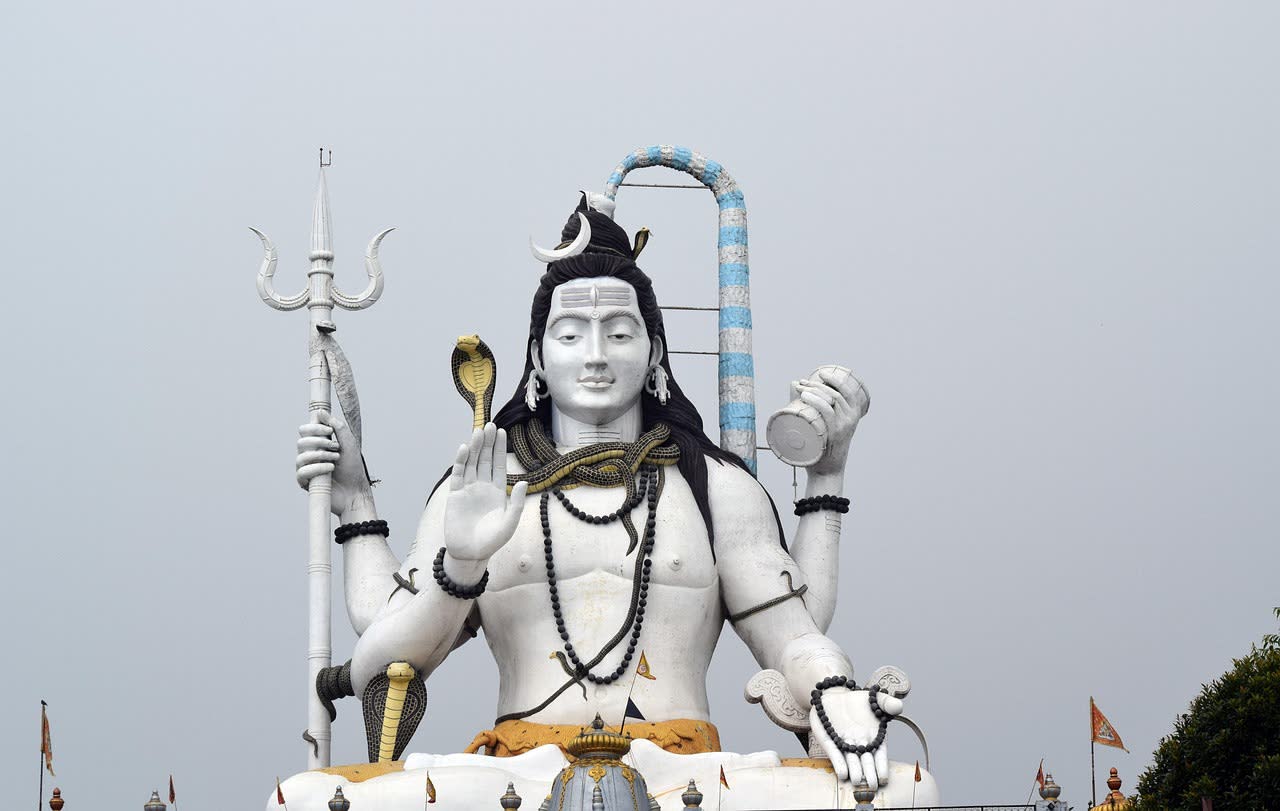
There was one figure the churners had not counted on. Shiva — the ascetic, the one who sits apart on the mountain, smeared with ash, a crescent in his hair and a serpent at his throat. In the tellings, it is to him that everyone turns when the poison rises, because he is the one who lives at the edge of things, unafraid of what destroys.
He gathers the poison up and drinks it.
But here is the detail the story is careful about, and I have always liked it. He does not swallow it. As he holds the halahala in his mouth, his consort Parvati presses her hand to his throat so that the poison can go no further — so that it neither spreads through him nor spills back onto the world. It stays there, held, in the narrow passage of the throat. And the poison is so strong that his throat turns a deep blue-black where it rests.
That is why one of Shiva's oldest names is Neelkanth — the blue-throated one. Not blue-crowned, not blue-handed. Blue exactly at the throat, at the one place a thing can be held without being taken in and without being thrown back out.
Why the month remembers it
Many traditions place this churning, and this drinking, in the monsoon weeks that became the month of Shravan. And so the month turned toward Shiva. Across northern India these are his weeks — the Shiva shrines fill, the twelve Jyotirlingas where he is worshipped as a pillar of light draw pilgrims by the thousand, and closer to home a small clay lingam appears in ordinary front rooms with a lamp beside it. In our own workshop in Bihar the Jyotirlinga range of incense is named for exactly those shrines, one stick for each. Even in a house that sells fragrance, the month is impossible to miss.
And the water — the endless thin threads of water poured over the stone — is remembered as a kind of cooling. If a body once held a poison hot enough to burn the worlds, then the least a person can do, the tradition seems to say, is offer it something cool. Milk, water, a green bilva leaf. Not to fix anything. Just to sit with the one who held the hard thing, and keep him company, and pour.
The men who walk the long roads in these weeks carrying water on their shoulders — the kanwariyas — are doing the same act at a larger scale. Carrying coolness a great distance to pour it, patiently, over a stone.
What the story leaves you
You do not have to believe any of it as history to feel what it is pointing at. Read plainly, the myth is about a very human problem: what to do with something toxic that has come up out of the depths and cannot be un-made.
The story offers a third way between the two we usually reach for. You can swallow the poison — take the hard thing all the way in, let it move through you, let it become who you are. Or you can spit it back out — hurl it onto whoever is nearest, and let the burn spread. The figure at the centre of this story does neither. He holds it. In the throat, in the narrow place, with a steadying hand, neither absorbed nor flung. And where he holds it, it leaves a mark — but it does not win.
I am not going to tell you that lighting a lamp or sitting quietly makes any of that easy; it does not, and the story never claims it. But I think this is why the myth has lasted, and why people who could not tell you a single verse still pour their thread of water every Shravan. It is a picture, very old and very stubborn, of holding a difficult thing steadily instead of being ruled by it. A blue mark at the throat is not nothing. But the worlds, in the story, go on.


