Ujjain and Indore Temples: A Malwa Pilgrim's Guide

I have lived in Indore most of my life, and if there is one thing visitors always ask me, it is this: "We have two, maybe three days — where do we actually go?" Malwa is thick with temples. Every second lane in Ujjain seems to open onto a shrine. So the honest job is not to list everything; it is to tell you which places reward the effort, when to arrive, and where a little planning saves you a long wait in the sun.
This is that list — the temples I send my own relatives to when they fly in from Dubai or Toronto and have limited days. I have tried to be plain about each one: what is special, and what to expect when you get there.
1. Mahakaleshwar, Ujjain — start here, and start early
If you visit only one temple in Malwa, it is this one. Mahakaleshwar is one of the twelve Jyotirlingas, and among them it holds a distinction devotees hold dear: the lingam faces south, which is why it is called Dakshinamukhi. The temple sits near the Rudra Sagar tank in the old part of Ujjain, and the crowd on any given morning tells you how much this place means to people.
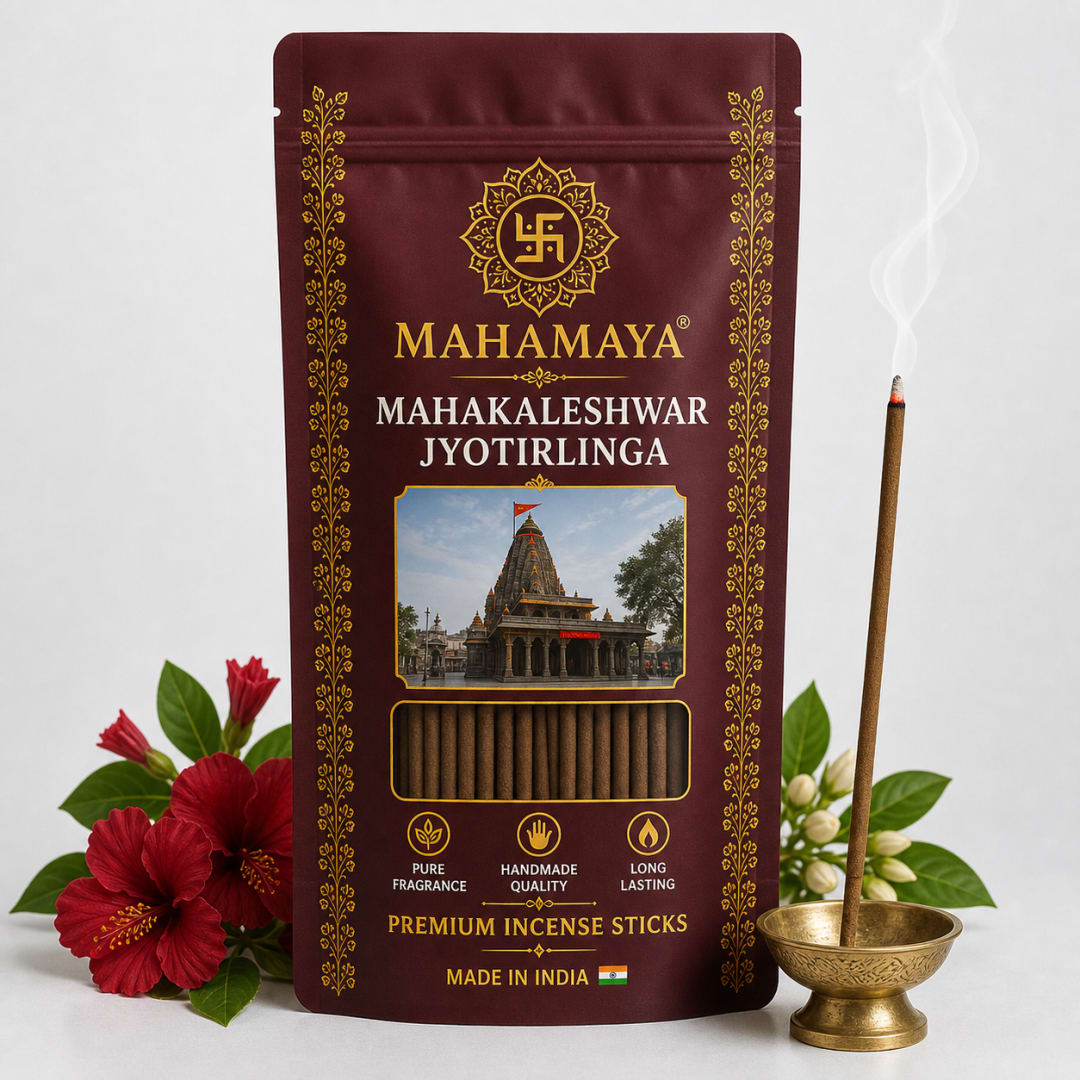
The moment everyone comes for is the Bhasma Aarti before dawn — around 4 a.m. — when the lingam is bathed in sacred ash. It is unlike any aarti I have seen elsewhere; the smoke, the drums, the darkness slowly lifting. It is the reason we named one of our Jyotirlinga incenses for Mahakaleshwar. If you want to attend the Bhasma Aarti from inside, you need to book a pass in advance through the official temple channel — do not rely on someone offering you a shortcut at the gate.
My honest note: general darshan is free, and the queue moves, but in Sawan and on Mondays it can take hours. Come on a weekday morning if you can. Leave your phone and leather items in the lockers before you join the line; it saves a lot of fuss later.
2. Kal Bhairav, Ujjain — the temple where the deity is offered liquor
A short drive from Mahakaleshwar is Kal Bhairav, and it surprises first-time visitors every time. Kal Bhairav is a fierce form of Shiva, the guardian of the city and the "lord of time." What makes the temple famous is its offering: liquor. You buy a small bottle from the stalls outside, the priest offers it to the deity, and a portion is returned to you as prasad.
This is not a gimmick. The offering traces back to old tantric practice, in which alcohol was one of five ritual offerings; today the liquor remains while the rest survive only in symbolic form. Whatever you make of it, it is a genuine, living tradition and worth witnessing with respect rather than a camera pointed at the deity.
My honest note: it takes fifteen minutes, it is close to Mahakaleshwar, and it leaves an impression. Do not skip it just because it sounds unusual.
3. Harsiddhi Mata, Ujjain — come back at dusk for the lamps
Harsiddhi is one of the Shakti Peethas — the sites where, in the old story, parts of Goddess Sati fell; here it is said to be her elbow. The shrine itself is calm and unhurried compared to Mahakaleshwar's rush, which is part of its appeal.
But the real reason to time your visit is the two deep stambh — lamp towers — that stand in the courtyard. Each is around fifty feet tall and studded with more than a thousand small lamps. When they are lit at dusk during Navratri and on special evenings, the whole tower becomes a pillar of fire. I have seen grown men go quiet watching it.
My honest note: midday it is a peaceful stop; evening it is a spectacle. If you can only come once, ask locally whether the pillars will be lit that night, and plan around it.
4. Omkareshwar — a Jyotirlinga on an island in the Narmada
About two hours from Indore, Omkareshwar is the second Jyotirlinga of this region, and geographically the most striking. The temple sits on Mandhata island, which the Narmada wraps around in a shape said to resemble the sacred syllable Om. You cross by bridge or boat, and the river is present the whole time — wide, slow, and cool even when Malwa is baking.
It makes a natural full-day trip paired with the Narmada ghats. Pilgrims here often do the parikrama, the circuit around the island, which is a real walk — wear proper shoes, not the chappals you keep for temple courtyards.
My honest note: budget a whole day and go early, both to beat the heat and because the last stretch back to Indore in the dark is not fun. The riverside food stalls are cheap and decent.
5. Khajrana Ganesh, Indore — the city's own beating heart
You do not have to leave Indore for a temple that matters. Khajrana Ganesh is closely tied to Rani Ahilyabai Holkar, the eighteenth-century Holkar queen who rebuilt shrines across India; she is credited with recovering the idol from a well where it had been hidden during Aurangzeb's reign and building the temple around it. The idol itself is unusual — made of a mixture of limestone, jaggery and clay rather than carved stone.
For Indore families this is the temple you visit before an exam, a wedding, a new job, a first trip abroad. On Wednesdays and during Ganesh Chaturthi the lanes around it fill with sweet-sellers and the crowd spills for streets. There is a well-known custom of tying a thread and writing a wish on the temple walls, though I would say a quiet prayer serves just as well.
My honest note: go on a weekday morning to actually feel the place rather than fight the crowd. The gujiya and modak from the shops outside are worth the small indulgence.
6. Maheshwar — end on the ghats, not in a queue
Maheshwar is a little further — around ninety minutes from Indore — and it is less a single temple than a whole riverside town that Ahilyabai made her capital. The fort and ghats on the Narmada are the draw: stone steps going down to the water, small Shiva shrines along them, and the famous handloom where the Maheshwari saris are woven.
I include it because a pilgrimage does not have to be only queues and crowds. An evening on the Maheshwar ghats, watching the diyas float on the Narmada, is as much a devotional experience as any darshan — quieter, and it costs nothing.
My honest note: this is the one to keep for your last evening. Carry a little cash for the boatman and for a sari if the weaving tempts you; it usually does.
Putting it together
If you have two days, I would spend the first in Ujjain — Mahakaleshwar at dawn, then Kal Bhairav and Harsiddhi — and the second on the Narmada, either Omkareshwar or Maheshwar, with Khajrana slotted in on the way out of Indore. Go early everywhere. Carry your own water, keep your valuables light, and treat the priests' guidance as guidance, not obligation.
Malwa does not put on a show for pilgrims. The temples here are working shrines that ordinary families have used for centuries, and that is exactly why they are worth the trip.