
Temples of Jaipur: A Devotee's Guide to Where the City Prays
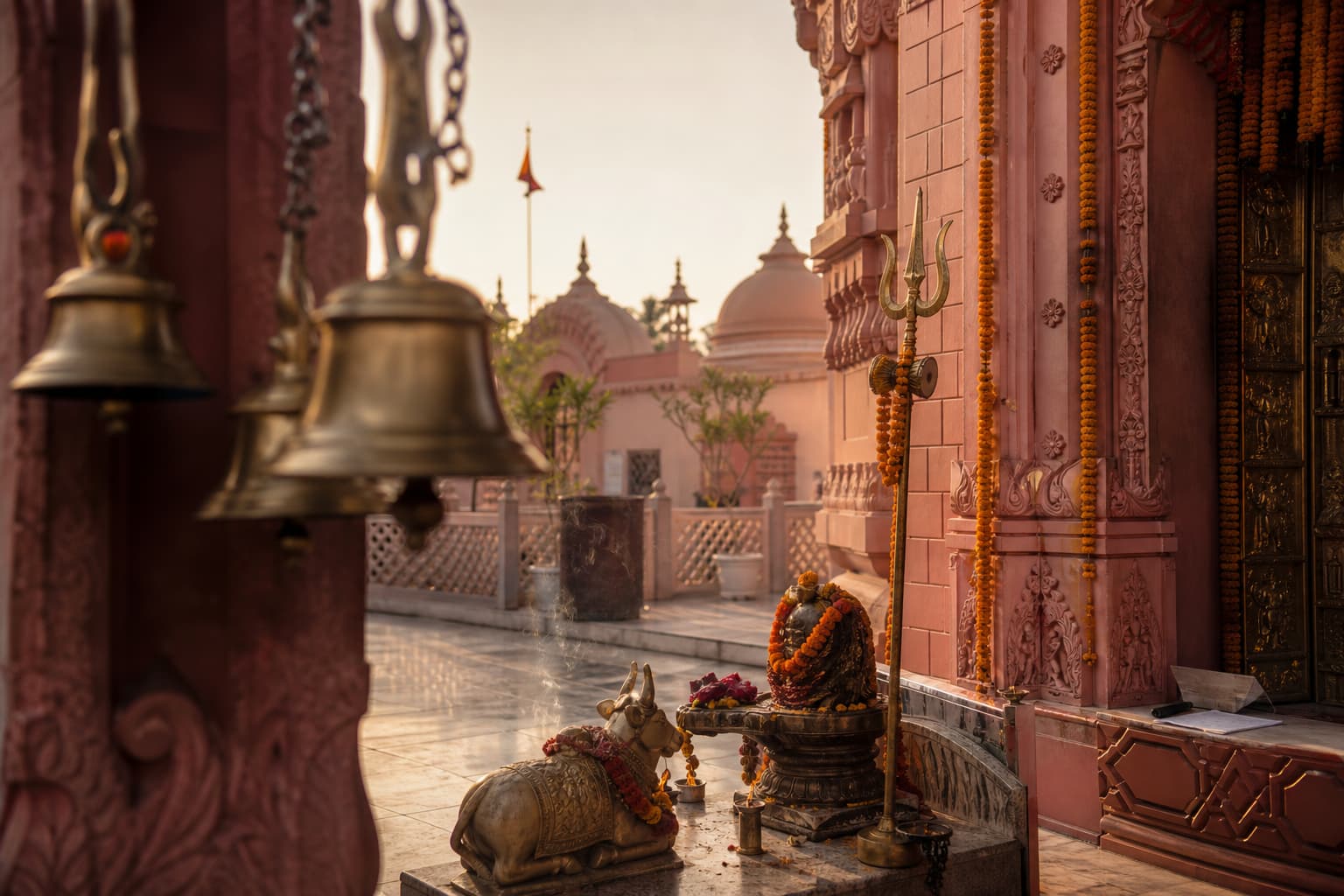
People come to Jaipur for the forts and the pink façades and the block-printed quilts they will carry home. They photograph the Hawa Mahal from the sweet shop across the road and think they have seen the city. They have not. Jaipur does not keep its heart in its monuments. It keeps it in its temples — a scattering of shrines the whole city sets its week by, so that a Wednesday means Ganesh, a Tuesday means Hanuman, and a certain shift in the light means it is time to climb.
I grew up an autorickshaw ride from most of these. What follows is not a "top ten" scraped off a review site. It is where Jaipur actually prays, and — just as usefully — when to go so you are not standing shoulder to shoulder with three thousand other people.
1. Govind Dev Ji — the god the city was planned around
Most cities put a fort or a clock tower at their centre. Sawai Jai Singh II put Krishna. The Govind Dev Ji temple sits inside the Jai Niwas garden of the City Palace complex, and the deity here was brought all the way from Vrindavan to keep it safe. What strikes you first is what is missing: there is no towering shikhara, no spire. The maharaja is said to have kept the temple deliberately low so that Govind Dev Ji and the king could see one another from the palace.
Go for one of the seven daily aartis — the mangla at dawn or the shringar soon after are the ones locals plan their morning around. The hall fills, the curtain draws back, and for a few minutes a garden temple with no tower holds more of Jaipur than any fort does. It is free, it is central, and it is the single thing I would send a first-time visitor to before anything else.
When: Early morning aarti. Janmashtami here is beautiful but impossibly crowded — go on an ordinary Tuesday instead.
2. Moti Dungri Ganesh — where the wedding cards go first
At the foot of a little marble-topped hill sits the Moti Dungri Ganesh temple, and if you want to understand how Jaipur uses its gods, come here on a Wednesday. Ganesh's day. The lane outside turns into a market of marigold and modak and red cloth, and the queue is full of families holding the very first printed card of a wedding — because in Jaipur you send Ganesh his invitation before you send it to anyone else. The temple is not old by temple standards, established in 1761, but few shrines in the city are loved this practically.
The smell hits you before the darshan does — marigold, ghee, and the thick sweetness of loban smoke curling out of the sanctum. That resin, frankincense's cousin, is the oldest temple smell in India; it is the same benzoin we hand-roll into our incense back in our workshop in Bihar, and standing in that doorway you understand why people want to carry the scent home. Come Wednesday morning for the full theatre, or a weekday evening if you would rather actually pray than jostle.
When: Wednesday for the crowd and colour; any evening for quiet. Ganesh Chaturthi turns the whole hill into a fair.
3. Garh Ganesh — the trunkless child on the ridge
This is my favourite, and the one visitors never find. Garh Ganesh sits high on the Nahargarh ridge above the old city, and reaching it means a climb of some 365 steps — one for each day, the old people say. Two things make it unlike any Ganesh temple you have seen. First, the idol has no trunk: here Ganesh is worshipped as Purushakriti, in his child form, before the elephant head of the familiar story. Second, its position is deliberate — Sawai Jai Singh II placed it so he could look up at it through a telescope from the Chandra Mahal of his palace below.
Climb it in the cool of early morning. Halfway up you stop pretending it is about the fitness and start noticing the city unrolling behind you — the grid of the old town, the pink washing pale gold. At the top the priest is unhurried and the crowd is thin, because most people cannot be bothered with the steps. Their loss.
When: Sunrise, for the climb and the view. Carry water; there is no shortcut.
4. Galtaji — springs, monkeys, and the sun on the ridge
East of the city the road runs out into a fold of the hills, and there sits Galtaji — a cluster of pink pavilions, pools fed by a natural spring, and a Surya temple crowning the ridge above. Foreigners call it the Monkey Temple, and yes, the langurs and rhesus macaques own the place; keep your prasad and your spectacles close. But that name sells it short.
The water is the point. Pilgrims have bathed in the kunds here for centuries, and the sound of the spring, the green of the water against the pink stone, and the troops of monkeys give the whole ravine a wildness the walled city has long paved over. Climb the extra steps to the Surya Mandir at dusk and watch the light leave Jaipur from above.
When: Late afternoon into sunset. Sundays are busy with local families; a weekday is calmer.
5. Birla Mandir — white marble and an easy evening
Below Moti Dungri, the Birla Mandir (Lakshmi Narayan temple) is the modern one — all white Makrana marble, carved clean and lit up after dark. Purists sniff at it for being new and grand rather than old and worn. Ignore them. It is calm, it is beautifully kept, and at dusk when the marble is floodlit and the aarti bell goes, it is one of the gentlest half-hours in the city. Bring elderly parents here; there are no punishing steps, no crush, just cool stone and a quiet god.
When: After sunset, when the marble glows. Good for anyone who cannot manage a climb.
6. Khole ke Hanuman ji — the temple that feeds the whole city
About nine kilometres out, tucked into a khola — a gap in the hills — is the Khole ke Hanuman ji temple. On an ordinary Tuesday or Saturday it is a busy, cheerful Hanuman shrine. But once a year, on Annakut just after Diwali, it becomes something else entirely: the Lakkhi fair, where hundreds of cooks work rows of furnaces through the night to feed a mountain of prasad to a crowd counted in the lakhs. If you are in Jaipur in that window, this is the one to see — not for the darshan alone but for the sheer scale of a city cooking for its god.
When: Tuesday or Saturday for regular darshan; the Annakut fair (late autumn, after Diwali — check the year's date) for the spectacle.
How a local actually uses this list
You will not do all six in a day, and you should not try. Jaipur's temples are not a checklist; they are a rhythm. If you have one clear morning, take Govind Dev Ji at dawn and let the day be quiet after. If you want the city's living, sweating, marigold-and-loban devotion, go to Moti Dungri on a Wednesday. If you want the climb and the view and a little solitude, it is Garh Ganesh, always.
And whichever you choose, go early. The gods of Jaipur, like the city itself, are best met before the heat and the crowds arrive — in that first hour when the bells start, the loban smoke rises, and the pink stone has not yet turned to glare.


