
Why Tirumala Pilgrims Give Their Hair and Their Gold
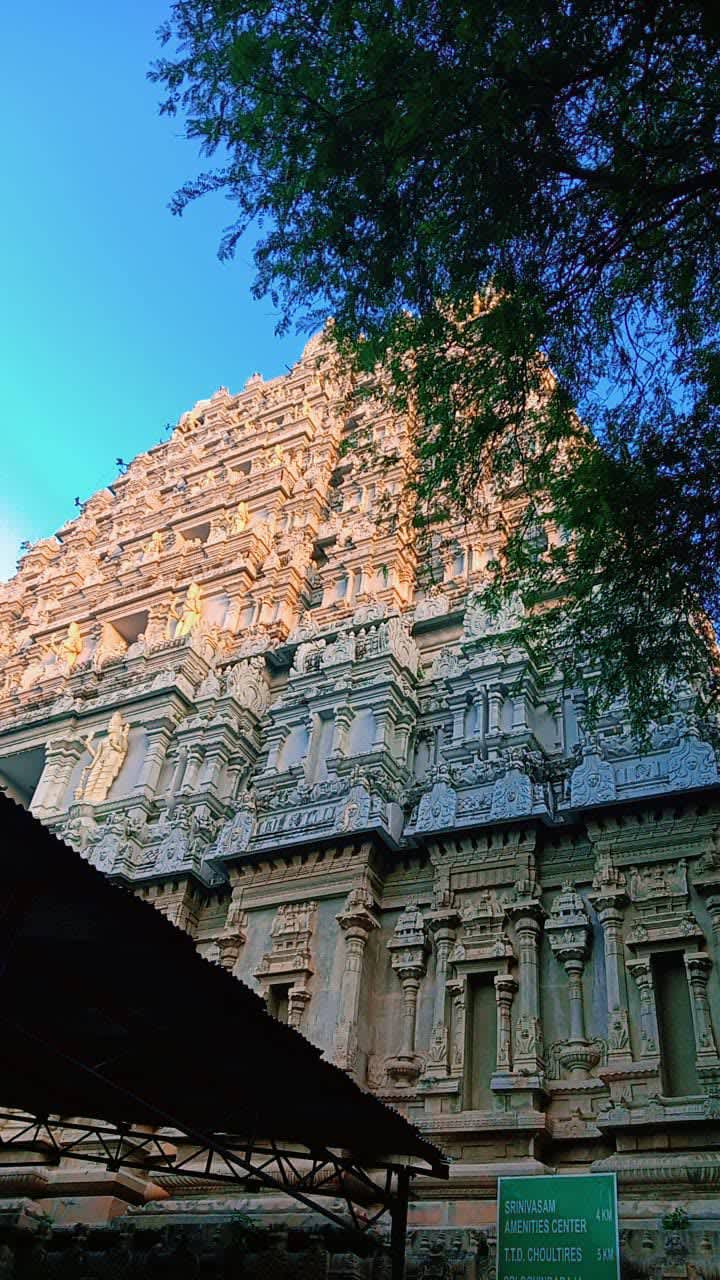
If you have ever stood in the line at Tirumala, you notice two things long before you reach the sanctum, and neither of them is the deity.
The first is the heads. Everywhere, men and women and small children with their scalps freshly shaved, the skin still pale where the hair was, a smear of sandal paste or turmeric on top. Whole families, bald together, walking up towards the hill temple. The second is the hundi — the great donation vessel near the shrine, into which people drop notes and coins and gold chains and folded slips of paper without pausing, a steady rain of money that the temple counts by the sackful every day.
To an outsider these look like two separate customs. They are not. They come from the same story, and once you know it, the whole crowded hill reads differently.
The hill that bled
The story begins, as these stories do, with a cow.
Long before there was a temple, the tale goes, the deity stood alone on the hill of Venkatadri, self-formed, un-carved by any hand — a swayambhu murti covered over by an anthill, forgotten by people. A cow from a nearby herd began slipping away each day to that mound. It would stand over the anthill and let its milk flow down into the earth, feeding whatever was hidden there, and come home dry.
The cowherd could not understand why the animal gave no milk. One day he followed it, saw it emptying itself over the mound, and in anger swung his axe at the cow's head. The blow never landed on the cow. The deity beneath the anthill rose to take it, and where the axe struck, the stone bled and a wound opened on the head of the Lord.
That is the traditional account of how Venkateswara was found — not built, but discovered, bleeding, on a hill. It is also, the story says, why he is called by names that carry that blow. The god of Tirumala is a god who took a wound meant for someone else.
Neela Devi's hair
The wound is where the hair comes in.
In the story, a Gandharva princess named Neela Devi was passing and saw the injury on the Lord's head. Without hesitating she cut a length of her own hair and pressed it to the wound, and the bleeding stopped. Her hair, given away without a thought for herself, healed the god.
Narayana was moved by it. He told her that hair — the one thing people are most vain about, the thing they groom and cover and protect — becomes something else entirely when it is given away with a clean heart. He promised that anyone who came to his hill and offered their hair to him would have their prayer carried. And he gave the hill she stood on her name: Neeladri, one of the seven hills of Tirumala.
So the shaved heads in the queue are not a hygiene rule or a fashion. Every one of them is a small repetition of Neela Devi's act — the surrender of the thing you are proud of, at the place where a woman once gave her hair to close a wound. At Tirumala the tonsure sheds have their own name, the Kalyanakatta, and barbers work through the day and night; the collected hair, once burnt, is now washed, sorted and sold at auction, and the money goes back into the temple. A vanity offered up, turned into schools and meals. The story would approve of that.
The god who borrowed money
The gold has a different root, and it is the part of the legend I find most human.
In his form as Srinivasa, the Lord fell in love with Padmavati, the daughter of a local king, Akasa Raja. He wanted to marry her. But the king, as fathers do, set terms — a wedding, a dowry, the full weight of a royal marriage. And the god, standing on his hill, did not have the money.
So he borrowed it. He went to Kubera, the treasurer of the gods, the keeper of every buried hoard, and took a loan — the tradition puts it at a staggering fourteen lakh coins of gold — to pay for the wedding of Padmavati. The condition Kubera set was simple and enormous: the debt, with interest, was to be repaid by the end of Kali Yuga, the present age. Until then, the Lord would not return to Vaikuntha. He would stay here, on the hill, working off what he owed.
That is the belief a devotee carries to the hundi. The money you drop in is not a fee for the darshan and it is not, in the old understanding, charity to a temple. It is a contribution to a specific, ancient debt — you are helping your god pay back Kubera so that he can one day go home. It reframes the whole transaction. The crowd is not buying anything. It is standing surety for someone it loves.
If you listen in the line, that is what the chant is doing too — Govinda, Govinda, rolling up the hill in waves, the name repeated the way you would keep saying a friend's name while you helped them out of trouble. Somewhere in that queue is the same instinct that fills a home with sandal and camphor before a prayer; the signature fragrances people burn at their own small shrines are a quieter version of the same reflex — giving something up into smoke so the prayer has somewhere to go.
Why the story still runs the hill
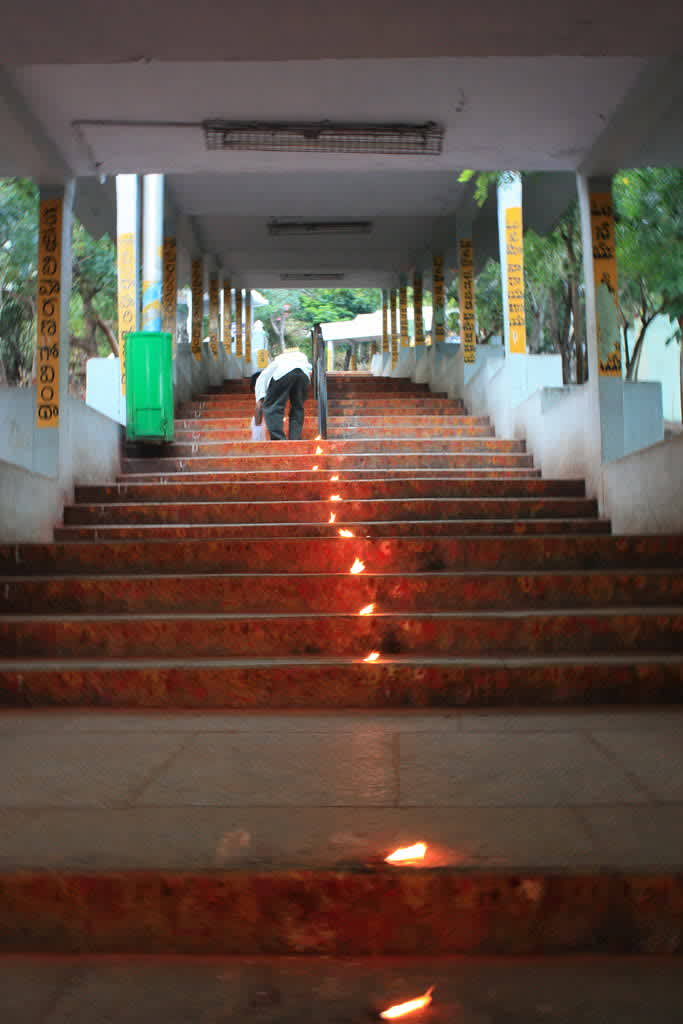
You can take all of this as literal history or as a devotional frame, and the temple does not ask you to choose. What matters is that the story is not decoration. It is the operating logic of the place.
The wound explains the hair. The hair explains the sheds full of barbers and the pale scalps in the queue. The debt explains the hundi and the sackfuls of gold and the never-ending count. A pilgrim who knows nothing of the sthala purana — the temple's own account of itself — still enacts it perfectly by shaving a head and dropping a chain into a box. The story runs the hill whether or not anyone is reciting it.
That is what a living myth is. Not something you believe in the way you believe a fact, but something you do — a shape your hands fall into, generation after generation, at a particular place. A god who took a blow meant for a cow. A woman who gave her hair to heal him. A god who ran up a debt for love and stayed behind to pay it. And a hill full of people, every single day, quietly helping him settle up.
The next time you see a small bald head bobbing in that line, or hear the coins go into the hundi without a pause, you will know what they are really doing. They are keeping a very old promise.


