
Bel Patra: The Offering That Was Never Meant to Cost
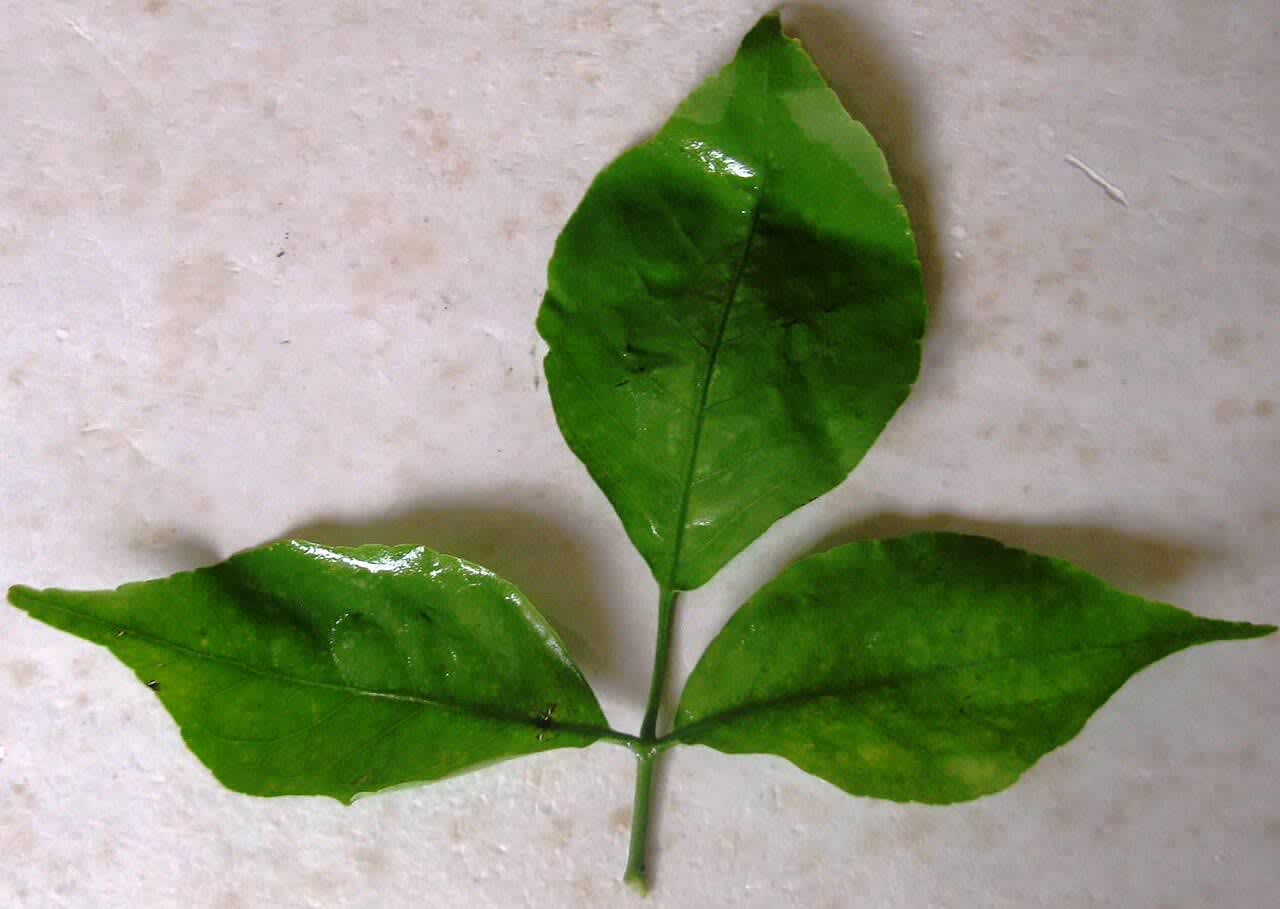
Outside a Shiva temple in Lucknow on a Monday morning, before the queue has properly formed, there is always someone sitting with bel leaves. They come in loose bundles tied with thread, three-lobed and still damp, laid out beside the marigolds. Everybody buys a bundle. Almost nobody looks at it twice.
There is something odd about that transaction, though. By the tradition's own rules, nobody should have gone out and picked those leaves that morning. Monday is one of the days on which bel leaves are not to be plucked.
That is not an accusation. It is the loose thread I want to pull, because pulling it turns a handful of rules that look like fussy superstition into something much more deliberate. The bel leaf is the one major offering in Hindu worship that was never supposed to cost anything — and nearly every rule attached to it works to keep it that way.
The tree nobody has to plant
Bel, bael, bilva: Aegle marmelos, the only species in its genus, a member of the citrus family. The leaf is trifoliate — three leaflets on one stalk, which is why a single bel patra already looks like a small arrangement.
What is worth knowing about the tree is how little it asks. It tolerates soil anywhere from acidic to strongly alkaline, puts up with waterlogging, and survives temperatures from below freezing to the high forties. It grows in dry forest. In plain terms, it stands in ground where a flower garden would simply fail, and it does so without being watered, fed or fussed over by anyone.
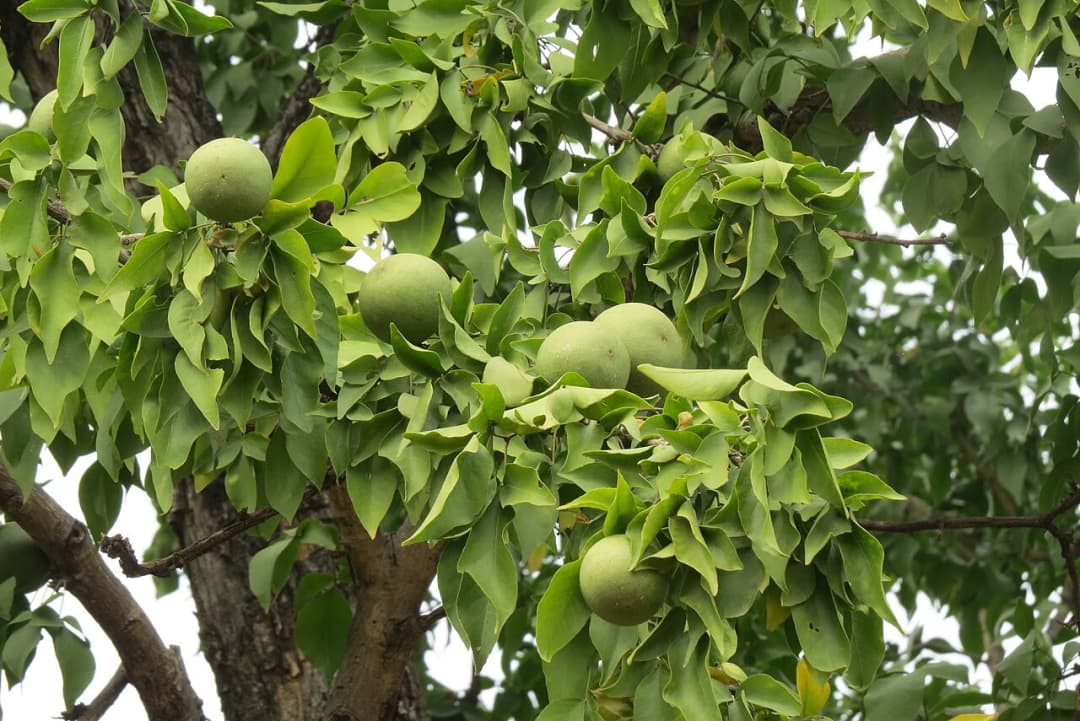
The fruit is a hard round thing with a shell you need a stone or a blade to get into, and it takes something like eleven months on the branch to ripen. A tree that asks for nothing and takes its time: that is the plant the whole of this practice is built on.
Lakshmi's tree, handed to the god with nothing
The oldest surviving note of the tree's sacredness is not a Shiva text at all. It sits in the Sri Sukta, the hymn attached to the Rigveda, where the bael is honoured as the tree in which the goddess Lakshmi resides.
Hold the two halves of that together, because I think it is the most interesting fact in the whole subject. The tree belongs to the goddess of abundance. Its leaf is the dearest offering of the god who wears ash, keeps company with a cremation ground, and owns nothing anyone would bother to count. The wealth is genuinely there in the tradition; it is simply, pointedly, not what gets offered. What gets offered is a leaf.
The Bilvashtakam — eight verses attributed to Adi Shankaracharya — is an entire hymn about the offering of a single bilva leaf. Its first verse reads the three lobes as the three gunas, as Shiva's three eyes, and as the three prongs of the trident. Ask around and you will be given other readings too: the three Shaktis, past-present-future, the three sounds of the syllable. The disagreement is itself informative. In centuries of commentary nobody has argued about what the leaf is worth. They have only argued about what it means.
The simplest explanation anyone gives for the leaf is the oldest one: it cools. Water, milk and a green leaf, poured and placed on stone, for a throat that once held the poison of the churned ocean. You are not buying anything. You are bringing something cool to someone who is burning.
The calendar forbids the picking, never the offering
Here are the rules as they are usually given. Bel leaves are not to be plucked on Chaturthi, Ashtami, Navami, Chaturdashi or Amavasya; not on Sankranti; and not on a Monday. The practical instruction that follows is to pluck a day ahead and keep what you picked.
Read that list again and notice what it does not say. It does not restrict the worship. Offering bel patra is not forbidden on any day of the year. Only the taking is restricted. You may bring the leaf to Shiva whenever you like; you may not help yourself to the tree whenever you like.
That is a rule about the tree, not a rule about your merit. And notice what it charges you. Sandalwood costs money. Ghee costs money. Remembering on Sunday evening that you will want leaves on Monday morning costs attention, and attention is the harder currency of the two. Of everything in the puja thali, the one item the tradition protects with a calendar is the free one. The placing itself — three leaves at a time, stalk turned toward you — is the easy part.
A leaf that never gets used up
In most of Hindu practice, once a thing has been offered it becomes nirmalya. The withered flower, the water that has run over the stone, the leftover garland: all of it is finished, and it goes back to a river or to the foot of a tree rather than back onto the shelf.
Bel patra is the exception everyone quotes. Leaves plucked on a permitted day can be kept, rinsed with clean water and offered again. The belief is that the leaf does not go stale and does not become impure — Shiva, the story goes, blessed the tree and declared that anything offered with its leaf is pure. There is a direction to it: leaves offered to another deity should not then be placed on a Shivalinga. But bel on bel, washed and brought back, is not a shortcut. It is the practice.
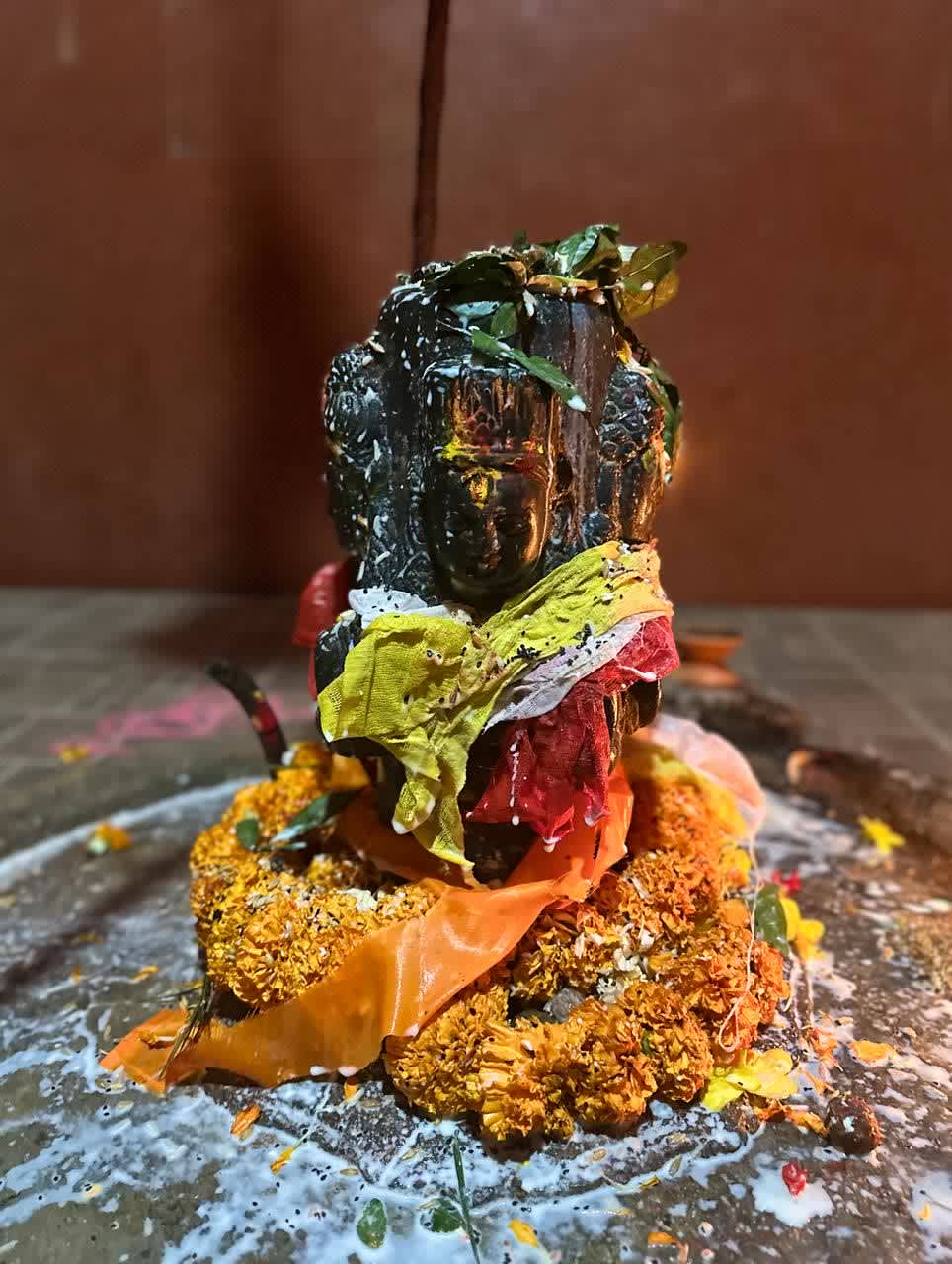
Set that beside a flower for a moment. A marigold garland is consumed by its own use; it is beautiful on Monday and compost by Wednesday, and that impermanence is half of what it means. The bel leaf refuses that arc. It can be offered, washed, dried and offered again. I cannot think of another common offering in the household repertoire that works this way — one that is never spent.
The hunter who did not know what he was doing
The story the tradition tells about all this is read out every Mahashivratri, and it is a strange one to have put at the centre of a festival.
In the Shiva Purana, a hunter — Lubdhaka in most tellings, Gurudruha in others — goes deep into the forest and is caught out by nightfall. He cannot find his way home, the dark fills with the sounds of animals, and he climbs the nearest tree to wait out the night. The tree is a bel. Afraid he will doze off and fall, he picks a leaf, drops it, says Shiva's name, and picks another — all night, one leaf at a time, to keep himself awake. At first light he looks down and sees that he has been dropping leaves onto a Shivalinga he never knew was under him.
Count what is missing from that offering. The man is poor. He is a hunter, outside the ritual class. He spends nothing, prepares nothing, and intends nothing — he is not worshipping, he is staying awake. The leaves were free and were not even chosen. Everything that would normally make an offering impressive has been stripped out, and the tradition kept the story anyway and made it the model.
And the man outside the temple gate
So back to the bundle of leaves by the marigolds, and to the small contradiction I started with.
I do not think it is hypocrisy. A city has far fewer bel trees than it has Shiva temples, and a flat on the ninth floor has nowhere to put one. The person sitting at the gate with the bundles is not breaking the system; he is the city's answer to it, and the rule he is quietly absorbing on everyone's behalf was always a rule about the tree rather than about the worshipper.
But something has shifted and it is worth noticing. The leaf was free so that the offering could not be a transaction. Buying a bundle on the way in makes it one again — mildly, cheaply, but genuinely. The older version is still available to anyone who wants it, and it still costs nothing. Find out where the nearest bel tree actually is. Pick on Sunday for Monday. Keep what you picked, wash it, use it again.
The leaf, in the end, was never the gift. Remembering it a day in advance was.


