
Charcoal or Sawdust: What the Black Base of an Agarbatti Is
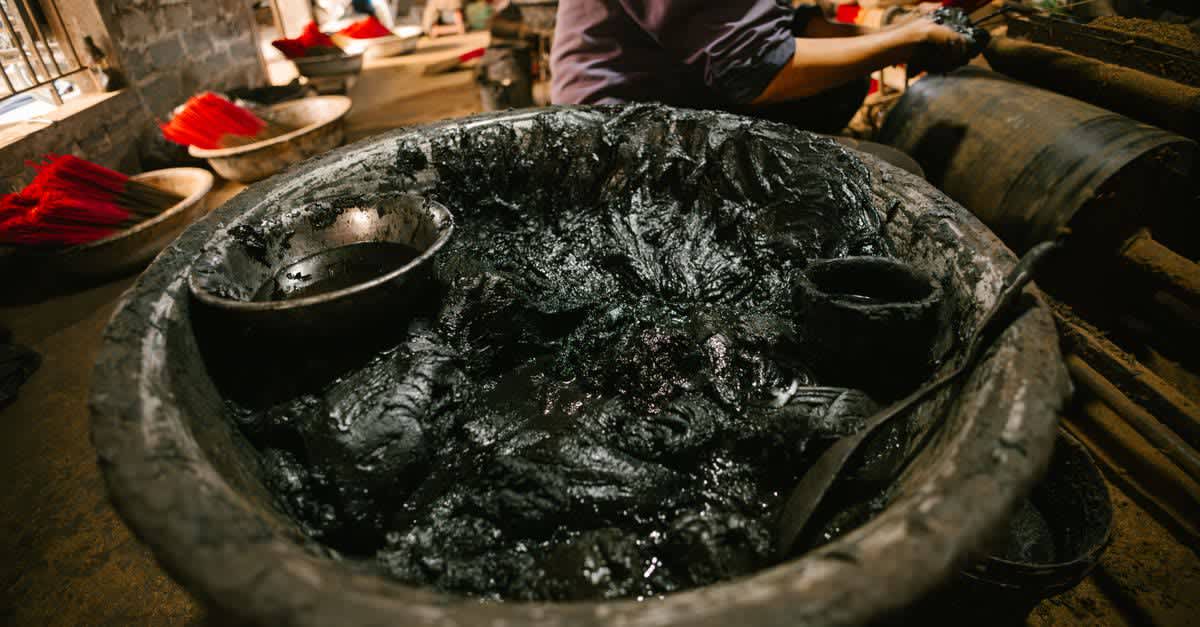
The first time I watched incense being rolled, I was surprised by how little of it was fragrance.
I had gone expecting a room full of sandalwood and rose. Instead there was a large steel tray of something that looked like wet black earth, and a woman sitting cross-legged, taking a pinch of it and drawing it up a thin bamboo stick with the flat of her palm in one long, practised stroke. The smell in the air was not perfume. It was damp, woody, a little smoky — closer to a mud stove than a temple.
That black paste is the part nobody talks about. We argue about scents. We pay for sandalwood and mogra and loban. But underneath every one of those is a base — an un-perfumed dough of powder, gum and water rolled onto the stick first — and that base decides more about how your incense behaves than the fragrance sitting on top of it does.
What the base is actually doing
Think of an agarbatti as three layers doing three jobs.
The bamboo sliver in the middle is the spine. It holds the stick straight and gives you something to hold that does not burn to nothing.
The fragrance is the part you buy it for — the scent that fills the room.
But between them is the base paste, and its job is simply to burn slowly and evenly, carrying the fragrance with it. It is the fuel. If the fuel is bad, it does not matter how good the perfume is — the stick will burn too fast, or go out halfway, or throw off a harsh smoke that fights the fragrance instead of carrying it. Most of what people call "a cheap-smelling stick" is not a cheap fragrance at all. It is a cheap base.
So what goes into it?
Charcoal, or wood powder — the two roads
Broadly, incense makers build the base one of two ways, and you can smell the difference once you know to look for it.
The charcoal base starts with fine charcoal powder — the black kind that burns hot and clean. A charcoal-based stick lights easily, holds a steady coal, and burns down predictably. It is the workhorse of the industry, and there is nothing wrong with it when it is made honestly. The catch is that charcoal has almost no smell of its own to give — it is a blank carrier — so a charcoal stick lives or dies entirely on the fragrance dipped or mixed into it. Get the fragrance right and it is lovely. Get it wrong, or use too little, and you are basically burning scented coal.
The wood-powder base — usually a fine sawdust from soft, low-resin woods, sometimes with a little charcoal blended in — burns a touch slower and brings a warm, woody undertone of its own. This is closer to the older, masala way of making incense, where the base is not just fuel but part of the smell. A good wood base gives a rounder, more forgiving smoke. A bad one — coarse sawdust, or wood with too much resin — smokes heavily and can smell of burning matchsticks.
Neither is "the good one" and neither is "the cheap one." What matters is the quality of the powder and how well it is mixed. I have smelled beautiful charcoal sticks and awful wood ones, and the other way round.
Holding it all together is a natural binder — a tree-gum powder that turns to paste with water, so the base clings to the bamboo instead of crumbling off as it dries. (We wrote separately about that gum and why it matters if you want the longer story.) Too little binder and the stick sheds; too much and it burns sluggishly and leaves a hard clinker. Getting that balance right is most of the skill in the tray.
Where cheap sticks cut the corner
Once you understand the base, the shortcuts in cheap incense become obvious.
The commonest one is simply too much filler and not enough fuel. Cheap sawdust — coarse, damp, from the wrong wood — is nearly free, so a bad maker packs the base with it and skimps on the good powder and the binder. The stick still looks like incense. It just burns badly: fast, uneven, with a grey, throat-catching smoke.
The second is over-dipping. If the base is weak, a factory can hide it by soaking the finished stick in strong synthetic fragrance oil so the first two minutes smell powerful. Then it fades to that harsh underlying burn. You have all met this stick — the one that smells wonderful when you light it and like burning cardboard by the middle. That is a poor base wearing borrowed clothes.
The third is drying it in a hurry. A properly made base is mixed to the right wetness and then dried slowly, so the water leaves evenly and the paste stays bonded to the bamboo. Rush it under heat and the outside dries while the inside is still damp; the stick cracks, or burns in fits and starts. On our own line in Samastipur the sticks are left to dry slowly on racks for exactly this reason — the base is only as good as the drying that sets it.
How to read a stick before you burn it
You do not need a workshop to judge a base. A few things tell you a lot, and they cost nothing to check.
- Snap one in half. A good base breaks with a clean, slightly dense edge — not chalky, not crumbly. If it powders away or the paste separates from the bamboo, the mix or the drying was poor.
- Look at how evenly the paste sits. Hand-rolled sticks are never machine-perfect, but the coating should run fairly consistently down the length, not thick in one spot and bare in another.
- Smell the unlit stick. A masala or wood base has a faint, warm, woody smell even cold. If a cold stick already smells sharp and chemical, that is dipped synthetic fragrance sitting on a base that has nothing to say for itself.
- Then light it and watch the ash. A clean base burns down to a firm grey ash that mostly holds its shape. A stick that drops black, oily flakes or keeps going out is telling you the fuel underneath was wrong.
None of this is about spending more. Some of the most honest incense I have burned was not expensive — it was just made by someone who did not cut the base. And some of the priciest, most beautifully boxed sticks turned out to be strong fragrance hiding a lazy paste.
The part worth paying attention to
We spend all our attention on the top note — the name on the box, the sandalwood, the rose. It is worth turning that attention down a layer, to the plain black paste nobody photographs. That is the part actually doing the work when a stick burns clean and slow in front of the evening lamp, or fills a whole room from one thin line of smoke without ever turning harsh.
Next time you light one, snap the spare in half and look at the break. You will start to see which of your sticks were built properly from the inside out — and which ones were only ever a good smell in a hurry.


