
Jigat: The Bark Gum That Holds Every Incense Stick
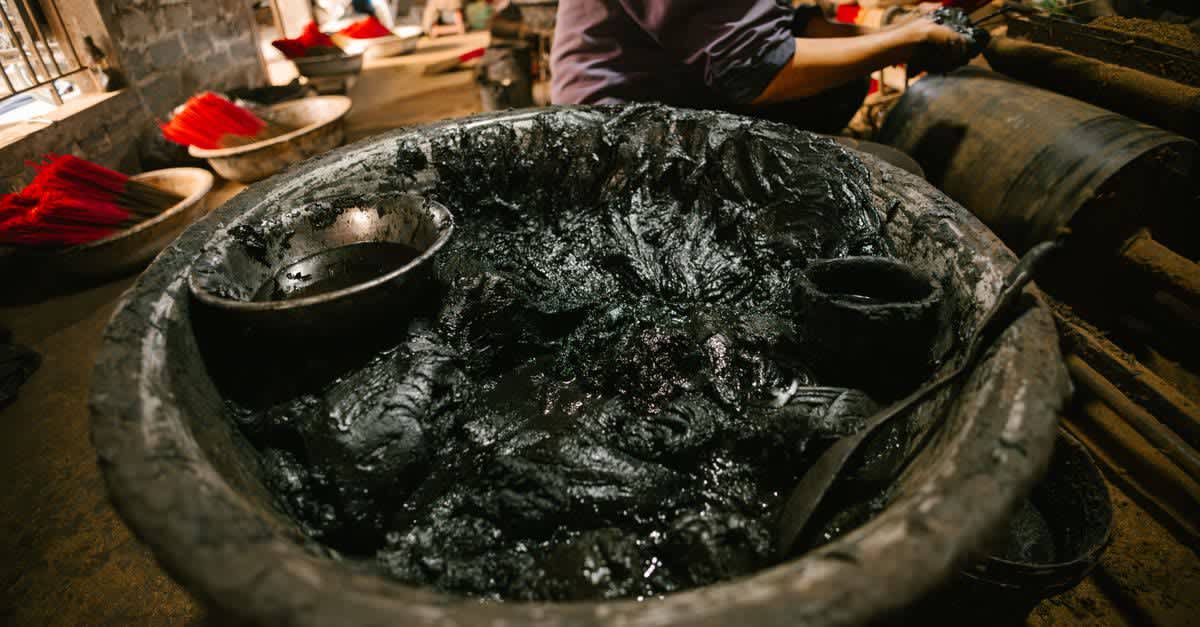
In Prayagraj the monsoon does not arrive politely. For three or four months the air itself is wet, the Ganga and the Yamuna run high and brown at the Sangam, and everything you own feels faintly damp to the touch. Papers curl. Salt clumps in the jar. And in the small rooms where incense is rolled, the season changes the work in a way no customer ever sees.
The reason has a name most people who burn agarbatti have never heard: jigat.
The ingredient that isn't on the label
Pick up a stick of incense and it looks simple — a thin bamboo sliver with a grey-brown paste dried onto it, dusted with fragrance. People assume the paste is "the perfume". It isn't, not mostly. The bulk of what you see is a mixture of charcoal and fine wood powder. Charcoal is what carries the clean, even burn. Wood powder gives it body. Neither of those, on its own, will stick to anything.
What makes the paste a paste — what lets a wet handful be pressed onto a bamboo stick and hold there while it dries hard as a matchstick — is jigat. It is a natural gum, milled to a soft flour, that comes from the bark of certain forest trees. Mix it with water and it turns mucilaginous, slippery, faintly sweet-smelling in the raw. It is glue, but a glue that grew.
You could think of it the way a cook thinks of the binding in a dish: the dal and the vegetables are what you taste, but without the right thickening the whole thing slumps and refuses to hold its shape. Jigat is the thickening. Get it right and nobody notices it. Get it wrong and the stick tells on you the moment you light it.
Where it comes from
Jigat is a forest product, not a factory one. It is ground from the bark of trees in the laurel family — machilus and its relatives are the usual source — that grow in the hill forests of India and the northeast. The bark is dried and milled into a powder, and that powder is what travels down to the incense-making belts of Bihar, Karnataka and beyond.
Because it is a bark gum and not a synthetic, it behaves like something that was once alive. It is fussy about water. It is fussy about weather. A sack of jigat from one season does not always behave exactly like the last. Makers learn its temper the way you learn a river's — not from a manual but from the season, from the feel of the dough under the heel of the hand.
Working it by hand
The mixing is where the craft lives. Charcoal, wood powder and jigat go into a wide vessel; water is added slowly, and then the hands take over. You knead it the way you knead atta for roti — folding, pressing, turning — until it stops being a crumbly, grudging heap and becomes a smooth dark dough that holds a thumbprint.
Too little water and it crumbles; the paste will not travel onto the stick. Too much and it sags, sliding off the bamboo before it can set. The jigat is what decides how wide that margin is. A good batch is forgiving — the dough stays workable for a long stretch and rolls onto stick after stick without cracking. A poor mix, or too little gum, and every stick fights you.
Then comes the rolling itself: a small ball of the dough pressed and drawn along the bamboo sliver with a flat, practised motion until a thin even coat runs the length of the stick, leaving a bare handle at the bottom. A skilled roller does this in a second or two, hundreds of times an hour, and the coat comes out the same thickness every time. It looks effortless. It is not. The paste has to be exactly right, and the jigat is what makes it right.
What goes wrong
This is the part outsiders never guess, so it is worth saying plainly. The most common mistake is not too little binder — it is too much.
Load a paste with extra jigat and it becomes wonderfully easy to roll; it grips the bamboo like it was born there. But gum does not burn cleanly. A stick over-bound with jigat struggles to stay lit, smoulders instead of glowing, and throws a flat, papery, faintly burnt-bark smell underneath whatever fragrance was added — the smell of the glue itself, cooking. You have made something that holds together beautifully and smells wrong. For a devotee lighting a stick before the morning lamp, that off-note is the whole difference between a scent that lifts the room and one that quietly spoils it.
Too little, and the opposite: the dried coat is brittle, it cracks along the stick, flakes come off in the packet, and the stick snaps when you pick it up. Between those two failures is a narrow, unmarked path, and finding it batch after batch — with bark gum that shifts from sack to sack — is most of the skill.
Why the monsoon changes everything
Here is where the season comes back in. Jigat is hygroscopic — it drinks moisture out of the air. In the dry months a mix behaves predictably. But through Sawan and the weeks after, when the rivers are full and the air in Prayagraj holds water like a cloth, the same recipe drinks differently. The dough needs less water because the atmosphere is already supplying it. Left out, a rolled batch that would have set firm in April stays tacky for hours, and sticks laid too close together in the damp will fuse or grow a bloom of mould before they dry.
This is why hand-rolled incense cannot be hurried, and why the good makers slow down rather than push through. In the wet months the freshly rolled sticks are spread out with more air between them, turned more often, and given the time they ask for instead of the time a schedule wants. Rush the drying and the jigat holds moisture inside the coat, and that trapped damp is exactly what makes a stick refuse to burn evenly later. Mahamaya's sticks are rolled and slow-dried by hand in Samastipur for this reason — the season sets the pace, not the calendar. You cannot argue a bark gum out of the weather.
The quiet ingredient
There is something fitting about all this for anyone who lights incense as part of a daily practice. The thing that holds the whole ritual together — that lets the fragrance ever reach you at all — is invisible, unglamorous, and entirely natural. No one prays to the binder. But without it there is no stick, no even ember, no thread of smoke to carry the morning.
The next time you light one and it burns down slow and clean, in a straight grey line to a fine ash, know that a good part of what you are enjoying is a decision someone made about a bark gum, on a humid morning, with wet hands, watching the sky over the river. That is the craft. It just doesn't sign its name.


