
Cotton Wick for a Diya: How to Roll One That Lasts
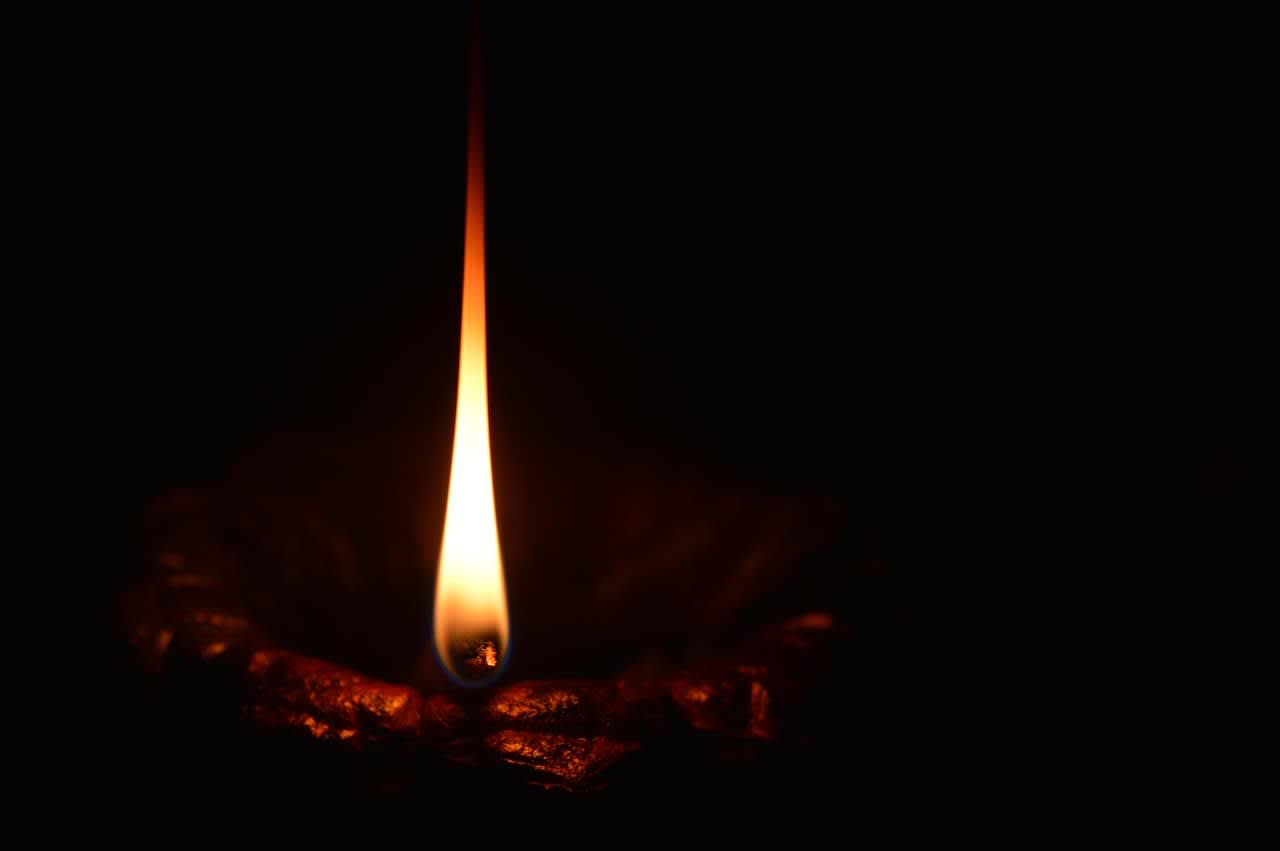
A cotton wick does not burn. It pumps.
The flame standing above a diya is burning oil, not cotton. The batti is a pump that lifts fuel to the place where it can catch, and almost every lamp problem people blame on bad oil is really a wick that is the wrong thickness.
Key takeaways
- A wick is a pump, not a fuel. Oil climbs it and burns as vapour just above the tip.
- Cotton suits the job because the dried fibre is a collapsed, twisted tube — a bundle of fine channels.
- Long battis suit deep brass lamps; round battis with a fat base suit shallow earthen diyas.
- Most failures are thickness failures. Too dense and the flame starves; too thin and it gutters.
What is the wick actually doing?
Put a wick in oil and the oil climbs it on its own, against gravity, with nothing pushing it. That is capillary action, and it is the whole mechanism: the oil travels up through the fibres to the tip, the flame's heat turns it to vapour, and the vapour is what burns. The standard description of a lamp wick is exactly that — it conveys the fuel to the flame, and when the liquid fuel reaches the flame it vaporises and combusts.
It reverses the way most of us picture a lamp. The cotton is not the candle. The cotton is the straw.
It also explains the commonest failure. If the wick cannot deliver oil as fast as the flame consumes it, the tip runs dry — and dry cotton is itself good fuel. The wick then burns as fuel instead of carrying oil, blackens and smokes.
Why cotton, and not something else?
Cotton is nearly all cellulose; by maturity more than ninety per cent of the fibre's dry mass is cellulose. But the useful part is the shape, and the shape is an accident of how the fibre dries.
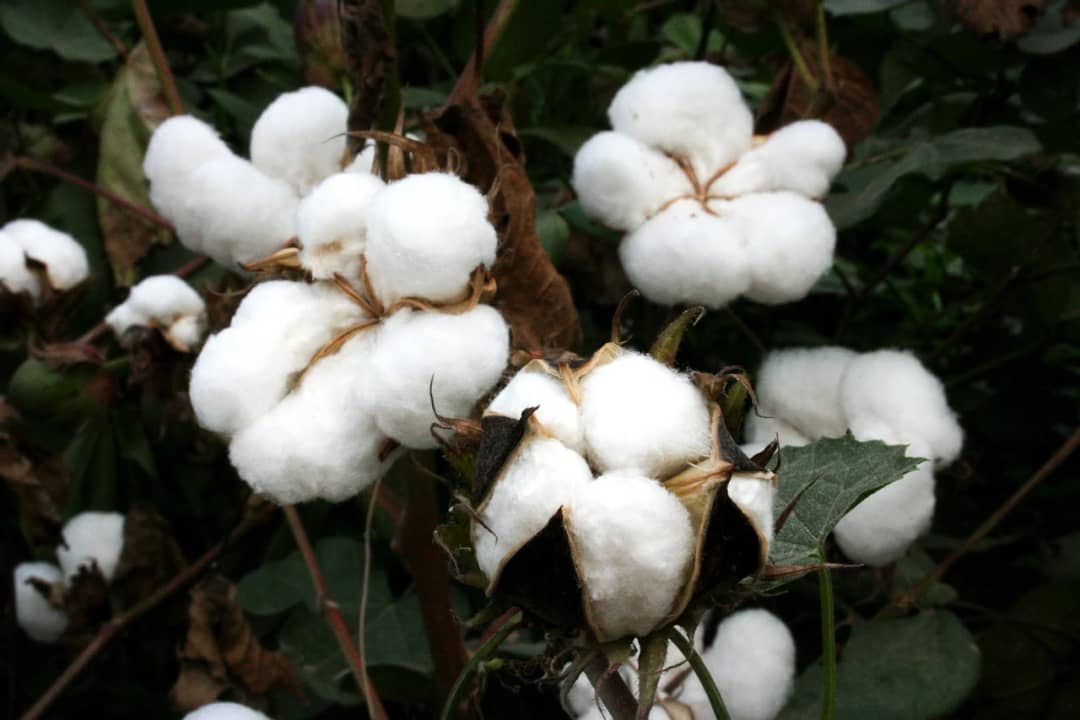
While the boll is still developing, each fibre is essentially a tube, with a central cavity called the lumen running down it. When the boll opens and the fibres lose water, those tubes collapse. The fibre flattens and twists irregularly along its length, and those twists are called convolutions. What you are left with is a flattened ribbon that has corkscrewed itself — and a mass of them, pressed together, is full of narrow channels for liquid to creep along.
A second property matters more for a wick than for cloth. Cotton gets stronger wet, its tensile strength typically rising ten to twenty per cent. A fibre that spends its working life lying in oil had better not go soft, and cotton does the opposite.
Which batti goes in which lamp?
Two shapes do nearly all the work, and they are not interchangeable.
| Wick | Shape | Suits | Behaviour |
|---|---|---|---|
| Long, lambi batti | drawn out thin, twisted, thread-like | deep brass lamps, an akhand jyoti kept burning | long reach into a deep oil well |
| Round, gol batti | fat base with a short upright tail | shallow earthen diyas | sits steady, will not slide |
| Multi-strand | several strands twisted together | large temple lamps | bright, and drinks oil quickly |
The round wick exists because a shallow clay diya has nothing to grip. A long thread laid in one slides into the oil and drowns, so the base is made deliberately bulky to anchor it.
How is a wick rolled by hand?
Take a small pinch of carded cotton — less than you think — and work it on a dry palm.
For a long wick you draw rather than squeeze, pulling the cotton out along the heel of the hand while rolling it under the fingers, so the fibres line up end to end. That alignment is the entire point: the channels must run the length of the wick, not across it. Roll one direction only — reverse halfway and you undo the twist.
For a round wick you keep a ball at one end and draw only the tail, then firm the base between finger and thumb.
Two things spoil it, both about the hands rather than the cotton. Damp or oily palms stop the fibres catching, so the wick never consolidates. And squeezing hard makes a dense, shiny thread that looks neat and performs badly, because the channels you crushed were the working parts. Firm but still soft is the feel; a rolled wick should give slightly.
It is the same economy of hand we use rolling agarbatti in Samastipur: even pressure, one direction, a tolerance for the first dozen being wrong. I have never rolled wicks for a trade, and those who do turn out a steadier thing in a second than I manage in a minute.
Why does my diya keep going out?
Nearly always, thickness. The trade's own troubleshooting puts it plainly: a wick that is too thin lets the flame puff and flutter, while one that is too thick swells with oil and pinches itself, so it cannot transport enough oil. A starved flame shrinks, blues at the base and dies.
The other three causes are easier to fix.
- The tail is too long. Everything above the oil is burning away as a free gift. A short tail, barely clear of the rim, gives a steadier light for longer.
- The base is not properly wet. A new wick needs a moment to charge. Lay it in the oil, let it darken, then lift the tail.
- The tip has carbonised. Black, brittle cotton no longer wicks. Pinch it off.
A larger wick means a larger flame and faster burning — sometimes just what is wanted at the lamp hour at dusk, almost never what is wanted from a lamp meant to stay lit all night.
Is the hand-rolled wick disappearing?
Partly, and the detail is more interesting than the headline.
Machines for making long cotton wicks have been available to industry for years. The round wick held out longer, because a bulbous base is awkward to form mechanically — so much so that two innovators from Ahmedabad, Vijaybhai Solanki and Dipakbhai Vyas, were recognised at the 8th National Grassroots Innovation awards in 2015 for building a machine that could make one at all. Their own note of the problem is that no machine existed for round cotton wicks, only the long ones.
The numbers in that record are worth keeping. By hand, a practised worker turns out eight to ten round wicks a minute; their machine does twenty to twenty-five, and a later model considerably more.
So the shape of the object decided how long the work stayed in people's hands. The simple thread went to machines early; the fiddly ball with a tail stayed a household job for another generation, because nobody could build the thing that replaced it.
Before the lamps come out
Diwali runs from 6 to 10 November this year, with Lakshmi Puja on Sunday 8 November, and most houses will take their battis from a packet without a second thought. That is entirely reasonable.
Still, it is worth rolling three or four by hand once, to feel what the packet hides. You will make a dense one that gutters and a loose one that burns out in minutes, and somewhere between them your fingers will find the pressure that works. After that you will never look at a lamp that has gone out and blame the oil.
Questions people ask
Why does my diya go out after a few minutes?
Usually the wick is too thick to draw oil fast enough, or its tail stands too high. Press the base down into the oil and thin the tail.
Should a diya wick be used with oil or ghee?
Both work. Ghee is thicker and climbs more slowly, so a looser, less tightly rolled batti behaves better in ghee than a dense one.
Can I just use a piece of cotton wool?
You can, but loose cotton has no continuous channel along its length, so it burns in patches. Drawing it into a tail is what makes it a wick.
Can a part-burnt wick be used again?
Yes, but pinch off the blackened tip first. Charred cotton no longer draws oil and will smoke rather than light cleanly.


