
Ekadashi Vrat: Which Day It Is, and When to Break It
You wrote to me on a Tuesday, which tells me you had already been worrying about this for a few days. Your phone says the Ekadashi is Thursday. Your aunt, on a call, said Friday and sounded faintly surprised that you had asked. And you are in a flat with one gas ring and nobody to copy, keeping this on your own for the first time instead of simply doing what was done around you.
So here is the long answer, because the short one — "ask at home" — is exactly what you cannot do this month.
Nobody is wrong. The disagreement is printed
Start with the thing that will make the rest make sense: your aunt and your app are not in a fight. They are using two different rules, both old, both legitimate, and the almanac knows it.
A tithi is not a day. It is the time the moon takes to gain twelve degrees on the sun, which runs to roughly twenty-three and a half hours and never lines up with sunrise. So the eleventh tithi almost always starts partway through one day and ends partway through the next, and someone has to decide which of those two calendar days is Ekadashi.
Smarta households generally take the day the tithi is current at sunrise. Vaishnava households apply a further rule that pushes the fast to the following day when the tithi is contaminated by the tenth at daybreak. Most months the two land on the same date. In 2026 they do not, three times.
Look at the list and you can see the seam
The 2026 Ekadashi list runs to twenty-four dates, and three of them are printed twice over.
| Ekadashi | First date | Second date, and its label |
|---|---|---|
| Yogini | Fri 10 July | Sat 11 July — Gauna Yogini |
| Shravana Putrada | Sun 23 August | Mon 24 August — Vaishnava |
| Devutthana | Fri 20 November | Sat 21 November — Gauna Devutthana |
That word Vaishnava in a row of a public almanac is the whole argument, settled and in print. The compiler is telling you that two communities keep the same Ekadashi on two days and that both tables are correct for their readers.
Two of the twenty-four will also look unfamiliar — Padmini on 27 May and Parama on 11 June. They exist only because 2026 carries an intercalary month; in a plain year you would never meet them.
Your fast does not begin when the tithi begins
This is what trips up everyone reading a panchang for the first time.
The almanac prints two times — Ekadashi Tithi Begins and Ekadashi Tithi Ends — and neither of them is an instruction. For Papankusha Ekadashi this month those read 2:11 PM on 21 October and 2:47 PM on 22 October. You do not start fasting at 2:11 on the Wednesday afternoon. The fast is kept across the whole of Thursday, sunrise to sunrise. The tithi times exist only to decide which date gets the fast in the first place. Once you have the date, you can stop looking at them.
What you may eat, which is a shorter list than you fear
The texts name four ways of keeping it, and you are allowed to choose at the sankalp according to what your body will take. Jalahar is water only. Ksheerbhoji is milk and things made of milk. Phalahari is fruit. Naktabhoji is a single meal taken just before sunset.
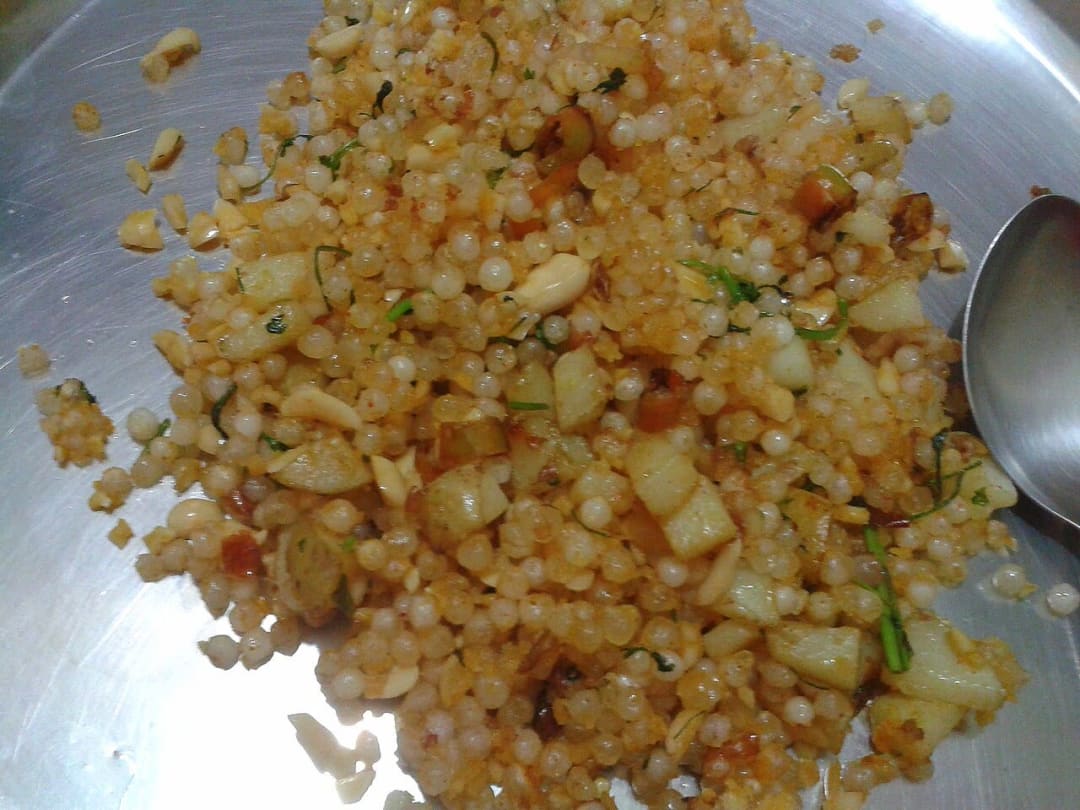
The one rule running under all four is the grain rule: no cereals, no pulses, no beans — no wheat, no rice, nothing of that family. Everything else follows from it. Sabudana, water chestnut flour, sweet potato, potato and groundnut are not quaint fasting foods invented for atmosphere; they are simply what is left standing when grain is removed, which is why an entire small cuisine exists around them.
Buckwheat and samak are eaten widely and deserve an honest footnote: they are pseudo-grains, and the almanacs themselves call their standing debatable. Plenty of careful households eat both. I mention it so you are not surprised when someone tells you off.
Breaking it is the part nobody explains
Here is the piece your aunt assumed you knew, because in her house it is simply what happens after the morning bath.
Breaking the fast is called parana, and it is not an afterthought — it is part of the vrat. It is done after sunrise on the day after the fast, and it must fall inside the twelfth tithi. Not doing the parana within Dwadashi is described in the texts as something close to an offence. You can keep the fast perfectly and still not have kept it properly.
There is also an hour you must not eat in. Hari Vasara — the almanac defines it as the first quarter of Dwadashi — is barred for parana. If it has not finished, you wait.
Why the window is only about two hours
Now the part I enjoy, because it is checkable on your own fingers.
The parana window for Papankusha Ekadashi is given as 6:27 AM to 8:42 AM on Friday 23 October. That looks arbitrary until you notice that sunrise that morning is 6:27 and sunset is 5:44 PM. Eleven hours and seventeen minutes of daylight; a fifth of it is two hours and fifteen minutes; add that to sunrise and you land on 8:42. The window is not a fixed clock interval at all. It is Pratahkal, the first fifth of the day's light.
Which means it breathes with the season. Rama Ekadashi's parana on 6 November gets two hours and eleven minutes. Nirjala Ekadashi's, in late June, gets two hours and forty-eight. The same rule, a longer day.
One more thing on Rama Ekadashi, since it is the next one after this month's: Dwadashi ends at 10:30 that morning. The window closes at 8:48 and the tithi itself expires less than two hours later. That is a morning to set an alarm for.
November, when even the dates give up
If you want to see the machinery fail honestly, watch Devutthana Ekadashi next month. The tithi opens at 7:15 AM on Friday 20 November and closes at 6:31 AM on Saturday — after Friday's sunrise, before Saturday's. It never reaches a sunrise at all. It is kshaya, a tithi that the calendar skips.
So the almanac prints Devutthana on the Friday and Gauna Devutthana on the Saturday and lets the two traditions take the one they need. This is also the hinge of the year — Vishnu is said to sleep from Devshayani in Ashadha and wake on this day, which is why the four months between are kept as they are. There is more on that stretch in our piece on what the Chaturmas rules actually ask of you, and the Odia month-long version of the same discipline is set out in the Kartika brata at Puri.
The two days in a row nobody warns you about
Look at 23 October again. It is the parana day for Papankusha — and it is also a Pradosh Vrat. So is 6 November, the parana day for Rama Ekadashi. Twice running.
The traditional answer is almost comically practical: do the parana with water alone, inside its window, and carry straight on into the Pradosh fast without really breaking anything. Two fasts back to back sounds punishing and is treated as perfectly ordinary.
What I would actually do in your flat
I am not a pandit. I have never kept all twenty-four in a year, and I have no standing at all to tell you which of the two traditions is yours.
But the question you asked has a plain answer. Keep the one your aunt keeps. Not because her rule is better — it is not, they are both sound — but because a vrat is something you inherit along with the people who taught it to you. Follow her date, set an alarm for the parana window, and eat something before it shuts.
And when someone in that flat asks why you were up at six on a Friday looking at your phone, you now know the real answer. You were not checking the date. You were checking how much of the morning was left.


