
Ghee or Til Oil in the Diya? What Each One Is Really For
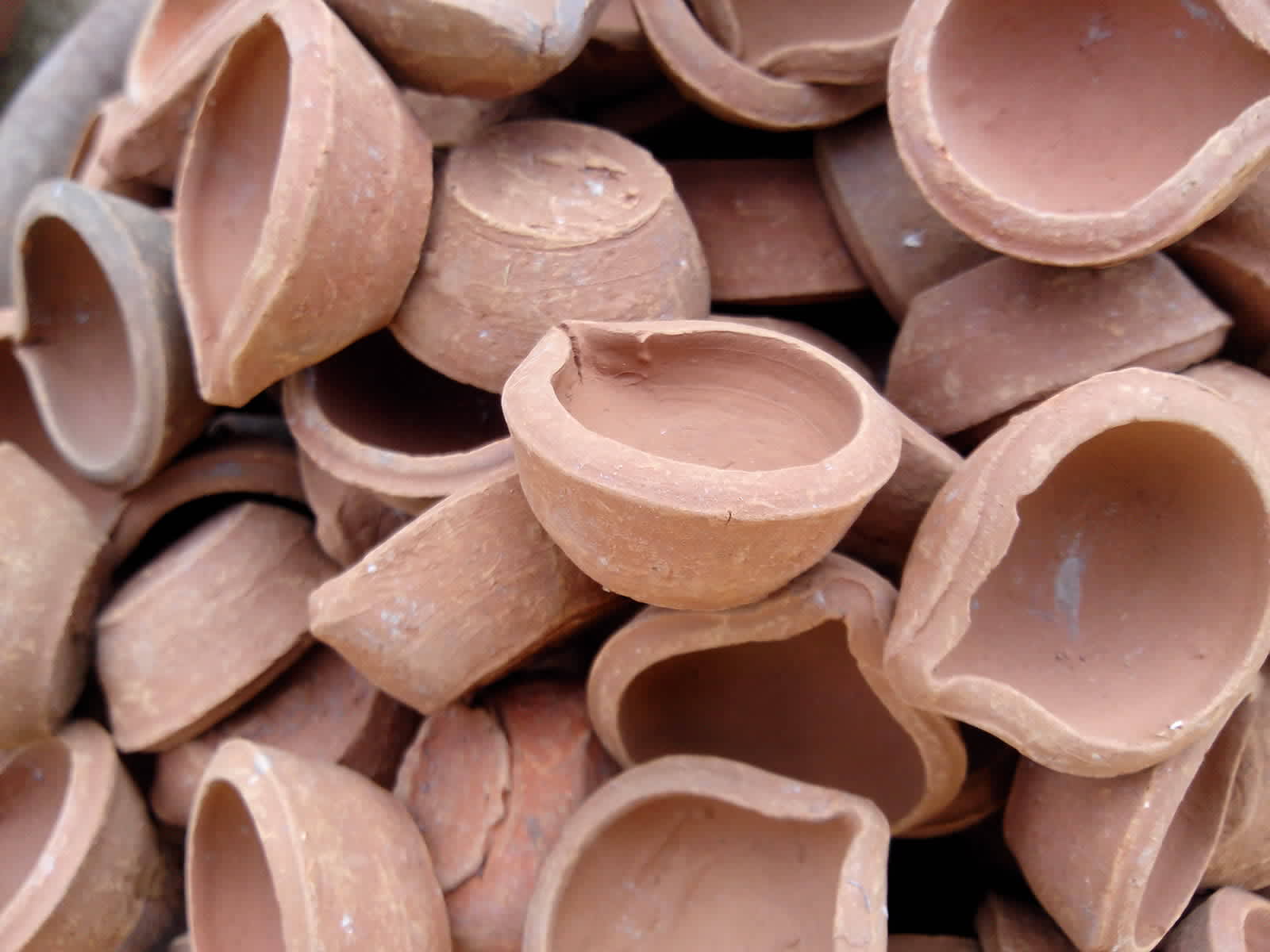
Ghee and til oil are not a ladder with ghee at the top. They are two different jobs, and the lamp usually tells you which job it is doing before you have to decide anything.
The lamp that faces inward — the one before the deity, the one kept burning for days — takes ghee. The lamp set outside the threshold takes oil, and often names which oil.
Key takeaways
- Ghee suits the inward lamp: the shrine lamp, the akhand jyoti, the Lakshmi Puja lamp on Diwali night, Sunday 8 November in 2026.
- Til oil is not a substitute for ghee. Across south India it is the standing everyday lamp oil, in temples with no reason to economise.
- Some rites name their oil. Yama Deepam on Dhanteras and the Saturday lamp for Shani take mustard or til oil, where ghee would be wrong rather than cheaper.
- The month of Kartika, 27 October to 24 November 2026, is when most households buy lamp fuel in quantity — and when the question actually comes up.
Is ghee really the purest thing to put in a lamp?
The common belief is clean and simple: ghee is the pure one, oil is what you use when ghee is beyond the budget. A single ladder, with everything else arranged below.
The honest case for that belief is stronger than people who dismiss it admit. Look at where the tradition spends, and ghee keeps turning up at the moments when nothing at all is being economised. The great beacon lit on the hill at Tiruvannamalai in the Tamil month of Karthigai — the one visible for miles, the one the whole town climbs for — is a ghee lamp, not an oil lamp. An akhand jyoti meant to stay alight through nine nights is filled with ghee. If ghee were merely an expensive indulgence, it would not be the thing chosen precisely when the choice is unconstrained.
So the belief is not foolish. It is just describing one ladder and assuming there is only one.
Why is til oil the default across south India?
Here is where the ladder breaks. In the whole southern half of the country, the everyday lamp — in the house and in the temple — burns sesame oil, and has for as long as anyone has written the practice down.
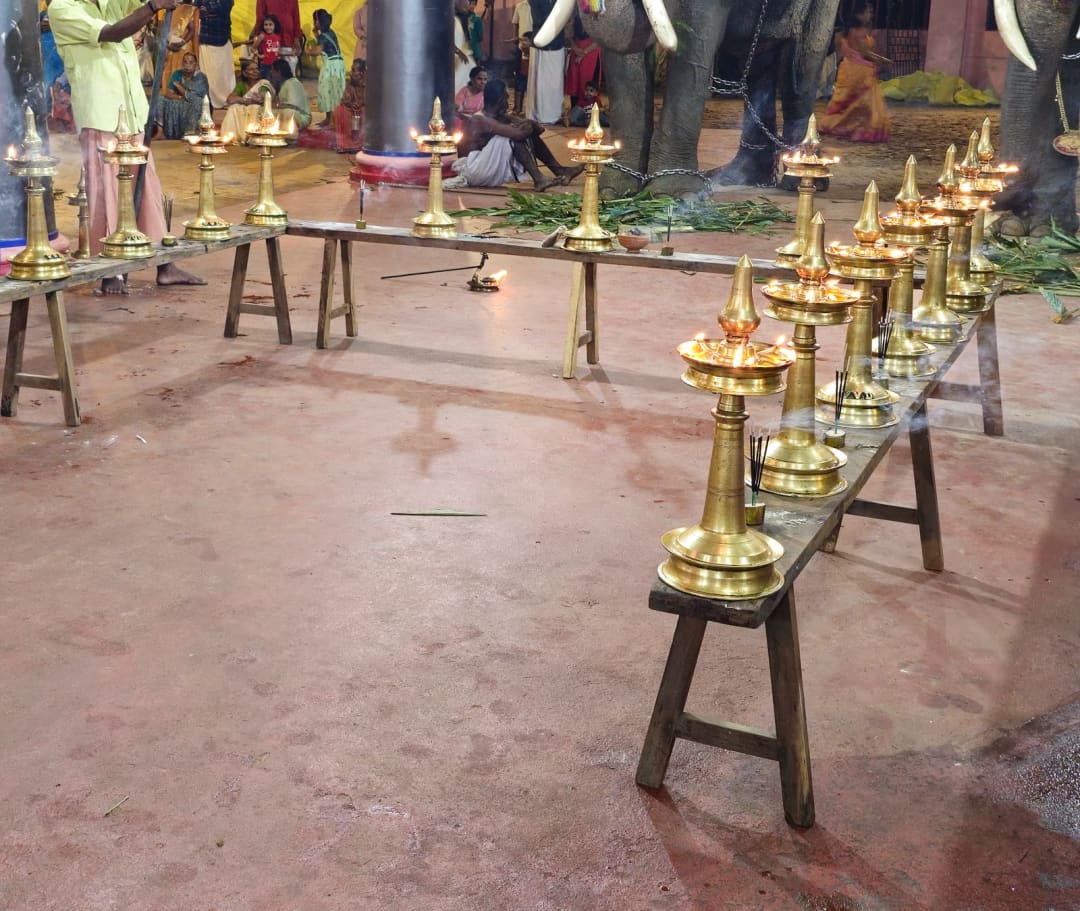
Tamil calls it nallennai, which is simply "good oil"; English-language shops sell it as gingelly. It is not bought as a compromise. It is bought as lamp oil, in a grade sold for exactly that, and large temples commonly use a blended lamp oil built around it. A temple with a treasury and an endowment is still filling its lamps with oil on an ordinary Tuesday, because that is what the lamp takes.
A Mithila eye reads this the way it reads a wall: not as a hierarchy of materials but as a vocabulary. The aripan drawn at a doorway and the painting inside the marriage chamber come from the same hands and the same household stock of materials, and they mean entirely different things, because placement carries the meaning and the material only carries the placement. Lamp fuel behaves the same way.
Which lamps name their own oil?
This is the part that settles the argument, because a handful of observances do not leave the fuel to taste. They specify it, and in those the substitution runs the wrong way.
On Dhanteras — Friday 6 November in 2026 — a single earthen lamp, usually four-wicked, is set outside the main door facing south for Yama. It is filled with mustard oil, or in many households til oil. The direction and the fuel are both doing work: this lamp is addressed outward, to what one is asking to pass the house by. The five days of Diwali each have a lamp like this somewhere in them, and they are not all the same lamp.
The Saturday lamp for Shani is the clearest case of all. It takes til or mustard oil, and black sesame is added to it. The oil there is not fuel that happens to be burning — it is part of what is being given. Filling that lamp with ghee does not make it a better offering. It makes it a different one.
| The lamp | What goes in it | The reasoning |
|---|---|---|
| Daily shrine lamp, south India | til (gingelly) oil, or a blended lamp oil | the standing default, not an economy |
| Akhand jyoti, kept alight for days | ghee | burns slowly and steadily, very little soot |
| Lakshmi Puja, Diwali night | ghee | the lamp is an invitation inward |
| Yama Deepam, Dhanteras, outside the door | mustard oil, often til | the direction and the fuel are both the offering |
| Saturday lamp for Shani | til or mustard oil, with black sesame | the oil is the offering, not the fuel |
| An ordinary evening lamp | whatever the house keeps | nobody is counting |
Does the fuel change how the lamp actually burns?
Yes, though less than people think, and not in the direction they expect.

Ghee is solid at room temperature and climbs a wick slowly, so it wants a looser, less tightly rolled batti; a dense wick starves in it. Thin oils travel up fast, and the same dense wick that failed in ghee will flood and gutter. Almost every complaint about a lamp dying after ten minutes turns out to be the thickness of the wick rather than anything wrong with the fuel.
What is worth saying plainly is that neither ghee nor til oil is a poor performer. Both give a steady flame with little smoke when the wick is right. The difference you will notice is the smell — ghee is warm and faintly sweet, sesame is nuttier and more present in a small room — and that difference belongs to the occasion rather than to quality.
So which should you use this Kartika?
Here is what I actually think, plainly.
If you keep one lamp before the shrine and light it in the evening, and you have been doing it with oil, you are not doing a lesser version of something. Half the country has lit that lamp with sesame oil for centuries without anyone considering it a concession.
Use ghee when the lamp is turned inward and the occasion is large: Lakshmi Puja on Diwali night, a jyoti meant to stay lit, the lamp before the household deity on a day that matters. Use til or mustard oil when the lamp is turned outward, and always when the rite names it — the Yama lamp at the door, the Saturday lamp under the peepal.
And if the only reason you are reaching for ghee is that you have absorbed the idea that oil is what people settle for, put that down. The ladder is real inside each of those two jobs. It simply does not run between them.
Questions people ask
Is ghee better than oil for a diya?
Not in general. Ghee is preferred for the lamp kept before the deity and for an akhand jyoti, because it burns steadily with little smoke. But across south India til oil is the standing default in temples that are not economising, and some rites specify oil rather than ghee.
Which oil is used for the Yama Deepam on Dhanteras?
Mustard oil, and in many households til oil, in a single four-wicked earthen lamp set outside the main door facing south. In 2026 Dhanteras falls on Friday 6 November, with the evening window running roughly 5:33 pm to 6:51 pm in Delhi.
Why is sesame oil used in south Indian temple lamps?
Til or gingelly oil, nallennai in Tamil, is the classical lamp oil of the region and is sold as a lamp-oil grade in its own right. It gives a steady, low-soot flame, and many temples use a blended lamp oil built around it.
Can I use ghee for a Shani lamp on Saturday?
The customary offering is a til or mustard oil lamp, often with black sesame added. Here the oil is not the fuel but part of what is being given, so substituting ghee changes the rite rather than upgrading it.
Does the type of oil change how the diya burns?
Yes. Ghee is solid at room temperature and climbs a wick more slowly, so a looser wick suits it, while thin oils travel faster and a dense wick will flood. Most complaints about a lamp going out are about wick thickness, not the fuel.


