Kanya Pujan at Home: Ashtami and Navami, Step by Step
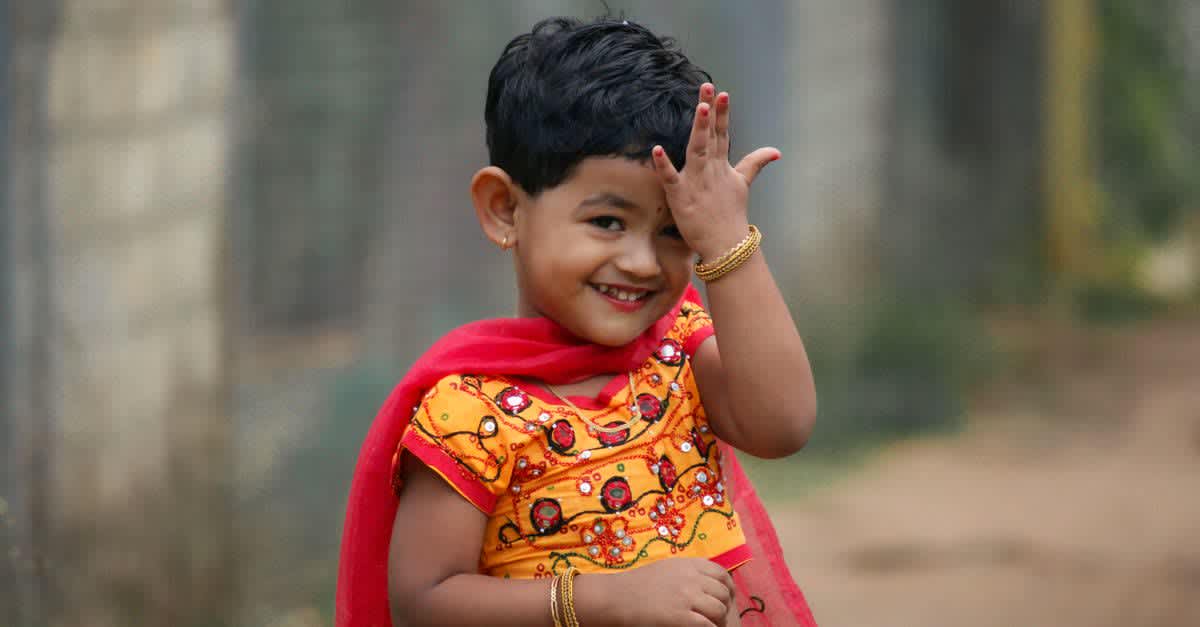
My mother-in-law starts negotiating with the third floor around Saptami. There are two girls up there, seven and four, and by the eighth morning of Navratri every household in our Indore lane wants them. The building has perhaps six eligible girls in it and something like fifteen kitchens making halwa. It is not a spiritual problem. It is a scheduling problem, and nobody warns you about it.
What follows is how kanya pujan is actually run in a house like mine — Kanjak, Kanchak, Kumari puja, depending on who you ask. I am not a pandit and I have never read a line of the Devi Mahatmya in Sanskrit. This is the household version, including the parts I have watched go wrong.
First, work out which morning — in 2026 that is not obvious
Sharad Navratri runs from Sunday 11 October to Monday 19 October this year, with Vijayadashami on Tuesday 20 October. The complication is in the tithis. Ashtami does not begin until the middle of Sunday morning on the 18th, well after sunrise, and it runs on until roughly eleven the following morning. Navami starts the moment it ends.
So under the sunrise rule most North Indian households follow, Ashtami and Navami land on the same day: Monday 19 October. One morning, not two. Some printed calendars still show Durga Ashtami on the 18th, and Bengal keeps Maha Navami on the 20th. Check your own panchang or the local temple's notice before you buy anything.
How many girls, and which ages
Nine is the number everyone names, one for each night. Plenty of houses do seven, or five, or two, and a house with one girl available does one. Nobody I know treats a smaller number as a failure.
The usual range is two to ten years old. Under two and she will not sit; much past ten and most families consider her grown. The printed lists give each age its own name — Kumarika at two, then Trimurti, Kalyani, Rohini, Kali, Chandika, Shambhavi, Durga at nine and Subhadra at ten — though the names vary between books. Nobody in my lane has ever recited them aloud. They are worth knowing anyway.
Ask the day before, not on the morning
This is the advice I would put above all the rest. Go and ask the evening before, in person, and be specific: what time, how long it will take, whether they will have eaten. Mothers of small girls spend the whole morning walking children between flats, and a vague bhej dena gets you nothing.
It matters more than usual this year, because both tithis collapse into one morning and there is no second sitting to fall back on. Ask early and take the earlier slot. By ten o'clock every girl in the building is full of somebody else's halwa.
The menu is fixed, and that is a mercy
Kala chana, sooji halwa, puri. Black chana soaked overnight and cooked dry with cumin and a little amchur, semolina halwa in ghee, puris fried fresh. No onion, no garlic. Some houses add kheer or a piece of coconut, and Punjabi houses often send the girls off with a packed plate as well.
Resist the urge to improve it. Every year somebody decides to serve pasta because the children will like it better, and every year it sits untouched beside the puris. This plate is also where a nine-day fast breaks, which is a discipline worth understanding on its own terms.
Lay the thali out before they arrive
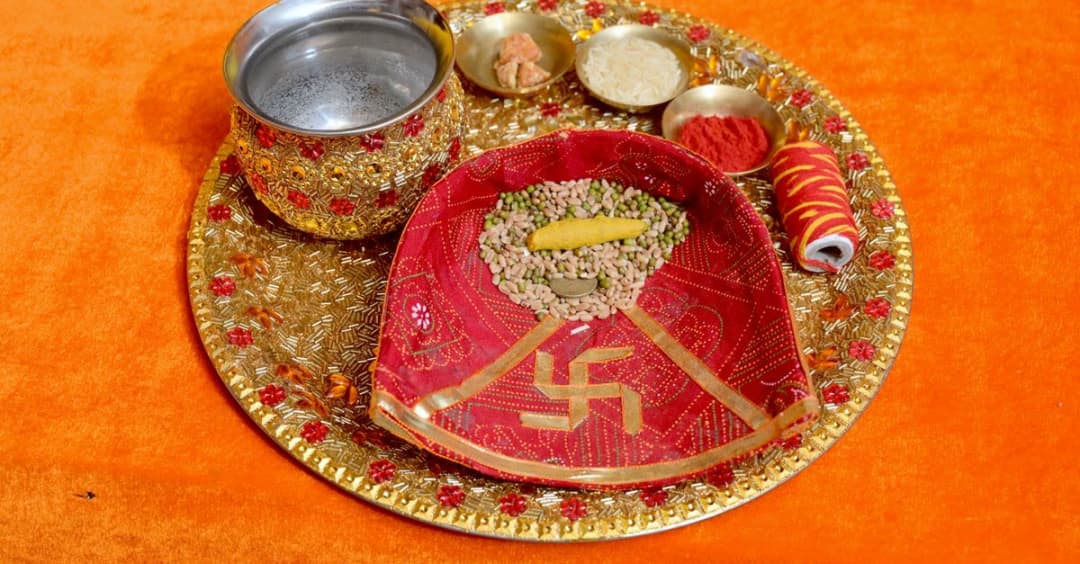
Small girls do not wait. Have everything on one tray before the doorbell goes: a lota of clean water and an empty plate to catch it, roli and uncooked rice, a little haldi, a spool of red kalava, chunnis, flowers, a diya and incense.
Keep the food covered and ready too. If the barley sown under the kalash on the first morning has come up well, cut a few tips now — some houses tuck them into the girls' hair, most keep them back for the tenth day.
The sequence, in order
- Seat the girls in a row, facing east if the room allows it.
- Wash their feet, pouring a little water over each foot into the plate, and dry them.
- Tilak of roli on the forehead, with a few grains of rice pressed on.
- Tie kalava on the wrist.
- Drape a chunni over each girl.
- Short aarti with the diya and the incense while they sit.
- Serve the food, and do not hurry them through it.
- Give the dakshina, then touch their feet before they leave.
None of this needs a priest, and in most households no priest has ever attended.
Feed them properly, then let them go
The commonest mistake I see is treating the girls as props. They get arranged for photographs, asked to fold their hands again because the first frame was blurred, made to wait while an aunt finishes a call. A four-year-old has a fifteen-minute ceiling, and past it you are simply holding a child in your drawing room.
Serve them sitting down, on proper plates, and let them leave food if they want to. The rite is a feeding. If the feeding gets rushed so the photograph can happen, the photograph is the only thing that happened.
What to give, and where this has gone wrong
Dakshina is traditionally a coin and a small gift. In our lanes it has quietly become a competition, and I do not think anything has improved for it — plastic toys broken by Dashami, stationery sets nobody opens, cosmetics for eight-year-olds.
What actually gets used, in my experience: a steel glass or a small dabba, a decent notebook, hair clips, a chunni the girl might genuinely wear. Give every girl in the row the same thing, because children notice at once when they have not. Keep it modest. A house that cannot match its neighbours should not feel obliged to try, and nothing in the rite scales with spending.
If you cannot find nine girls
This is the ordinary situation in a small flat, a new city or a country where the lane does not exist. There are several accepted answers. Feed fewer, and do the puja properly. Feed the same girls on both days where the tithis allow it. Include the young boy some houses insist on anyway — the langur, Batuk Bhairav — and count the sitting complete.
If there is genuinely nobody, most families I know offer the plate before the goddess and then give the food to children who will eat it. Whether that counts is not mine to rule on. It is certainly better than skipping the cooking and feeling bad about it.
The things nobody has given me a straight answer about
Three, after years of asking. Whether the boy is required or merely customary — half my relatives treat the langur as non-negotiable and the other half have never included one. Whether a girl who has begun to grow up still counts, on which the printed rule is clear and families are not. And whether you should feed the same girls every year or deliberately vary them, a question I have heard argued both ways with total confidence.
I have stopped expecting these to resolve. A custom carried in households rather than in texts will always have this much give in it.
What the morning is actually for
Strip away the scheduling and the gifts and very little is left: you cook, you wash someone's feet, you feed a child before you eat yourself, and you bend down to a person half your height. On the ninth morning of a fast, with the kitchen hot and nine pairs of shoes at the door, none of that is a metaphor. It is the last instruction of the nine nights, and the easiest one to get right.