
Pandav Lila: Garhwal's Village Mahabharata in Winter
Picture a courtyard in a Garhwal village, somewhere up above the Alaknanda, in the dead middle of winter. Flat ground, beaten hard. Houses on three sides, painted that particular hill pink and blue. The whole village is there — the old women sat down on a mat in front, everyone else standing behind them in layers of wool, and a few teenagers holding phones up over the heads of the crowd.
Then the drum starts.
And a man that everybody in that courtyard has known since he was a child — a man who drives a shared jeep, or welds, or teaches the primary section — begins to shake. Within a few minutes nobody is using his name any more.
That is Pandav Lila, and it is one of the plainest, strangest things that happens in the Garhwal hills.
The Mahabharata, performed by people who are not actors
Pandav Lila — Pandav Nritya, if you are in a village that calls it that — is the Mahabharata re-enacted through singing, dancing and recitation. The crucial detail, and the one that makes the whole thing work, is that it is performed by village amateurs, and not professionals. Nobody is touring. Nobody gets a fee. The five Pandavas are five men off that lane.
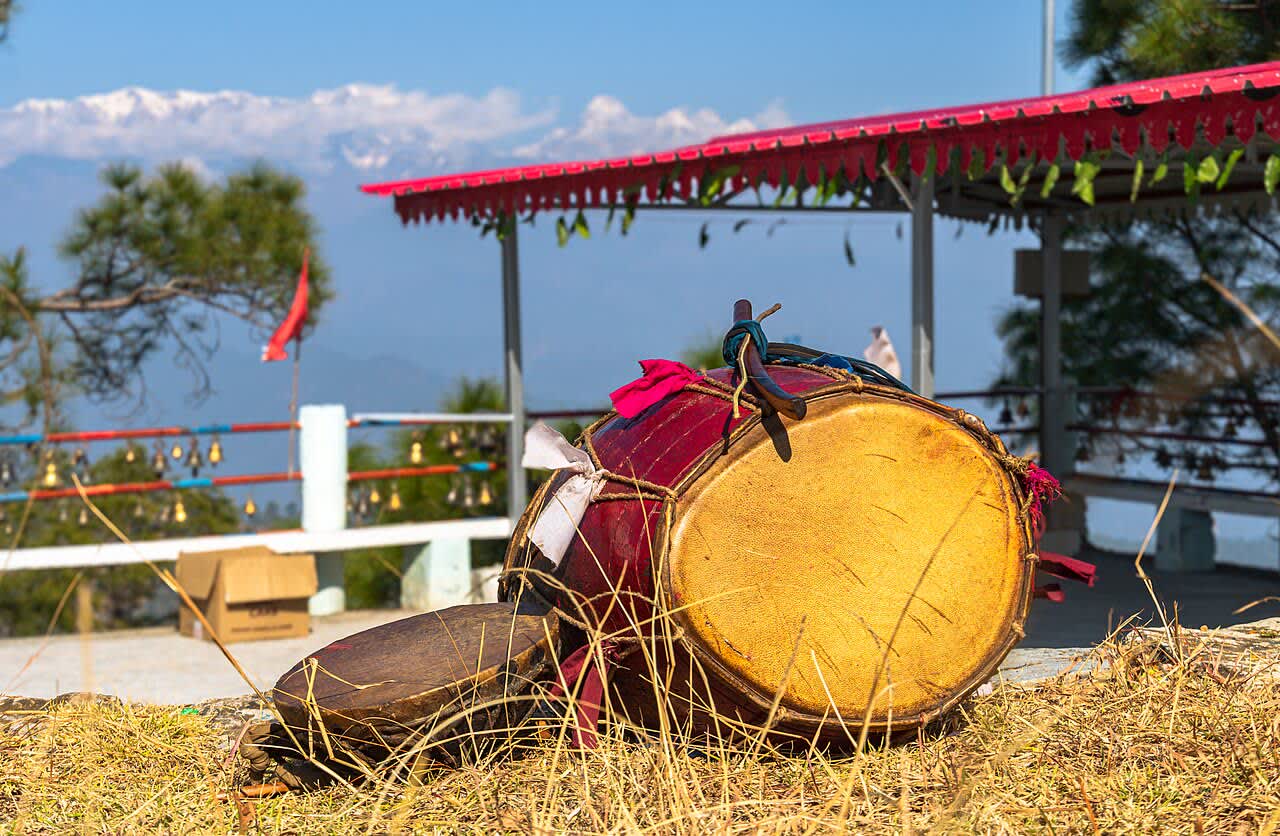
It happens outdoors, in the open, with the village ringed around the edge. The music is dhol and damau — the two drums that are almost never played apart — and two long trumpets called bhankore. Performances begin at night and run till early morning, and as the story tightens towards its battles they start creeping earlier and earlier into the day.
Two things about it will throw you if you arrive expecting theatre. The episodes are not necessarily performed in a linear order — a village does the parts it holds, in the order it holds them. And the length is genuinely elastic: the sources that describe it well put it at anywhere from three days to a month, varying from village to village. You will also see "ten to twelve days" quoted confidently. Both are reported; nobody is wrong, because there is no central body deciding.
The season is November to February, across Rudraprayag, Uttarkashi, Sonprayag and the Joshimath side. People sometimes look for something mystical in that timing. The honest answer is agricultural and practical: the harvest is in, the high passes are shut, the work that fills the rest of the year has stopped, and there are suddenly a great many evenings. Winter in the high valleys closes everything down — it is the same logic that sends Badrinath's worship down the valley to Joshimath for six months, which is a story worth reading on its own. The gods come indoors, and so does the epic.
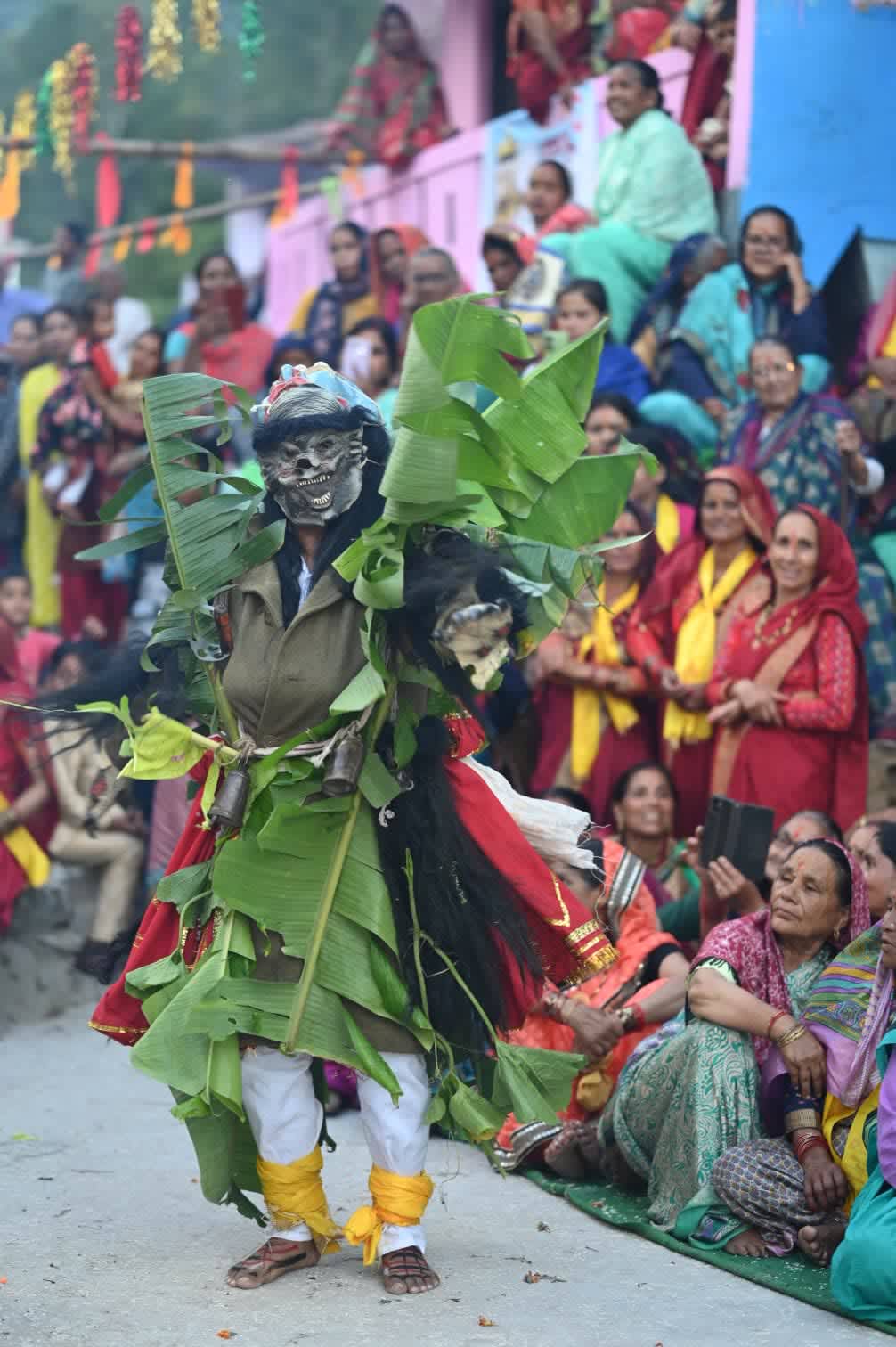
Though that window is a tendency, not a rule, and for the same reason the length is not fixed: nobody is setting the date. Lower and warmer villages hold theirs when their own harvest allows. The Kulsari photographs on this page are from a September lila — cotton rather than wool, the hillside still green.
Why the Pandavas, and not somebody else
Because Garhwal claims them, and the geography backs it up.
The Pandavas' last journey takes them north, giving up the kingdom, walking towards heaven; the Swargarohini peaks are held to be the stairway they climbed, and only Yudhishthira, the eldest, gets there. The accounts specify that it was Yudhishthira and the dog — Yama in another form — who went up the Swargarohini glacier, not the peak itself.
Here is where it gets interesting, and I would rather hand you the disagreement than pretend it is settled. Many hold that the Pandavas went north from what is now Badrinath, in eastern Garhwal — which is a very long way indeed from the Swargarohini peaks in the Sankari range of western Garhwal. Two routes, both sincerely held, across opposite ends of the same range. What that really tells you is how many separate valleys want the Pandavas to have walked through them.
They are also held to have left their weapons behind as penance — bow, quiver, sword, mace and javelin — in villages scattered across Uttarakhand. This is the same stratum of story that gives Garhwal its five Shiva shrines of the Panch Kedar: the Pandavas did not merely pass through, they left things, and the things are still there.
The drum is what calls them
This is the part I would most want you to take away.
The drumming is not accompaniment. It is the mechanism. The rhythms belong to a body of knowledge called the Dhol Sagar — the "ocean of the drum" — which does not exist in a complete printed form. It was transmitted orally, through percussive verses and vocable syllables, or simply picked up by practice inside the drumming families themselves.
What it contains is remarkable: shlokas in Sanskrit or Garhwali, and specific rhythm patterns for specific occasions — a naming, a wedding, a religious festival, a shamanic rite, a ritual drama like Pandav Lila, a death. A different beat for each. The drummer is not setting a mood; he is stating, in a language older than anyone present, exactly which door is being opened.
The players of this knowledge traditionally came from particular musical caste groups — auji, bajgi, das, dholi — communities the same villages have historically ranked at the bottom.
Hold those two facts next to each other. The god does not arrive because a performer decides to be moved. The god arrives when the correct pattern is played, and that pattern lives in the hands of the man the village has spent centuries looking down on.
The man who becomes the god
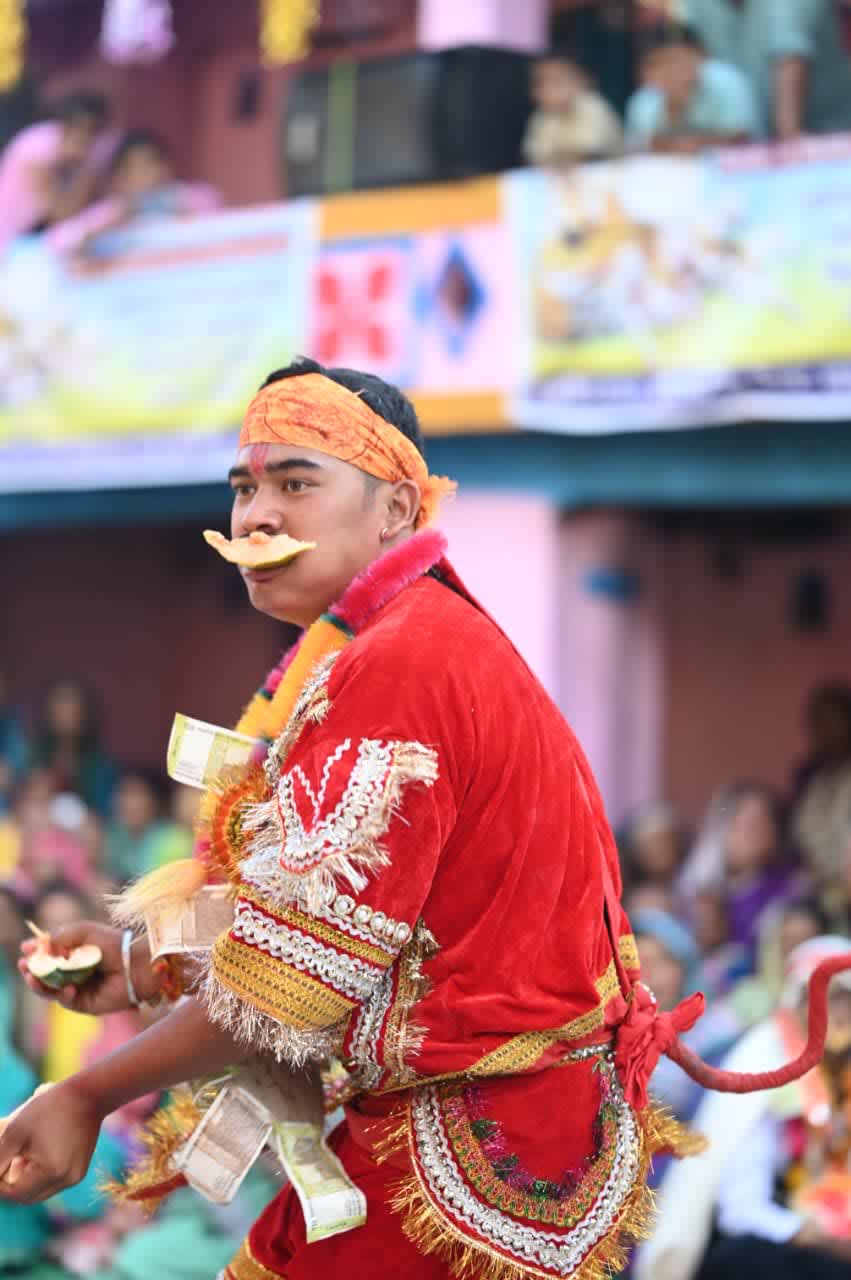
The dancers who take the possession are called pashwa, and they are handpicked — the role is understood to need absolute devotion, and not everyone is thought able to hold it. The description given of what happens is admirably direct: once the music reverberates, the divine presence of the five Pandavas is activated in their bodies. Villagers will tell you the actors become possessed by the spirits of their characters and begin to dance, often without warning.
And the weapons used are not props. They are worshipped. They are never allowed to touch the ground — and when the lila finishes, they are not packed away and forgotten; they are kept and cared for until the next one.
Sit with what that means for the other eleven months. Somewhere in that village, in somebody's keeping, are the Pandavas' arms, being looked after by people who will tell you quite matter-of-factly whose they are.
What is actually at risk here
Not the snow. Ask anyone in those valleys about snow and you will get a shrug; snow is a scheduling problem.
The real risk is to the Dhol Sagar, and it is well documented. The knowledge is threatened by the migration of young people out of the drumming families, by brass bands and DJs taking the work, and — this is the uncomfortable part — by drummers' own reluctance to carry on a practice that has historically marked them as low caste. Many have given it up. Many more have simply been pushed out of the work.
So here is the shape of the danger, and it is not the one people expect. A village can nearly always find five men willing to dance the Pandavas. What it is beginning to struggle to find is the one man who knows which rhythm brings them.
Three things worth keeping
One. This is not a folk show staged for anybody. It is a village performing its own ancestry to itself, at night, in the cold, with no audience that has not known the performers their whole lives.
Two. The calendar is not mystical, it is agricultural — November to February, because that is when the hills are free. Traditions sit in the gaps that work leaves behind, which is why so many of them are in winter.
Three. The fragile part of a living tradition is rarely the visible part. The costumes and the masks will survive; somebody will always sponsor those. The unwritten rhythm, held by the family that was never thanked for holding it, is the part that goes quiet first.
If you are ever in Garhwal between the harvest and the thaw and you hear a dhol going after dark, walk towards it. Nobody will mind. Stand at the back with the rest of the village, and watch for the moment the drumming changes and somebody's cousin stops being somebody's cousin.


