
Where Oud Comes From: Hojai and Assam's Agar Trees
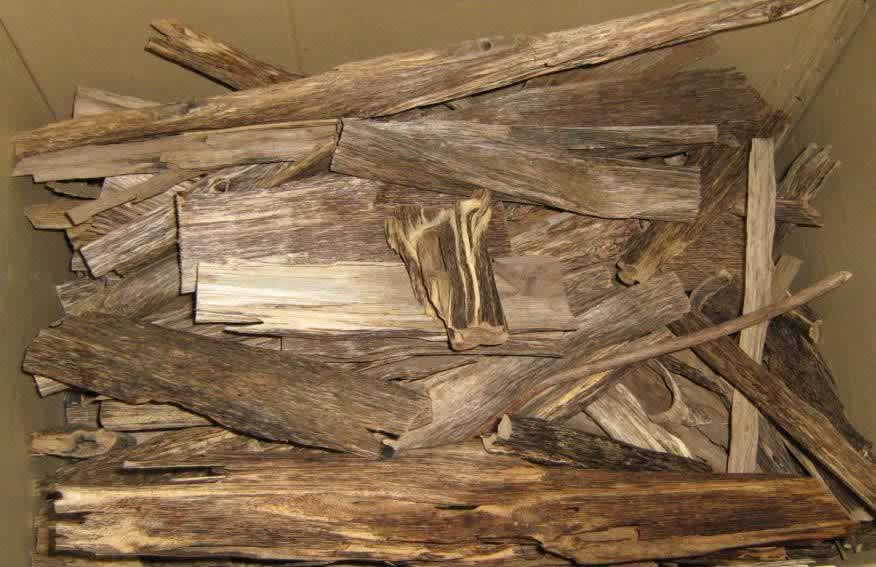
Perfume counters have a particular way of talking about oud. The card beside the bottle will mention deep forest, rarity, something being hunted rather than farmed. It is very good copy. It is also, for most of what is actually sold, about as accurate as describing a supermarket chicken as game.
The real answer is less cinematic and considerably more interesting. A great deal of the world's agarwood now passes through one town in central Assam, where the trees were planted on purpose, usually by somebody's boundary wall, and where the smell of wet wood in a water tank is simply what the air is like on a Tuesday afternoon.
The tree is in the garden, not in the forest
This is the fact that rearranges everything else. Assam's agar is not, in the main, a forest product. State figures put something like 11.44 crore agarwood plants over two years old on non-forest land, concentrated in Golaghat, Jorhat, Sivasagar, Karimganj and Cachar, with the state government claiming close to two lakh hectares outside forests under agar. Farmers in Golaghat, Karbi Anglong and Nagaon have taken it up in numbers.
Read the descriptions of where those trees actually stand and you get homesteads, farm boundaries and mixed land-use systems — which is the polite way of saying: in the garden, along the edge of the paddy, behind the house. A smallholder does not clear land for agar. They put it where a tree was going to be anyway.
That makes the tree a particular kind of household object. It is not a crop you harvest each season. It sits there for years as a slowly appreciating asset, the thing you cut when a roof needs replacing or a wedding needs paying for. Treat it as savings rather than farming and the whole economy starts to make sense.
Seven trees in a hundred
Here is the catch, and it is a severe one. A healthy Aquilaria is pale, light wood worth almost nothing. The dark resinous heartwood that the trade wants only forms when the tree is attacked and floods the wound with resin. Naturally, this happens to roughly seven trees in a hundred.
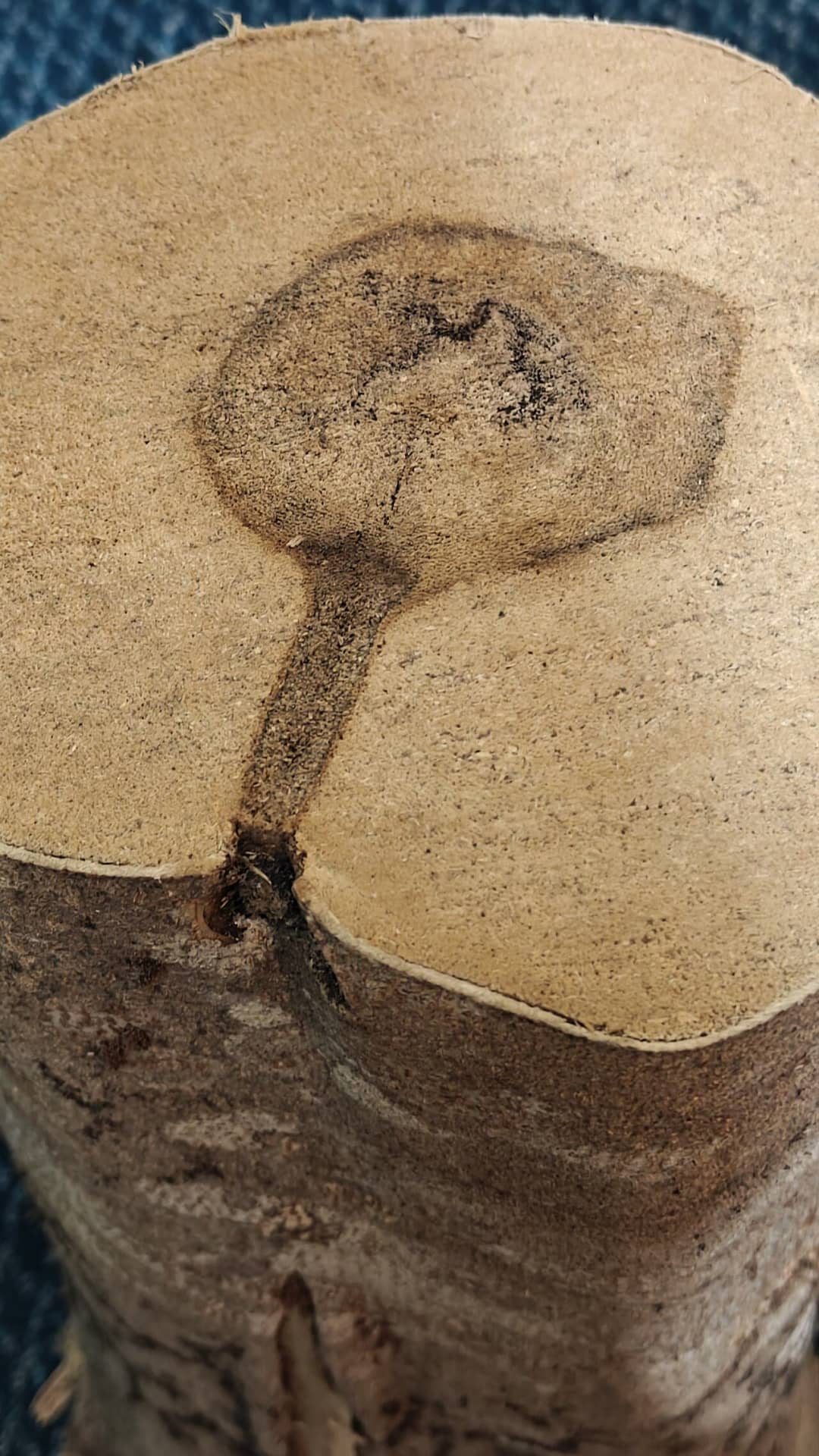
Seven in a hundred is a terrible number if your retirement is standing in the garden. So plantations do not wait for chance; they inoculate, drilling and seeding trees deliberately so that the tree does the thing it would otherwise probably never do. Purists sniff at the result, and the mechanism behind all of it — why the good stuff stays expensive no matter how many trees are planted — is a subject we have gone into separately. What matters here is the economics: inoculation turns a lottery ticket into something closer to a crop, which is precisely why there are now enough planted trees in Assam to need a national export policy.
What an ordinary Tuesday in Hojai looks like
Hojai is a district in central Assam, carved out of Nagaon in August 2015 from the three tehsils of Hojai, Doboka and Lanka. It grows some agar. Mostly, though, it processes it: there are reckoned to be over two thousand distillation units, big and small, in and around the town.
They are not romantic. A unit may be a shed, a few tanks and a boiler. Wood arrives graded and chipped, goes into water, and stays there for weeks while fermentation does the first part of the work. Then it is distilled, and the oil is drawn off in grades — a slower, rougher cousin of the careful copper-still work that goes on in Kannauj, and done at a scale that has far more to do with shipping containers than with poetry.
The thing nobody tells you about a distillation town is the smell. Not the finished note you get from a bottle — that arrives at the end, concentrated and strange. For most of the process it smells of standing water and wet timber, which is to say it smells like something rotting, because something is. The transformation from that to the dry, smoky, faintly sweet thing in a perfume hall happens almost entirely in the last stage.
For most of its life, this trade was not quite legal
Agarwood has been regulated internationally for thirty years. Aquilaria malaccensis went onto CITES Appendix II in 1995; by 2004 every Aquilaria species had followed. The reasoning was sound — wild agarwood trees really were being stripped out.
The awkward consequence was for the man with twelve trees behind his house. A planted tree on private land is still, legally, a tree of a restricted species, and for years Assam's growers sat in a grey zone: an asset they had deliberately grown, which they could not straightforwardly fell or export. In July 2019 the state cabinet moved on the first half of that, clearing the growing and cutting of agar trees on non-forest land and green-lighting an international agar trade centre at Golaghat. The export half took longer.
The number that changed it
In January 2025 the Directorate General of Foreign Trade amended the export policy. India's annual ceiling for agarwood chips, powder and sawdust went from 25,000 kg to 151,080 kg; agar oil went from 1,500 kg to 7,050 kg. Assam took much the largest share — 119,400 kg of chips and powder, and 5,560 kg of oil.
The conditions are where you see what "cultivated" has to mean in practice. The material must come from artificially propagated sources. A certificate of origin is issued only after a Forest Department officer authorised by the state has physically inspected the consignment. The goods are photographed and certified. The plantation must be registered with the state. The exporter signs an undertaking on CITES compliance.
And then, in May 2025, the first legally approved shipment went out to Saudi Arabia and the UAE: 112 kg of chips.
Sit with that pair of numbers for a moment. A quota of 151,080 kg, and a first legal consignment of 112 kg. Either the formal trade has barely begun, or a great deal of agarwood has spent decades leaving by other routes — and the honest answer is that both are true. What the paperwork has changed is not the volume. It is that a tree in a garden in Golaghat can now, in principle, be traced to a bottle in Riyadh.
The tree was a writing material before it was a perfume
The part I find hardest to shake is older than any of the trade. In Assamese the tree is sanchi, and its bark, treated and cured, is sanchipat — the leaf that Assamese manuscripts were written on, a tradition still practised in Majuli.
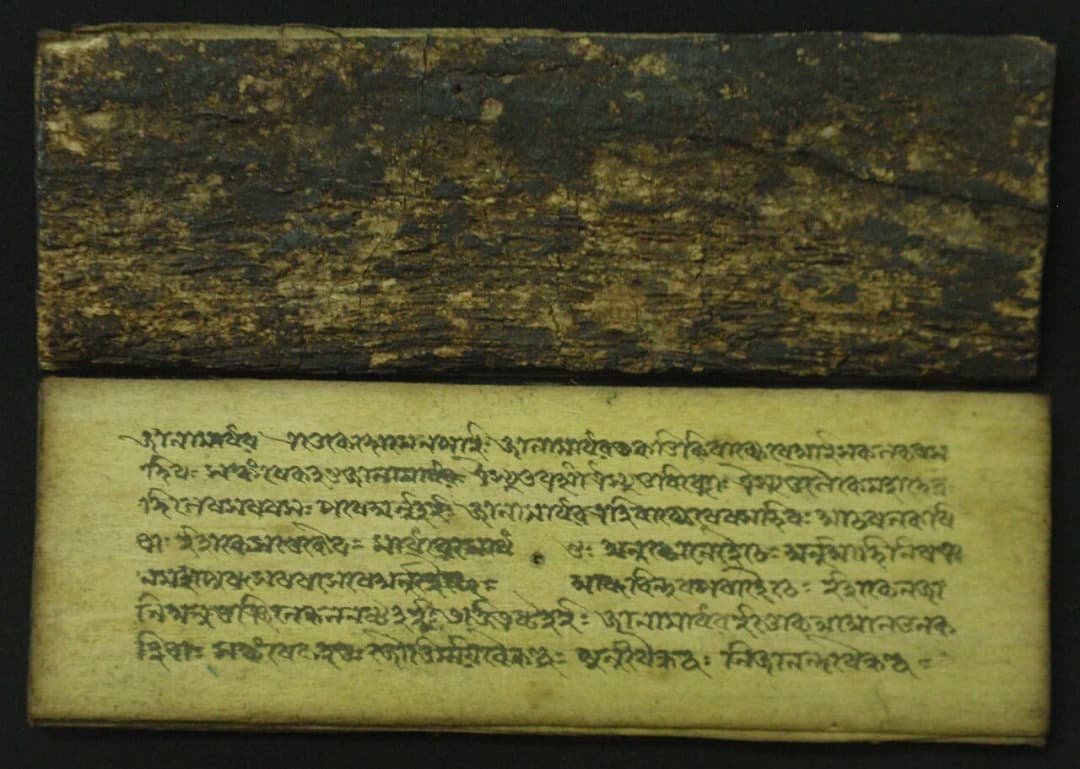
So the same tree that the Gulf buys by the kilogram was, in the same valley, the thing you wrote scripture on. References to aloe-oil in ancient Assam go back to seventh-century texts. Japan built a whole grading vocabulary around the wood centuries ago and still reserves its highest grade, kyara, for material almost nobody will handle. None of this is a trend.
What is new is the audit trail. The next time you burn or wear something labelled oud, the picture worth holding is not a jungle expedition. It is a planted tree behind a house in Golaghat, a forest officer with a camera and a clipboard, a shed in Hojai where the water smells of rot, and a consignment weighed to the kilogram. That is a less flattering story than the one on the card by the bottle. It is a far better one, and unlike the card, it is checkable.


