
Sirimanotsavam: Vizianagaram's Tuesday After Dussehra
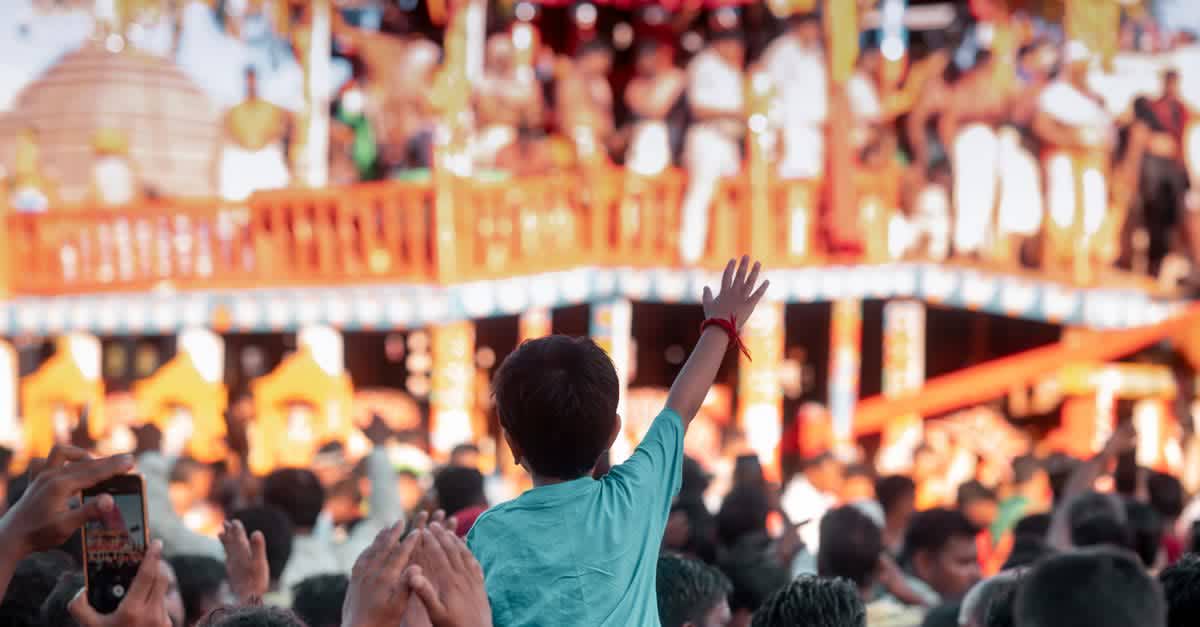
By the last week of October the rain has finished with this coast. What we get instead is a fortnight of high washed-out light, a sea that has stopped throwing things at the shore, and a dry heat that arrives around eleven and leaves by four. That is the window. Somewhere inside it, north Andhra empties itself into one small town about sixty kilometres inland from Visakhapatnam, for one afternoon, to stand in a road and look up at a tree.
I want to talk about Sirimanotsavam, because it is the largest festival in this part of the state and, outside this part of the state, almost nobody has heard of it.
The Tuesday the calendar argues with itself
The rule everyone quotes is simple: the first Tuesday after Vijayadashami. The jatara at the Pydithalli Ammavari temple in Vizianagaram is built on that one line, and the line is why the date moves by a fortnight some years.
This year the rule folds back on itself, which I find genuinely funny. Vijayadashami in 2026 falls on Tuesday 20 October. So is the festival that Tuesday, or the next one? Published schedules put Sirimanotsavam on Tuesday 27 October 2026, with the Tholella procession the evening before and the rest of the jatara — a float festival on the big tank, the swing — running into November. That matches how the rule is normally read. But a year when Dashami is itself a Tuesday is exactly the year to take the temple's own announcement over a calendar website, and I would.
Who Pydithalli is, and where the accounts split
Here is the version you will be told standing in the queue. Pydimamba was the sister of the Vizianagaram king Vijaya Rama Raju. She had a premonition about the war he was riding out to and she asked him not to go. He went anyway. The Battle of Bobbili was fought on 23 January 1757, and he did not come home. Not long after, her image was found in the Pedda Cheruvu, the big tank lying west of the fort, and a temple was built where the fishermen brought it up.
Now, where the accounts stop agreeing. Some say she ended her own life in that tank on hearing the news. Some say she was ill and simply did not want to live past him. And the phrasing that keeps turning up in the written accounts is that she would merge with the village goddess — which is a very different claim. It says a goddess was already there. It says a dead princess joined her rather than became her.
I am not going to arbitrate that, and I would be suspicious of anyone who did. But it is worth noticing which way the sentence points. A second battle, Padmanabham in 1794, sometimes gets pulled into the story too, and that one is well after her time.
The tree nobody knows about until a dream
This is the part that makes the festival what it is.
Roughly a fortnight before the day, the goddess is said to come to the temple priest in a dream and tell him where this year's tree is standing. He goes and finds it. It is felled with a puja and brought in, stripped and shaped, and mounted on a chariot — published descriptions put it at around sixty feet.
And then the detail I cannot get past: the owner of the tree has to agree. A dream identifies the tree, and a man with a document then says yes. Every year. That single requirement tells you more about how this festival actually runs than any amount of description — it is a divine instruction that still has to clear a conversation over a fence.
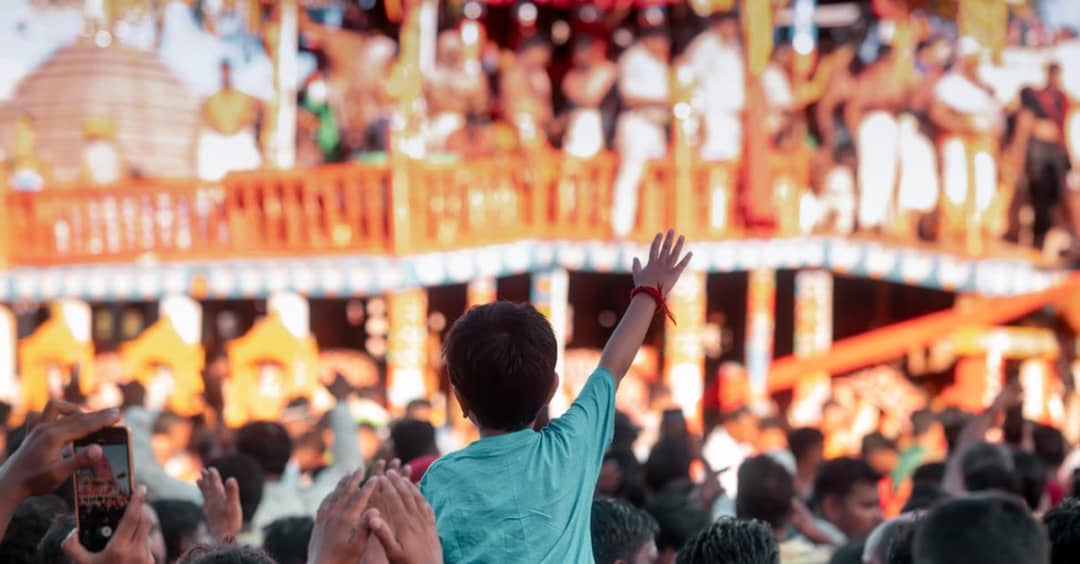
The head priest rides the raised end of it. He hangs off the upper part of the trunk, well above everyone's heads, while the chariot is pulled. Between roughly three and four in the afternoon it goes three times along the short run between the Vizianagaram fort and the temple, a few hundred metres each way, through a crowd that published estimates put in the lakhs.
What moves down the road with it
The sirimanu is not alone. A white elephant goes ahead of it — historically the maharaja's presence in the procession, now carried as a figure. Then the Anjali chariot, with five married women on it. The reason given is blunt and rather sad: Pydimamba died unmarried, so married women ride for her.
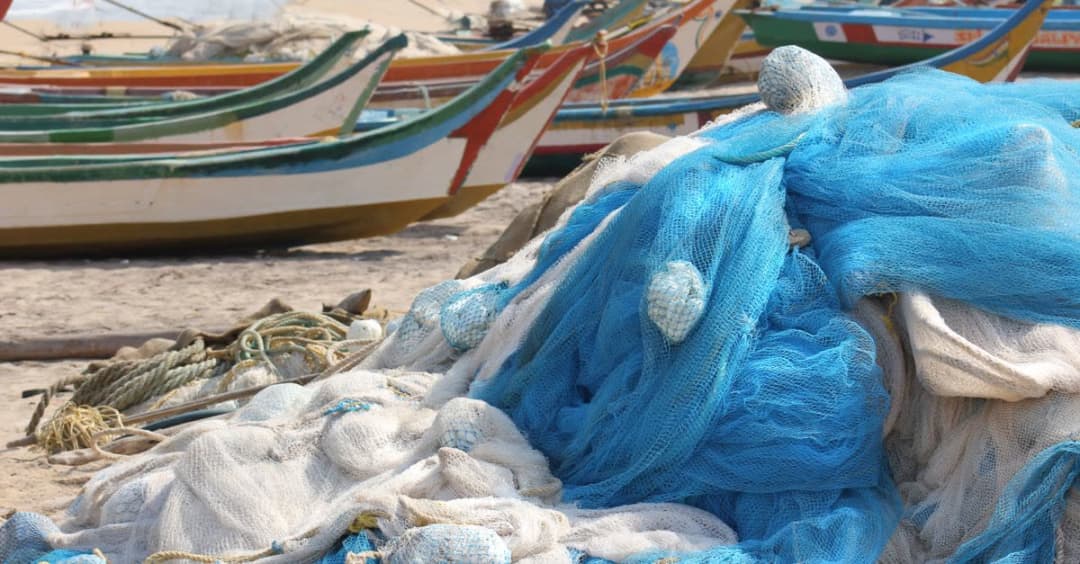
And then the piece that tells you what coast you are on. The fishing community brings the paladhara — a canopy made of fishing nets, dressed with flowers and fruit. Not a donated umbrella. Their own working gear, turned into a covering for a goddess for one day.
Afterwards the trunk is not thrown away. People come for darshan of the sirimanu itself, and farmers take pieces of it home for their fields.
Why the biggest thing in it is a tree
Coastal Andhra has plenty of temples with towers, carved stone, a long Sanskrit liturgy and a priesthood trained in it. The hill temple at Simhachalam is twenty minutes from my house and it is all of those things.
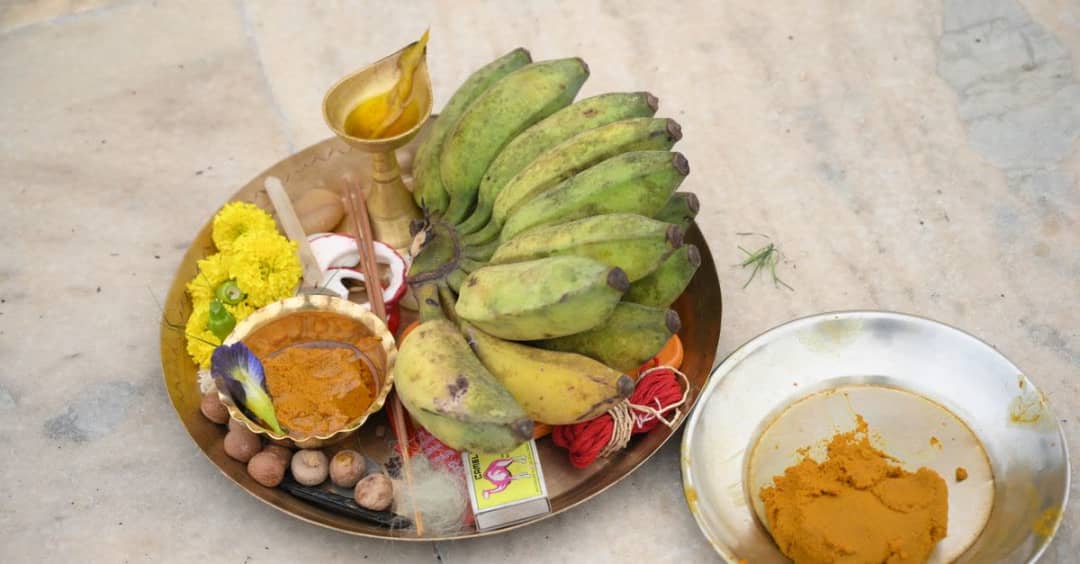
Pydithalli Ammavaru is not that. She is a gramadevata — the goddess of a town rather than of a tradition. Gramadevata shrines across the Telugu country tend to work this way: turmeric rather than marble, a local story rather than a text, a festival that belongs to the municipality and the fishing families and the farmers who want a piece of the trunk. The tallest object in the whole event is a tree that did not exist as a sacred thing three weeks earlier and will be firewood, fenceposts and field-blessings three weeks later.
That is not a lesser kind of worship. It is a different accounting of what lasts.
The part I am not going to settle
A man hangs off a sixty-foot trunk above a crowd of that size. The traditional explanation is that the goddess holds him there. I have heard it put exactly that way by people who are not otherwise given to dramatic statements.
I am from Vizag, I have watched this from the road, and I have never been up there or anywhere near the planning of it. What I will say is what is observably true: the district administration treats the day as a very large public event, and the people who organise it are not relying on the explanation alone. Both things are true at once, and I do not think either one embarrasses the other.
If you go
Go the evening before, for Tholella, when the town is filling up and you can still move. Get to the fort–temple stretch well before three. Stand at the side, not the middle, and accept that you will see the sirimanu and not much else — that is the correct amount to see.
Three things worth remembering
- It is the first Tuesday after Vijayadashami — 27 October in 2026, though a Tuesday Dashami makes this a year to check the temple's own notice.
- The tree is found in a dream and released by its owner. Both halves of that matter.
- It is a gramadevata's festival, not a temple's. No tower, no canon. A trunk, a tank, a fishing net, and a town that has not let go of a woman who asked her brother not to go to war.


